
Select the relevant link below to navigate to a specific desired section or continue reading the full content:
People and Processes
People Experience Team
Our people are at the heart of our ambition to advance equality, diversity and inclusion (EDI) at Northumbria University. This year the University has continued to prioritise the lived experiences of our staff, ensuring that feedback, representation and belonging are embedded into the culture and operations of our institution, as a core part of our strategy, decision making and day-to-day operations.
By aligning EDI with key people processes and data, we’re building a more transparent, inclusive and accountable organisation through the development of:
People Strategic Delivery Plan
The People Strategic Delivery Plan outlines four pillars of initiatives which contribute to achieving Northumbria’s commitment to be a place where people feel valued and proud to work, in a community where everyone belongs. We recently published Our Exceptional People, which articulates Northumbria’s ambitions as an inclusive and progressive employer, and sets out clear commitments to creating an inclusive working environment.
People Data Dashboard
The People Data Dashboard has enhanced transparency and accountability around workforce diversity. It provides biannual updates on key people metrics broken down by protected characteristics, giving leaders and managers real-time insight to inform inclusive policy, planning and workforce development.
Eliminating barriers to equity and inclusion remains a priority at Northumbria. Through data-driven insights and active listening, we identify where inequalities exist to take meaningful, targeted steps to address them. We do this through:
Engagement and Pulse Surveys
The University-wide Engagement Survey continues to serve as a vital tool in identifying and addressing barriers to engagement and inclusion. Analysis of quantitative and qualitative colleague feedback uncovers disparities in experience across different demographic groups, ensuring that interventions developed which are data-driven and targeted where they are needed most.
Continuous Improvement through Feedback
Insights from the Pulse Survey and the Engagement Hub are used to critically review policies, practices and systems through an EDI lens. Emerging patterns such as underrepresentation in engagement or experience gaps trigger further investigation and bespoke action to eliminate systemic barriers and improve equity across the employee lifecycle.
Reasonable Adjustments
Throughout the year we have supported 79 colleagues with DSE Assessments, Reasonable Adjustments and Access to Work. Following the introduction of equipment cataloguing, we have been able to repurpose items no longer in use, meaning some colleagues received equipment more quickly than usual. We continue to provide training and advice for colleagues and line managers on reasonable adjustments and how to use the Adjustments in the Workplace Passport, and currently we have 21 colleagues with a Passport in NUPF. We have begun work to streamline the current process to improve colleague experiences.
Accessibility
Northumbria University continues to work with AccessAble to provide information for colleagues, students contractors and visitors, for all our buildings and services. 11,053 people used AccessAble guides during 2024.
Work has now begun to develop "Virtual Access Guides" using 360-degree imagery to virtually explore routes, alongside detailed written guides with facts, figures, and photographs for planning and to reduce uncertainty before arrival.
This year the Accessibility Review Group has driven forward actions on a wide range of accessibility initiatives. At Coach Lane Campus a new Spiritual Commons was created, the Parenting room was relocated to a more accessible location and the old Parenting room was repurposed into a Quiet Space where staff and students can take time to self-regulate. Another four Quiet Spaces are in planning across both campuses, co-designed with the Student Accessibility Team, engaging with students to develop a suitable specification. In addition to the existing weekly pop-up space in the Library plans are being explored regarding creation of a permanent sensory space at City Campus.
City Campus East (CCE1) now have signage and symbols for the Parenting Room on the ground floor of. In 2024, two quiet rooms were made available on the 3rd floor which are dedicated spaces for when staff and students need to rest, relax, meditate, pray, or take time to recharge.
The Digital Technology and Transformation Team have continued to embed accessibility considerations into campus development projects across the estate, from the initial design phases and throughout. Examples include Mea House redevelopment, liaising with the architects with a dedicated EDI workstream involving multiple colleagues to gain a comprehensive understanding of accessibility requirements for inclusive teaching environments and neurodiverse-friendly spaces to ensure it meets the diverse needs of our staff and student community.
Centre for Health and Social Equity (CHASE)
Two sessions were facilitated by accessibility and inclusion consultant Buro Happold through the design team (Ryder) for the CHASE project. The sessions engaged colleagues and students across the University to understand how the design of CHASE can support a reduction in barriers for teaching and learning and support working in collaborative environments. The design team are reflecting on the feedback and refining CHASE designs to ensure they accommodate the needs of colleagues and students.
Faculties and Departments
Art, Design and Social Sciences
Colleagues have continued to embed EDI into learning and teaching, with events and initiatives including a ‘Race in the Classroom’ session at the September Away Day and a session on ‘Handling Transphobia in the Classroom’ at the Humanities January Away Day, which focussed on pedagogy and practical methods to eliminate isolation for Trans+ students in the classroom. A ‘Centring the Needs of International Students’ workshop in April was delivered jointly with SLAS.
Business and Law
The Faculty has progressed several initiatives to promote EDI over the past year. Some of these originated in Athena Swan work, as well as broader work of the EDI Leads and colleagues within the Faculty.
In 2025, the Faculty committed to flexible scheduling of meetings, avoiding early or late meetings where possible to support carers, part-time work, and work-life balance. As a result of Athena Swan work, new EDI-related interview questions were developed with Faculty HR and Faculty Executive Group (FEG)and trialled in the Law School from January 2024. These are now being continued for candidates at interview stage across all Faculty recruitment panels.
Between 2024 and 2025, analysis of workload data manually gathered from all departments for Athena Swan, helped to identify actions to promote more equitable workload distribution in the future. Targeted research support was put in place during 2024-5 to assist colleagues to identify funding, develop research proposals and achieve publication through research ‘Away Days’, ‘meet the funder’ sessions and writing retreats.
An annual rolling review of Faculty committee membership was introduced to monitor gender and intersectional equality. Attendance at open days is now monitored at Faculty level for gender equality. In 2024–25 work was undertaken with RIS to improve the accuracy of PGR student data, ensuring it reflects departmental distribution across B&L and is disaggregated by gender. PGR completion data by gender was also reviewed at Faculty level.
Engineering and Environment
Embedding EDI into the core business of the Faculty of Engineering and Environment is reflected in inclusive research, curriculum development, and leadership. Colleagues have secured external funding and published work that advances equity and inclusion, including a SEA-UK GEDI Challenge Grant to explore barriers in higher education across Southeast Asia and the UK, and an EPSRC-funded EDI+ Fellowship focused on improving work culture through honest feedback. Inclusive scholarship includes a publication in Nature, communications around under-represented early career researchers, work on domesticity, migration, and labour agency, research on Indigenous-led contaminant monitoring and a book on decolonial media studies.
Other activity in the Faculty includes work exploring socio-economic barriers, mental health, spatial inequality, neurodiversity and a racial equity project. The department of Mechanical and Civil Engineering worked with the Engineering Professors’ Council on the ‘Neurodiversity for All in Engineering’ project contributing to inclusive assessment. A neuroinclusive assessment event was held, as well as a diversity in construction workshop and a racial equity project.
Health and Life Sciences
Athena Swan actions have been progressed across all areas. The Department of Social Work, Education and Community Wellbeing ran a campaign to raise awareness of anti-bullying and harassment policies and reporting mechanisms for colleagues. Regular ‘Equality Matters’ seminars held at Coach Lane for colleagues and students, looked at topics such as gender-based violence and working cultures within UK universities. An ‘EDI Voices’ forum ran each semester, providing colleagues with a safe space discuss experiences. Both Applied Sciences and Psychology developed newsletters to keep colleagues up to date with EDI developments within departments.
EDI is an agenda item on away days and at all formal meetings. It also forms part of periodic programme reviews. Joint sessions have been developed between Applied Sciences and Psychology for decolonising the curriculum, which is part of a Faculty-based programme to develop decentring activities and which provides resources for the University’s Knowledge Bank. In Sport, Exercise and Rehabilitation colleagues developed a short document to support researchers in the embedding of EDI consideration in research development There are a number of research projects in the Faculty that look at inclusion, and in the past year these have included projects related to Gender, LGBTQ+ and neurodivergence.
EDI forms part of all student induction materials in the Faculty and following a cross-departmental EDI review of open days, improvements have been made to events held at Coach Lane.
Research and Innovation Services
Equality, Diversity, and Inclusion (EDI) in research development is central to fostering a research culture that is innovative, inclusive, and socially impactful. Diverse research teams bring a breadth of perspectives, experiences, and methodologies that:
- Enhance creativity and innovation.
- Improve the rigor and relevance of research.
- Ensure research outcomes address the needs of broader communities.
This year some key achievements include:
- Development of EDI Web Resources: A dedicated online hub was launched to support colleagues in embedding EDI throughout the research lifecycle.
- EDI Self-Assessment Tool: This reflective tool helps researchers identify areas for growth and directs them to tailored resources within the EDI toolkit.
- EDI Toolkit: A curated collection of practical guidance, frameworks, and case studies designed to support inclusive research development practices. The toolkit includes inclusive research design frameworks, guidance on equitable collaboration and authorship, resources for engaging underrepresented communities and templates for inclusive funding applications and impact statements.
Teaching, Learning and Student Experience
Student Inclusion
Universal Design for Learning (UDL) - Beyond the Classroom
The Inclusive Education Team developed a 10-week programme and Digital Badge to educate and incorporate Universal Design for Learning principles within Student, Library and Academic Services. The goal of UDL is learner agency that is purposeful and reflective, resourceful and authentic, strategic and action-oriented. It invites us to move beyond planning and designing for the mythical ‘average student’ towards inclusive, intentional design that anticipates the diversity of our student population from the outset, moving away from the need to ‘retrofit’ or adjust on an individual basis.
Access & Success Framework
The introduction of the Access and Success Framework this year helps us to clearly articulate the shared vision and goals for students accessing and succeeding in their Northumbria journeys and to help meet Northumbria’s social mobility ambitions. This forms our whole provider approach to access and participation. The Framework was developed to collate the work happening across the university in a cohesive, strategic manner.
The Framework enables the tracking of activities currently being delivered, to see how they align with strategic objectives and to enable us to monitor how activities are being evaluated in line with our APP commitments.
Both UDL and the Access & Success Framework are embedded in our Education Strategic Delivery Plan (ESDP) and supported by staff-facing hubs which maximise the visibility and accessibility of information to support colleagues in embedding these core EDI workstreams.
Attendance Monitoring System
In the past year the TDS (Time Data Security) Attendance Monitoring system has been upgraded. This system supports student inclusion by providing accurate, real-time data that helps identify and address barriers to student engagement and success. By tracking attendance patterns across different student groups, this enables early intervention for those who may be at risk of disengagement, allowing the university to tailor services ensuring that all students have equitable access to support. A system upgrade brings the additional benefits of QR codes for easier attendance monitoring for off-campus provision.
StarRez
A significant part of the student experience is where they stay while they study with us. This year, Northumbria are introducing StarRez - a new accommodation booking system, which includes some ‘about me’ questions to identify any accessibility requirements and to assist in matching students with flatmates with similar interests.
Access and Participation Plan (APP) Showcase
The annual APP showcase was expanded this year to include Faculties and a keynote speaker. Activities included a keynote address from Dr Paul Campbell, University of Leicester on ‘Current dearth of sociological and empirically substantiated evidence as to what works with regards to equalising the uneven experiences of racialised students in higher education across all disciplines’ a World Cafe and Poster presentations on how to embed various APP and EDI activities into teaching. Posters and other content were then shared on the Access and Success Hub for colleagues to access in the new academic year.
Inclusive Design in Teaching and Assessment
This year Technology Enhanced Learning (TEL) have delivered a broad range of initiatives to support colleagues to deliver inclusive learning. Blackboard Module Templates include a section on Accessibility and Alternative formats with guidance on how to increase accessibility, and ‘Accessibility Thrives’ (staff only access) guidance was launched – this is a Digital Accessibility Resources page where colleagues can find information on digital assistive technologies, services, and other resources related to digital accessibility.
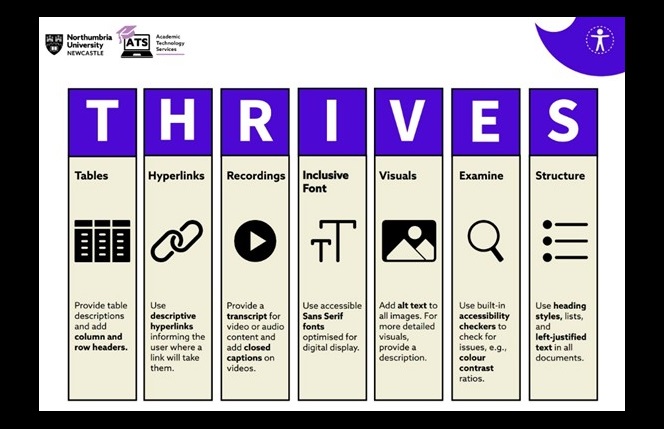
A ‘plus one’ approach was introduced in the Staff Digital Skills Programme (staff access only), the staff and student Accessibility toolkits were refreshed, Accessibility-First guidance and training was rolled out and TEL colleagues co-led the International Ally User Group, a global community focused on advancing digital accessibility through shared practice, peer support, and sector-wide collaboration. Learning sessions were delivered on Empowering Learning with MS 365: Assistive Technology Tools for Neurodivergent and All Learners; Ignite creativity: video scenario using AI tools; and Inclusive Design for Academic Content: Sharing the learning journey in achieving accessibility.
Library
Diversification of Reading Lists
This is one of two areas of work in Phase Three of the Amplifying Black Voices project for which six student ambassadors were recruited to collaborate with Library teams. A staff and student toolkit has been developed in collaboration with student ambassadors and academic staff to support the academic community to create reading lists that promote inclusivity, broaden students’ understanding by including diverse perspectives and respond to demand for more representative curricula. The toolkits provide information around useful resources that can be added to reading lists, promote essential texts within this area and encourage students and academics to challenge their subjects, as well offer support to academic colleagues creating or reviewing their lists. The toolkits - https://library.northumbria.ac.uk/readinglists/decolonising - have been added to the support pages for academic colleagues, and to the Project webpages.
Sport
To diversify participation and enhance access to sport, Northumbria Sport partnered with local disability sport clubs this year to deliver a series of free, inclusive sessions through the existing Just PLAY programme. Running from September 2024 to March 2025, the bespoke sessions included wheelchair rugby league, sitting volleyball, goalball, wheelchair basketball, as well as activities tailored for neurodiverse people and those with mental health support needs.
The sessions were fully subsidised by Northumbria Sport and included equipment and coaching. The series also highlighted the recently signed Memorandum of Understanding with Northern Allstars Goalball Club, enabling regular student engagement while supporting the club's long-term growth. A total of 68 disabled and non-disabled participants attended across the six sessions, creating shared experiences and expanding perceptions of inclusive sport on campus.
Postgraduate Research
The Postgraduate Research (PGR) community is one of the most diverse in the Northumbria University ecosystem; more than a quarter are international and over half are female.
The Graduate School offers a range of targeted initiatives to address inequalities and support candidates from under-represented groups to engage and remain in doctoral study. All findaphd adverts include a statement outlining Northumbria’s commitment to an inclusive research culture, and all UKRI funded students have access to the Disabled Students’ Allowances (DSA) to support additional study-related costs incurred in relation to a Disability. UKRI and Northumbria funded stipend holders are eligible for UKRI rates of maternity and adoption leave pay, and all PGR students are eligible for up to 2 weeks of paternity leave as well as unpaid parental leave as the secondary parent of a child.
The Graduate School has anEDI representative and offers Unconscious Bias training each semester for new students and supervisors.
There are a number of financial support opportunities offered to those from racially minoritised UK-domiciled students including:
- One fully funded scholarship and a further five fee scholarships offered through pro:NE,
- One ringfenced award through OnePlanet DTP, which also provides an applicant mentor programme and engages in outreach to increase the low engagement of marginalised ethnic groups.
- Two ringfenced studentships through NINE DTP the Action for Equality Scheme.
The ReNU CDT – a cross-institutional Renewable Energy Centre for Doctoral Training – has a key objective to recruit more diverse and inclusive cohorts of Doctoral Carbon Champions and EDI values are embedded throughout, with a current PhD cohort of 34% female and 22% from a minority background which exceeds the overall averages for EPSRC sponsored students.
Scholarships are also offered through the philanthropical initiative Higher Education Without Barriers to students from low-income backgrounds.
The BISCOP Collaborative Training Partnership led by Proctor & Gamble has a dedicated EDI action plan for the PhD studentships based at Northumbria, delivered through an EDI Delivery Group working in partnership with other partner HEIs to monitor equality data throughout the student lifecycle from application through to interview, offer, acceptance and successful completion of the studentship.
You might also be interested in...
Latest News and Features
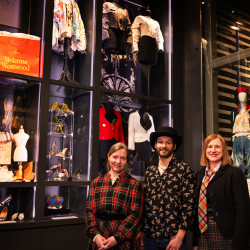
Northumbria University research unlocks the secrets of Vivienne Westwood's craft in a major new exhibition
A fashion researcher and educator from Northumbria University has created what is believed…
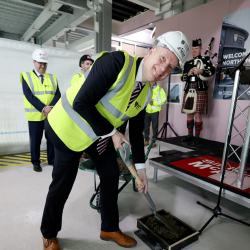
NESST topping out ceremony attendees receive traditional tankards to celebrate build milestone
Topping out ceremony marks pivotal moment for centre backed by £50 million investment set to…

From Netflix to Newcastle Northumbria graduate uses AI to revolutionise film and TV production
A Northumbria University graduate who co-created Bangkok Breaking — one of Thailand's biggest…
Northumbria University researcher brings death-positive arts festival to libraries across England
An arts festival exploring death, dying and end-of-life choices — led by a Northumbria University…
Northumbria University spinout achieves CE marking for deep lung breath sampling device — a first backed by peer-reviewed research
A medical device company spun out of Northumbria University has reached a significant milestone…
Northumbria University's IT recycling initiative recognised as national best practice
The equivalent weight of one and a half double-decker buses' worth of IT equipment has been…
Scientists solve decades-long mystery about why Saturn appears to change its spin
Researchers at Northumbria University have used the most powerful space telescope ever built…

Northumbria University professor named among UK's most outstanding health and care research leaders
A Northumbria University professor has been appointed as one of the UK's most influential health…
More events
Upcoming events

From sustenance to complete nourishment in a changing and uncertain climate
Ellison Building A, 001 (ELA 001)
-

Broken Bonds: New Perspectives on Marital Breakdown
The Great Hall
-

Smarter Supply Chains: Digital Innovation for Cost, Efficiency & Carbon
Northumbria University
-

Culture in Conversation: Rethinking Leadership & Organisational Practice
CCE1 Newcastle Business School
-
