
As part of the EDI Report 2024-25, read about progress at Northumbria under Theme 2: 'Take Action to Eliminate Barriers'.
Select the relevant link below to navigate to a specific desired section or continue reading the full content:
- Pay Gap Summary
- EDI Initiatives
- Campus Accessibility
- Learning and Development
- Reverse Mentoring
- Shadow Chair Initiative
- Student Inclusion
- Removing Barriers to Sport
- Graduate School: Removing Barriers to Participation
- University Library
- Graduate Futures
- Northumbria Students' Union (SU)
- Faculties and Departments
- Centre for Health and Social Equity
Pay Gap Summary
Northumbria has an ambitious aim to eliminate pay gaps by 2030. In 2024-25, the university made modest progress in narrowing the gender pay gap, with the mean gap reducing to 10.7% and the median to 13.9% from 11.4% and 15.8% respectively. While disparities remain, particularly at senior levels such as grade10 (University Executive), where the gap stands at 16.5%, most grades show no gap at the median, suggesting equal pay within grades but continued underrepresentation of women in leadership roles. Pay gaps within staff groups are notably smaller, with academic staff showing a mean gap of 7.8% and professional support staff just 2.4%, though workforce composition continues to influence the overall figures.
Encouragingly, the headline ethnicity pay gap has closed, with ethnic minority staff earning slightly more than white staff on average. However, intersectional analysis reveals deeper inequalities, particularly for ethnic minority women, who face a mean pay gap of 13.2% compared to white men. Disability pay gaps have narrowed significantly, falling to 6.3% at the mean, though disabled staff remain underrepresented in senior roles. The LGBTQ+ pay gap stands at 8.2%, with wider disparities observed within specific staff groups.
The pay gap figures are combined for both Northumbria University and Northumbria University Services Limited, analysing key characteristics such as area of work, staff group, age and service length. The full report explores pay disparities for gender, ethnicity, disability, and LGBTQ+ status and outlines how these will be addressed through proactive action to reduce occupational segregation, increasing representation of women in senior academic roles, and prioritising support for ethnic minority women in professional support roles. Strengthening disability inclusion and improving data quality – especially around disclosure rates for protected characteristics – are also key to enabling more effective monitoring and action planning.
EDI Initiatives
Vice-Chancellor's Diversity and Inclusion fund (VCDF)
The Vice-Chancellor's Diversity and Inclusion Fund (VCDF) provides funding for initiatives and activities that contribute to a culture of diversity and inclusion across the University.
The fund welcomes applications for a variety of EDI initiatives, and this year saw the introduction of ‘themed call outs’ designed to encourage applications for projects which directly support the achievement of Northumbria’s strategic priorities. Themes included:
- Addressing barriers to disclosure of EDI Characteristics (demographic data)
- Addressing barriers to inclusion
- Contributing to diversifying leadership
In 2024, the application process was streamlined to fast-track applications below a £200 spend. This year the panel approved applications which contributed to ‘Taking Action to Eliminate Barriers’ and ‘Fostering Inclusion and a Sense of Belonging’. Projects this year have included:
Using Student Voice to shape our Understanding of Identities
Project synopsis: This project supports delivery against the Race Equality Charter action plan. It does so by building on consultative and co-creative workshop models developed in DACI. Findings will be captured and shared as a range of display materials.
The Work (Wear) Place
Project synopsis: To create fitted storage within a designated room in the Student Law Office to store and provide donated office wear clothes to students in need of the same.
Make Space – Inclusive Making for Students and Staff
Project synopsis: A pilot project offering inclusive, confidence-building making sessions for students and staff, increasing access to technical spaces and promoting diversity, visibility, and belonging within Northumbria’s workshop environments.
Successful projects completed in the previous year were presented to EDI Committee for review as part of our continuous improvement.
DFN Project Search
2024 saw us welcome seven interns onto our second cohort of DFN Project Search, a year-long supported internship programme for young people with autism and/or a learning disability, in partnership with Newcastle City Council, City Learning, DFN and Sodexo.
In addition to Northumbria and Sodexo placements, this year saw the offer expand to include catering provider Chartwells host placements at Cafe Central, and a new placement with Accenture at Cobalt Business Park. This year we introduced a Priority Onboarding Scheme to adapt the recruitment process for interns as and when suitable roles arise across the University, and at the DFN Annual UK Conference in November 2024, the programme and three colleagues were ‘Highly Commended’ across two award categories. Once again we held a graduation ceremony for the interns, attended by placement hosts and families and all partners in the programme.
Recruitment for the 25/26 cohort was concluded in the late spring and we will welcome eight interns onto Cohort 3 in September 2025.

Campus Accessibility
A feasibility assessment was undertaken for an additional Changing Places facility for City Campus East to accommodate the needs of staff and students based in buildings at that location. Accessible toilets and lift ‘Out of Order’ signage has been updated to include signposting to AccessAble to locate the nearest alternative facility. Sutherland Building doors at the ramped entrance have been automated and ‘hold open’ devices were fitted to another two doors. The lift in Sutherland Architecture Studios is being replaced with an accessible one.
Learning and Development
Northumbria’s new Leadership Retreat
June 2025 saw the introduction of our new Leadership Retreat; a five-day immersive development programme for colleagues who lead and manage others, aligned to Northumbria’s five Behaviours. This bespoke programme is designed to:
- Enable colleagues to better understand themselves, understand others and their impact on people
- Develop empathetic, compassionate, people-focused leaders who lead inclusively
- Provide the knowledge and skills to be able to effectively lead high performing teams to successfully deliver the University strategy
- Enable colleagues to develop the skills so that they can influence, and have challenging conversations
- Develop confidence to be bold, bring new ideas to life, make a difference and overcome barriers
- Create a leadership community who understand and lead through Northumbria Behaviours
Twenty colleagues from both academic and professional support roles participated in the first cohort, reflecting on their leadership roles, and exploring their impact and the legacy they want to leave as leaders. Three cohorts are planned for 25/26 and applications are open to colleagues across the University in people leadership roles.
University-wide Leadership and Development Programmes
In 2025, we continued to invest in leadership development programmes that support underrepresented colleagues and promote diversity within senior roles across the University. These initiatives are aligned with our broader commitments to equity and inclusion, and aim to create pathways for progression, visibility, and influence.
Advance HE’s Diversifying Leadership Programme
In 2024/25 eight colleagues participated in Advance HE’s Diversifying Leadership programme, which supports early-career academics and professional services staff from Black, Asian and minority ethnic backgrounds to develop their leadership potential. Since 2021, 31 colleagues have been supported through this initiative. Upon completion all participants join the Diverse Leaders at Northumbria (DLAN) group, which meets regularly with the Deputy Vice-Chancellor to foster dialogue and influence around inclusive leadership. Feedback from participants who have completed the post-programme survey suggested that the majority have been able to apply the learning from the programme in their current role and that it was useful to prepare for a leadership role. 55% had applied for a promotion or progression opportunity following the programme, of which 36% were successful. Participants found guidance from the Sponsors to be useful.
Aurora Women’s Leadership Programme
Six women took part in Advance HE’s Aurora Programme this year. The programme explores key themes such as identity, impact, core leadership, and adaptive leadership skills, and includes an action learning set to support peer development. To date 43 women have been supported to participate. Feedback from participants who completed the post-programme survey suggests that 82% of colleagues found this programme useful in preparing for a leadership role and 91% felt inspired to apply learnings from the programme. 55% had applied for a promotion or progression opportunity following the programme, of which 36% were successful.
Senior Women’s Leadership Development
This year two women attended Advance HE’s Senior Women’s Leadership Development Programme. Designed for women in senior roles seeking to expand their leadership impact, the programme covers strategic areas such as institutional finance, governance, and personal leadership legacy.
LGBTQ+ Leadership Programme
We continued to invest in leadership development for LGBTQ+ colleagues through the Stonewall LGBTQ+ Leadership Programme, funding a place for one colleague to attend this year. Designed by and for LGBTQ+ leaders, the programme blends expert-led sessions with peer learning to explore how identity shapes leadership.
Reverse Mentoring
Northumbria’s Reverse Mentoring Programme continues to support inclusive leadership and amplify under-represented voices across the University. Originally piloted in 2023–24 with five mentoring pairs from the BAME Staff Network, the programme has since expanded to include women, disabled and LGBTQ+ colleagues as mentors.
Designed to foster dialogue between senior leaders and colleagues with lived experience of protected characteristics, the programme is grounded in the principle that insight can be shared upwards. Reverse mentors lead conversations focused on identity, inclusion, and institutional culture, challenging assumptions and informing more inclusive decision-making.
Feedback from previous cohorts has highlighted the programme’s transformative impact. One reverse mentee shared:
“It has helped me understand alternative points of view from someone with lived experience. Our discussions have raised my awareness and understanding and informed my leadership.”
Mentors have also reflected on the value of the experience:
“I’ve built a great working (and friend) relationship with my mentee, and we have agreed to keep in touch moving forward.”
“Feeling safe to explore difficult topics with someone at the institution I wouldn’t normally have exposure to.”
“Reverse mentoring means imparting my experiences as my knowledge on my mentee and giving them the space to think about how their bias or prejudices might affect their working/personal life.”
As the programme continues to grow, it remains a cornerstone of Northumbria’s commitment to embedding inclusive thinking across all levels of the University.
Shadow Chair Initiative
The Shadow Chair initiative allows colleagues not normally present in committees to be involved in decision making and interact with University Executive members. Seven colleagues shadowed the Chairs of Education Committee, Research & Knowledge Exchange Committee, EDI Committee, Research Culture Committee, Student Access and Success Sub-Committee, and Strategic Delivery Committee.
The process has given Committee Chairs the opportunity to hear views from those working in roles not traditionally members of those committees. Following the pilot in 2023-24 for racially minoritised colleagues, this year we expanded the scheme to include Disabled and LGBTQ+ colleagues who are under-represented in these forums.
EDI Learning
In 2025, we continued to deliver a comprehensive EDI learning offer to support inclusive practice across the University. Our programme combined scheduled training, bespoke sessions, and self-directed learning, tailored to meet evolving staff needs and foster a culture of inclusion. We also supported colleagues to attend external training and events
In addition to our regular termly training, we hosted a variety of events including guest speaker talks, specialist-led workshops, awareness activities and film screenings. These covered a wide range of inclusion topics and were supported by an expanding library of online resources, enabling flexible, on-demand learning.
We continued to provide targeted learning opportunities focused on specific inclusion themes:
Understanding Race Bias eLearning Module
The Understanding Race Bias module encourages critical reflection on racial inequality and supports colleagues in identifying practical actions for change.
Domestic Abuse Guidance and Support
The resource provides clear guidance for colleagues who may be experiencing domestic abuse and for line managers on supporting individuals. It contains clear signposting to both internal and external support services and reinforces our commitment to creating a safe and supportive workplace. A separate e-learning course on supporting colleagues experiencing domestic abuse looks at the different forms abuse can take and how to support victim-survivors.
Introduction to Inclusive Language
In addition to scheduled sessions, we delivered tailored workshops to teams including ADSS and Engineering & Environment. The sessions explore how language shapes belonging and inclusion and encourages participants to reflect on respectful communication in a dynamic and evolving context.
T in Transgender Online Training
Following the success of the in-person sessions designed and delivered by Northumbria students, the content was adapted into an online resource for self-paced learning, available to staff via the intranet and to students via the Students’ Union. The resource is a practical introduction to transgender issues and the different lived experiences faced by transgender people.
Broader EDI Training Engagement
Other EDI e-learning programmes include Allyship, Effective Bystander and Tackling Gender Bias, as well as Inclusion Essentials.
Neurodiversity Guidelines
A group of colleagues with a common interest in neurodiversity from both lived experience and research perspectives came together throughout 2024 to author a proposal for best practice and recommendations for colleague neurodiverse inclusion at Northumbria. The proposal was adapted to create a Neurodiversity Guidance resource for colleagues encompassing relevant legislation, definitions, support, advice for line managers, supporting students and adjustments including communication, the work environment and assistive technology.
Student Inclusion
Our commitment to eliminating barriers for our students has continued, much of which is driven by our APP. Some examples include:
NU Belong is package of practical support which supports around 200 students each year who are Care Leavers, Estranged, Student Carers and Sanctuary Scholars. With a designated named contact throughout their studies, students meet with a practitioner to discuss academic, financial, and personal wellbeing concerns, providing a holistic support approach offer. This year over 75 students were supported to secure Short Extensions and PECs.
Peer Wellbeing Advisers. A peer support model was introduced this year to support Widening Participation students who research shows are disproportionately impacted by mental health issues. 48 drop-in sessions were attended by over 1,000 students this year, facilitated by Advisers who had received 20+ hours of training.
Technology Enhanced Learning
The Digital Larder Service provides free laptops to disadvantaged students and provides equitable access to the technology needed for academic success, linked to our Strategy 2030 and Strategic Delivery Plan. The Student induction video series – aims to reduce barriers to technology encountered by newly enrolled students. This year we held Student Voice Forums to gather feedback on the Virtual Learning Environment (VLE) usability and access to drive improvements to guidance and support, and an AV Accessibility checklist was introduced to ensure accessibility and inclusion are embedded in design when planning AV upgrades to teaching and meeting spaces.
Disability Collaboration Group
Northumbria joined a cross-university Disability Collaboration Group to deliver careers workshops for students at member universities (including Oxford, Cambridge, UCL, LSE, LJMU, and Birkbeck) who have a long-term health condition, disability, or identify as neurodivergent. By working collaboratively, we aim to offer a broader range of workshops and employers to engage with. Online workshops this year were:
- Blind in Business: Visually Prepared Workshop
- Finding and thriving in Internships (disabled students and neurodivergent students)
- Talking about Disability, the employer perspective
- Neurodiversity in the workplace – celebrating your strengths and thinking about the adjustments you might need
- Time to Talk about Mental Health and Careers
Graduate Futures also offered the following sessions:
- Why disclosing a disability, neurodiversity or specific learning difference can be of benefit in the workplace
- ADHD and the Workplace: Meet NU graduates
Ensuring Equity in Access, Success and Progression in Higher Education
A well-attended public lecture was given in May by psychologist, memoirist and author Professor Katriona O'Sullivan, hosted by the Inclusion and Social Justice Expert Group and supported by CHASE (Centre for Health and Social Equity). Professor O'Sullivan drew from her experiences of childhood shaped by her parents' heroin addiction, from poverty, teenage pregnancy and homelessness to graduating with a PhD from Trinity College Dublin to become an award-winning professor. She highlighted the importance for university staff to educate themselves on trauma and poverty to be able to support students who come from backgrounds of adversity. Attendees reflected positively on the session, with one commenting:
"I rarely get to feel emotionally moved in a lecture so this was a powerful experience and one that will stay with me as I engage with students in the coming years."
Removing Barriers to Sport
The Daily Mile Challenge launched in February 2025, a 25-day physical activity initiative co-designed to remove barriers for staff and underrepresented student groups. The initiative targeted four student groups notably underrepresented in our programmes: first-generation students, BAME students, commuter students and mature students, as well as staff.
Through consultation with low-engagement societies and collaboration with the Northumbria Students’ Union, key motivators for participation were identified: flexible scheduling, free access, inclusive environments, and supportive leadership. These insights shaped a highly adaptable campaign – "Your Mile, Your Way" – which empowered individuals to move for at least one mile per day, in whatever way suited them, for a total of 25 days. Activity was logged via Strava, with prize draws and in-person walks and runs offered to provide structure and motivation.
Of the 419 participants, 222 came from underrepresented backgrounds and 90.7% met at least one widening participation criterion. 46% increased their activity levels; 99% became moderately to highly active; 82% reported improved wellbeing; 86% found daily movement easy or habitual. Overall, 97% rated the programme positively with 72% rating as excellent. Participants logged activity across 20 countries, with over 19,000 miles recorded in 7,671 activities.
The Daily Mile Challenge, supported via the Wellbeing Network, exemplifies inclusive practice and cross-institutional impact. The campaign has since been adopted as a flagship programme within the active wellbeing offer and will return in March 2026. Additionally, a breakout session was delivered at the BUCS Conference in July 2025 to share best practice with the HE Sport network and the programme was shortlisted for a BUCS Award in the ‘Active Wellbeing’ category.
Graduate School: Removing Barriers to Participation
The Graduate School has continued to ensure barriers to participation are addressed, including:
- NUdata Centre for Doctoral Training (CDT) recruitment incorporates a range of actions to remove barriers for applicants, such as removing the requirement for project proposals at application stage, providing some interview questions in advance, the availability of funding to support attendance at interview and quiet rooms being made available during CDT week.
- ReNU - a cross-institutional EPSRC funded Renewable Energy CDT led by Northumbria plans cohort activities and visits within the UK so international students are not impacted by visa restrictions, including a trip to the Centre for Alternative Technology in Wales. It has also begun setting up a buddy/peer mentoring programme to address female student withdrawal rates.
- The Northern Bridge Equality Action Award initiative funds up to 2 studentships for applicants with protected characteristics not in receipt of an award of a funded position, and across the consortium are six EDI Action Award Research Fellows, three of whom are Northumbria students working on a review and repair taskforce and activities such as a PhD Jargon Buster.
- The International Mobility team has continued to promote opportunities with departments to embed short programmes within the core activities of modules. Notable success has been seen in programmes such as Nursing and Physiotherapy which lack opportunities due to the structure of the academic calendar, including a six-week traineeship exchange with a partner in Finland for nursing level 5 students, and a five-week placement in Fiji for Physiotherapy level 5 students, supported by the Turing Scheme.
- A ‘Research of Excellence’ programme created with the Psychology department supports undergraduate students to take part in short supervised research placements in high-ranking international institutions such as Toronto University. The model was also adapted to support six students to access a research placement opportunity in Chile.
- Funding from the Access and Participation Plan (APP) budget has supported eight WP students unable to commit to the 28 day minimum placement term, to do one to two-week international programmes allowing them to experience overseas mobility programmes.
University Library
Listening sessions
Several listening sessions took place in person and online in January and February 2025 as part of Phase Three of the Amplifying Black Voices APP project. Feedback was gathered on a variety of themes including Library spaces and resources as well as support services and accessibility. The response rate from the survey was 49 and engagement at the sessions was high. The January sessions coincided with intakes of large numbers of international students and therefore they experienced an additional warm welcome and could be signposted to services and buildings.
Feedback analysis suggests that raising student awareness of academic integrity and referencing support could be an area for improvement, and the project has explored ways to enhance this.
A lot of the feedback relates to services and spaces already on offer and the Library as a welcoming place was a common theme alongside more inclusive spaces. Short video reels linked to the feedback and ideas generated from student ambassadors were created and shared on the Library’s Instagram account. A dedicated web page - https://library.northumbria.ac.uk/Amplifying-Black-Voices/showcase - was created to showcase the creative video content produced by the student ambassadors. These short films also explore themes of identity, belonging and visibility within the University experience. The aim with embedding this content into one accessible space is to amplify these voices further and provide a lasting resource that encourages reflection, conversation, and connection across our University community.
Graduate Futures
EDI Careers Hub
In May the ‘Equality, Diversity and Inclusion in Careers Hub’ launched. This contained EDI careers information to support students from all backgrounds. The Hub was developed in collaboration with Northumbria students (Student Inclusion Consultants and Student Career Advocates) and supported by partners from the other regional universities (via the regional network) and discussions with Northumbria’s HR team.
The information on the hub includes:
- Rights to equity in recruitment and the workplace
- External organisations that offer support
- Opportunities (internship programmes, funding opportunities etc.)
- Support to develop employability skills and career planning
- Financial Support
- Finding Inclusive Employers
- Starting in the Workplace
- Care Experienced Student Support
- Disability, Neurodivergence and Health Conditions
- Estranged Student Support
- Race and Ethnicity
- Sanctuary Scholar Support
- Social Mobility
- Student Carer Support
- Transgender and Non Binary Student Support
In the first month there were 212 views with an average of 6 visitors per day. We will measure engagement in the coming year, promote to students and staff and refine content. We have already created some video/social content for promotional purposes aimed at final year, graduating students in particular.
Faculty-Focused Web Pages
For 2024/25, thirteen webpages were developed containing information which proved popular among staff and students. The pages offer deeper insights into various industries, addressing student feedback that indicated a lack of knowledge about opportunities beyond their degree-specific industry options. These pages aim to broaden students' understanding of career paths and enhance their participation in degree-level careers.
Careers Fairs Accessibility Measures
To make our 2024/25 fairs more inclusive, we consulted with the Student Inclusion Team to draw on their experiences. They also advised us on the wording of our communications and sent targeted messages on our behalf. We established a range of accessibility measures for students with sensory differences or those who find large events overwhelming or challenging to navigate, including:
- Quiet Half Hour at the start of each fair. 123 students attended the Quiet Half Hour at our Part-time Jobs Fair, while 105 students attended the Quiet Half Hour at our Graduate Jobs & Placements Fair.
- Support Zone stand, with Student Inclusion Consultants and Graduate Futures staff available to support students on a one-to-one basis.
- Quiet space for students.
- Video content before the Fairs, including a tour of the venues and top tips for making the most of the events.
- Visible staff and student assistants in branded t-shirts.
- Charter Marks (e.g. Disability Confident and Stonewall) displayed on employer stand information.
- Hard copies and a QR code to download the floor plan, for students who found the app and TV displays challenging to access.
- Targeted email with tips on how to approach employers at the Fair.
Levelling up Law
The Levelling up Law mentoring scheme ran for the third time in 2024-25. The scheme matches second year Law students with legal professionals predominantly based in London. The scheme aims to support students’ career decision making and provides access to role models who can provide insight, information and professional connections to increase the awareness and confidence of Northumbria students in engaging with City Law firms.
The scheme is run collaboratively by the Law School Employability Leads, Graduate Futures and the Alumni & Philanthropy team. This year ten students took part, all of whom met at least one WP criteria. Organisations involved included the Metropolitan Police, Clifford Chance and the Bank of England. Nine of the ten mentors were Northumbria University alumni.
In October 2024 the scheme was awarded Enhancement Bid funding, allowing participants to visit their mentors in the workplace. Alongside the guaranteed funding from Alumni and Philanthropy, seven students were supported to make a trip to London.
Most mentees indicated an increase in knowledge and confidence as a result and gave positive feedback of their experience.
"It has helped me massively with my confidence, and the ability to communicate with professionals. This experience has really eased anxiety around this. This scheme has also made being able to travel into London and gain some legal experience a lot more accessible as well."
Female Accelerator Programme
The Female Accelerator Programme is funded by the Susan Dobson Trust, which aims to support female founders in the Northeast. The programme provides a series of workshops for women to develop their business ideas and enhance their business skills. Participants gain access to resources, including mentorship, networking opportunities, and the chance to pitch for £15,000. 10 places were offered, 9 accepted and 8 started the programme.
The programme is structured to support female founders with business growth, sales, marketing, and personal development. By connecting participants with industry experts, the accelerator fosters a collaborative environment where women can share experiences.
International Mobility BAME Focus Group
In December the International Mobility team held a focus group for students who had completed an international mobility experience and identified as BAME. It was useful for our team to understand their experience pre departure and whilst in country, to increase participation in mobility experiences and to identify if/when/where there are issues/concerns so we can tackle these at an early stage.
Pre-entry - Graduate Futures & Supported Entry schemes at Northumbria
The Graduate Futures team provide pre-entry provision support to raise awareness of the Graduate Futures service, encourage early engagement with services, engage harder to reach students in first year of study and provide targeted support for WP students to encourage engagement with service, improve career readiness and support towards overall retention.
The team were involved in a range of activities to engage pre-entry cohorts, including university wide open events and supported entry schemes, including the supported entry scheme Destination Northumbria. To be eligible for the scheme students must meet eligibility criteria which cover several widening participation characteristics.
The team engaged with Destination NU to deliver a careers and part-time job workshop, provide pre-recorded webinars on what to do in the first year and interview skills, and attend supported entry welcome and celebratory events.
Northumbria Students’ Union (SU)
Building Belonging on Campus
Over the past three years we have undertaken analysis of participation in Students’ Union by different Widening Participation groups of students against the University population, to inform our strategy and work in relation to EDI as well as building a feeling of belonging on campus. The past three years have seen growth in participation amongst BAME students in academic representation and in the numbers of students who are first in their family to come to university and who move into our leadership positions. We have worked to ensure diversity in student voice to meet the needs of marginalised and underrepresented students. All faculties have an Equity and Inclusion Rep and an International Students Rep to work with staff at senior faculty level.
Various research was undertaken to inform University policy. This included the sense of belonging to campus for BAME students, the importance of prayer and spiritual space for Muslim students for the relocation of Muslim Prayer Facility and future services, preferences around food provision within the Students’ Union and student wellbeing linked to hours of part time work.
Food Bank
This year 507 students used our Food Bank 1,113 times. Of those 62% identified as BAME. We also continue to provide free period products across all buildings on campus.
Mental Health First Aiders
320 students are accredited as mental health first aiders to provide signposting to their peers.
Student Voice
This year the Students’ Union submitted a response to the EHRC consultation regarding trans individuals and women following the Supreme Court decision on the Equality Act. We also lobbied for inclusion of student friendly amendments to the Renters’ Bill that would otherwise discriminate against international students and those without family support.
Several recommendations were made in the annual Quality Review to the University relating to EDI. These included incorporating faith as a student characteristic to understand student experience and academic outcomes, mapping international student attainment alongside BAME UK students to compare outcomes as part of Access and Participation, adjustment of resits to support international students and a review of fee structures to better match the student experience.
Faculties and Departments
Art, Design and Social Sciences
As part of the national Festival of Social Sciences (FOSS), funded by the Economic and Social Research Council (ESRC) which is part of UK Research and Innovation, colleagues hosted several events throughout October and November. The Regional programme was co-hosted by Northumbria University and Newcastle University and was centrally organised by Research and Innovation Services.
Events included: Community Safety Unlocked; Autistic Community and Creativity; Flash Writing Re(Treat) for Neurodivergent Creatives, partnering with the Neurodivergent Writers' Group @ New Writing North; Crafting Connections: Exploring Storytelling Wellbeing Through Paper Art and Eternal You. Contributors and attendees included University strategic partners as well as members of the public, civic groups and third sector organisations.
The Department of Design, Arts and Creative Industries held several Listening Sessions on Space and Facilities in the Lipman Building, as well as Demystifying Workload sessions for colleagues in the Department.
Colleagues in Humanities collaborated with the Malcolm Bradbury Trust to work on Creative Writing provision and to support level 7 students from WP backgrounds with limited access to Creative Writing in Higher Education.
TICE (This is Creative Enterprise) works with Northumbria students and graduates, within Fashion Communication and Education pathways, offering paid industry experience and co-creation opportunities, helping remove early-career employment barriers. All TICE projects are structured to meet clear learning outcomes aligned with inclusive pedagogy, reflecting Northumbria’s values of embedding EDI in curriculum, outreach, and impact. Around 300 young people, aged 13–18, from 24 schools across the region attended 3 TICE activities on campus, taking part in activities including TICE Project Days: Showcasing creative work and engaging in hands-on workshops, Work in Progress days (involving feedback and insight from Fashion colleagues), and TICE Fest (an annual celebration of creativity, future pathways, and student exhibitions).
ADSS has an active research community, with key EDI research projects which relate to our strategic ambitions in creating new knowledge. Several of these activities are outward facing, which contribute to the city and region, as well as fulfilling our strategic priorities. These include:
- Involvement in the IDRT on Gendered Violence
- The AHRC project on Liberating Histories in Humanities
- The Online Interactive Guide to Women's Movement Magazines
- The MARGINALITIES Research Group and the event ‘Celebrating Windrush, Challenging Myths’ in June at Newcastle City Library
- The ‘Laura Fish Memorial Event/Celebrate Black British Women’s Writing’ in March
The Transforming Together Network project is led in partnership with Agenda Alliance and Changing Lives and is part of a regional project entitled ‘Transforming Services for Women’s Futures’. It brings together support services and academics to work together to enact change in support services with and for women with multiple support needs.
The Institute of Humanities Seminar Series frequently host topics with EDI themes and ensures a diversity of speakers and topics across gender, race and ethnicity, disability, and sexuality.
Business and Law
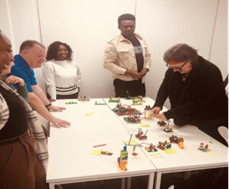
This year cross-Faculty Inclusive Student Curriculum Design workshops were held with Health and Life Sciences for Foundation Year tutors, using innovative methods like Lego Serious Play.
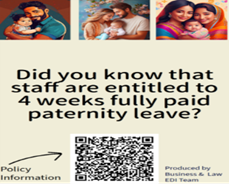
The Faculty, in collaboration with the Parent and Carers Network, launched a campaign to promote parental leave. This included engagement through managers, a poster campaign and events to encourage the take up of paternity leave.
New staff joining the Faculty now benefit from an enhanced approach to local induction with structured induction programmes, underpinned by clear, locally tailored guidance for Line Managers. The local induction guidance was introduced by EDI leads to drive a more inclusive, tailored induction experience in the Faculty. A 2025 survey of all new starters found overwhelming satisfaction with Faculty induction support.
Several EDI-related training events and seminars were held throughout the year, including:
- A one-hour student-led training session to explore the lived experiences of dyslexic students studying at Northumbria.
- A World Menopause Day, a Faculty talk and Q&A session on research into menopause in Tribunal claims in England and Wales.
- A Modern Law Review funded event ‘Living a Reproductive Life in the Workplace’ held in the Law School.
- The Gender Violence and Abuse IDRT conference entitled: ‘Changing Public and Professional perceptions of Gendered Violence and Abuse through research and policy implementation’ was held in the Great Hall, Sutherland Building. The event was supported by Northumbria University's Gendered Violence and Abuse Interdisciplinary Research Theme and the Faculty of Business and Law.
- A Parents and Carers Network session exploring the potential for networks to become powerful actors in the employment relationship and whose interests do these networks really serve.
- A webinar entitled: ‘Meaningful Work: An intersectional perspective’ was delivered by the Responsible Business research group with a leading panel of experts.
- A talk entitled: ‘A History of Disability Rights’ in celebration of 30 years of disability rights legislation in equality law in the UK
Engineering and Environment
The Faculty has taken a multi-layered approach to removing structural and cultural barriers through infrastructure, policy, and staff support. A building review of Ellison and Sutherland identified step-free access issues resulting in the installation of automated door openers at the access point in Sutherland. A Royal Geographical Society workshop was held on accessible fieldwork. MPEE conducted a STEM accessibility audit and developed inclusive resources.
A Family Leave toolkit was created in Geography with a focus on the practicalities of reintegrating into the Department’s teaching and research environment following a period of maternity or paternity leave. The Organisational Development Team worked with MPEE and MCE colleagues to increase academic line management capability.
CIS launched a Women’s Social Hub and are planning to launch an LGBTQ+ Focus Group.
Training and awareness activities included delivery of Unconscious Bias training, an Inclusive Language session and joint coffee breaks hosted by hosted by MCE/MPEE to foster informal EDI dialogue.
Health and Life Sciences
Mentorship schemes are established in some departments and being introduced in others. These schemes provide academic staff mentoring, to support colleagues engaging with the ADR process to achieve their career goals. Psychology have augmented this with a buddy scheme for new colleagues as part of their local induction support.
Researchers in the department of Social Work, Education and Community Wellbeing were given opportunities to take part in teaching and observe interview panels, to support their career development. Listening groups were held with part-time colleagues, leading to a review of workload allocations and enhanced support from line managers.
In Psychology, colleagues were invited to join a group for co-creating the ‘Value Me’ framework for use with early and mid-career staff, with external collaboration from University of Portsmouth.
Spiritual commons and the Parental Room are completed and opened at Coach Lane.
The Psychology department is continuing to work on bringing a Living Library for Mental Health to the university. The department is developing the training package with the Student Wellbeing team and Student Inclusion consultants.
Research and Innovation Services
EDI in Internal Selection Processes for Demand Management in Research Funding
Demand management in research funding involves processes used by research funders and institutions to control the volume and quality of applications for research funding, often to maintain acceptable success rates, encourage high-quality proposals, and manage resources. Our internal selection procedures for research funding opportunities, including the UKRI Future Leaders Fellowships (FLF), align with sector best practice on EDI.
Northumbria’s approach has been recognised in UKRI’s own guidance, with elements of this contributing to their published recommendations.
Anonymised data is submitted for each FLF round, and the internal selection process description is updated. The most recent submission for Round 10 reflects Northumbria's commitment to transparency and continuous improvement. Following Round 10 and the review of UKRI’s report and internal data, refinements were made to the Expression of Interest (EOI) process which included:
- Widening Awareness: The FLF EOI opportunity was shared across multiple internal staff networks to ensure visibility among underrepresented groups.
- Data Consent and Confidentiality: A new question was added to the EOI form asking applicants for permission to access anonymised EDI data.
- Post-Round Survey Participation: UKRI’s survey on the EDI profile of applicants completed after each round, contributing to sector-wide monitoring and improvement.
Centre for Health and Social Equity
The Centre has continued to develop community engagement plans and activities in collaboration with RIS. Two experts by experience who have worked with some of our researchers have also completed two CPD modules on peer and participatory research approaches. The Centre delivered CPD courses on stigma to local authorities in England and Ireland, as well as internally.
North East Women’s Homelessness Alliance Launch
Through our engagement with communities, we were proud to host the launch event for the North East Women’s Homelessness Alliance, in July. The event was one of learning connection and collective action, bringing together experts and advocates to address homelessness in the region through a gendered lens.
You might also be interested in...
Latest News and Features
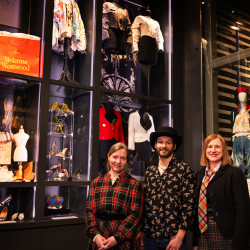
Northumbria University research unlocks the secrets of Vivienne Westwood's craft in a major new exhibition
A fashion researcher and educator from Northumbria University has created what is believed…
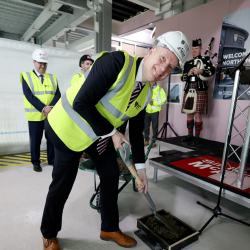
NESST topping out ceremony attendees receive traditional tankards to celebrate build milestone
Topping out ceremony marks pivotal moment for centre backed by £50 million investment set to…
From Netflix to Newcastle Northumbria graduate uses AI to revolutionise film and TV production
A Northumbria University graduate who co-created Bangkok Breaking — one of Thailand's biggest…

Northumbria University researcher brings death-positive arts festival to libraries across England
An arts festival exploring death, dying and end-of-life choices — led by a Northumbria University…
Northumbria University spinout achieves CE marking for deep lung breath sampling device — a first backed by peer-reviewed research
A medical device company spun out of Northumbria University has reached a significant milestone…

Northumbria University's IT recycling initiative recognised as national best practice
The equivalent weight of one and a half double-decker buses' worth of IT equipment has been…
Scientists solve decades-long mystery about why Saturn appears to change its spin
Researchers at Northumbria University have used the most powerful space telescope ever built…

Northumbria University professor named among UK's most outstanding health and care research leaders
A Northumbria University professor has been appointed as one of the UK's most influential health…
More events
Upcoming events

From sustenance to complete nourishment in a changing and uncertain climate
Ellison Building A, 001 (ELA 001)
-

Broken Bonds: New Perspectives on Marital Breakdown
The Great Hall
-

Smarter Supply Chains: Digital Innovation for Cost, Efficiency & Carbon
Northumbria University
-

Culture in Conversation: Rethinking Leadership & Organisational Practice
CCE1 Newcastle Business School
-
