-
Study
-
Quick Links
- Open Days & Events
- Fixed Block Degrees
- Real-World Learning
- Unlock Your Potential
- Tuition Fees, Funding & Scholarships
- Still Time to Apply
-
Undergraduate
- Application Guides
- UCAS Exhibitions
- Extended Degrees
- School & College Outreach
- Parents & Guardians
-
Postgraduate
- Application Guide
- Postgraduate Research Degrees
- Flexible Learning
- Change Direction
- Register your Interest
-
Student Life
- Students' Union
- The Hub - Student Blog
- Accommodation
- Northumbria Sport
- Support for Students
-
Learning Experience
- Real-World Learning
- Research-enriched learning
- Graduate Futures
- The Business Clinic
- Study Abroad
-
-
International
International
Ideally situated in the 5th best student city in the UK (QS Best Student Cities 2026), Northumbria University is a UK Top 40 University (Complete University Guide 2026) with a diverse community of 34,500 students from over 140 countries.
View our Global Footprint-
International Students
- Information for International Students
- Northumbria and your Country
- International Student Events
- Application Guide
- Entry Requirements and Education Country Agents
- Global Offices and Regional Teams
- English Requirements
- English Language Centre
- International student support
- Cost of Living
-
International Fees and Funding
- International Undergraduate Fees
- International Undergraduate Funding
- International Masters Fees
- International Masters Funding
- International Postgraduate Research Fees
- International Postgraduate Research Funding
- Useful Financial Information
-
International Partners
- Agent and Representatives Network
- Global Partnerships
- Global Community
-
International Mobility
- Study Abroad
- Information for Incoming Exchange Students
-
-
Business
Business
Northumbria University is proud to offer a range of Professional, Statutory and Regulatory Body (PSRB) approved & accredited courses and programmes. Explore our list of courses and programmes under our Education and Training page.
More on our Business Services-
Business Quick Links
- Contact Us
- Business Events
- Research and Consultancy
- Education and Training
- Workforce Development Courses
- Join our mailing list
-
-
Research
Research
Northumbria is a research-rich, business-focused, professional university with a global reputation for academic quality. We conduct ground-breaking research that is responsive to the science & technology, health & well being, economic and social and arts & cultural needs for the communities
Discover more about our Research-
Quick Links
- Research Peaks of Excellence
- Academic Departments
- Research Staff
- Postgraduate Research Studentships
- Research Events
-
Research at Northumbria
- Interdisciplinary Research Themes
- Research Impact
- REF
- Partners and Collaborators
-
Support for Researchers
- Research and Innovation Services Staff
- Researcher Development and Training
- Ethics, Integrity, and Trusted Research
- University Library
- Vice Chancellors Fellows
-
Research Degrees
- Postgraduate Research Overview
- Doctoral Training Partnerships and Centres
- Academic Departments
-
Research Culture
- Research Culture
- Research Culture Action Plan
- Concordats and Commitments
-
-
About Us
-
About Northumbria
- Our Strategy
- Our Staff
- Our Schools
- Place and Partnerships
- Leadership & Governance
- University Services
- Northumbria History
- Contact us
- Online Shop
-
-
Alumni
Alumni
Northumbria University is renowned for the calibre of its business-ready graduates. Our alumni network has over 253,000 graduates based in 178 countries worldwide in a range of sectors, our alumni are making a real impact on the world.
Our Alumni - Work For Us
In this article originally written for The Conversation*, Dr Thomas Cheney, Vice Chancellor's Research Fellow and Assistant Professor at Northumbria Law School in Northumbria University, discusses the implications of Space Junk.
A piece of space junk recently crashed through the roof and floor of a man’s home in Florida. Nasa later confirmed that the object had come from unwanted hardware released from the international space station.
The 700g, 10cm-long piece of hardware was expected to burn up, Nasa said. Even a relatively small piece of junk can cause considerable damage when falling from space.
This raises several important questions. Who is liable for damages caused by human-made objects that fall from the sky? Can anything be done to prevent this happening? Luckily, international treaties provide some answers to the first question, while recent developments help with the second.
The outer space treaty of 1967 says that the country that authorised the launch (known as the “launching state”) is responsible for damage caused to people or things on Earth. The UN’s liability convention, which came into force in 1972, also makes this liability absolute for damage on Earth or to aircraft in flight.
The concept of absolute liability means that responsibility applies regardless of whose fault it was. Countries are also liable for spacecraft and rocket sections launched by private companies. This is because article 6 of the outer space treaty makes nations responsible for the activities of their citizens in outer space.
So if a piece of space junk launched by one country lands in another, the launching state is responsible for any financial compensation that may result from the costs of damage or clean up. It is important to note that these principles relate to international law. A US object damaging US property is a matter for US law.
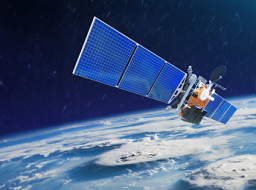
All objects in Earth orbit are falling towards Earth. Active satellites engage in “station keeping” to remain in their intended orbit. Inactive satellites – those that no longer work or are disabled in some way – will not be able to perform this task.
Their orbits will steadily drop until they re-enter the Earth’s atmosphere. Of around 11,000 satellites in orbit today, about 3,300 are estimated to be inactive.
There are two main options for best practice when the lifetime of an active satellite comes to an end. One is to either move the satellite into a higher orbit –- known as a graveyard orbit –- in order to delay the date of re-entry (by hundreds, or even thousands of years).
Another is to re-orient the satellite to ensure that it either re-enters in a manner that ensures it burns up in the atmosphere or that it can cause only minimal damage on the ground.
However, due to malfunctions or damage, some space objects still undergo an unplanned re-entry through the Earth’s atmosphere and can thus can land anywhere. Earth is big, however, so the risk of a given space object causing harm to people or property is low, particularly as a space object also needs to survive the searing heat of re-entry which causes many pieces of space junk to burn up.
However, space junk can sometimes reach the ground. Some, such as debris from Skylab, the first US space station, came down in western Australia in 1979 but caused no damage. Other space debris, like Cosmos 954, a Soviet nuclear-powered satellite, spread dangerous radioactive debris across northern Canada when it re-entered in January 1978.
While that clean up cost the Canadian government CA$14 million (about £5.3 million at exchange rates from four decades ago), the Soviet Union reimbursed the Canadian government for CA$3 million. This remains the most significant test of the space treaties and shows the limitations on the protections provided by international law because the compensation was a fraction of the clean-up cost.
The object that recently damaged the home in Florida was American, so that incident will not test the space treaties, as the incident occurred on US soil and will therefore be a matter for US law.
However, it is illustrative of the legal hazards of the proliferation of space objects without adequate end of life planning. The more objects launched into outer space, the more of them will return to Earth. Indeed, they will all eventually enter the atmosphere and not all of them will burn up in the process.
Mitigating space junk
Two sets of UN guidelines present an encouraging picture for what happens to space debris. Recent work to incorporate more long-term planning into these non-binding agreements encourages the development of end-of-life plans for space objects such as satellites.
The guidelines are primarily aimed at dealing with the growing problem of space debris rather than preventing objects from causing damage on Earth. However, planning for the end of a space object’s life will also reduce the risk of an impact on the ground.
A piece of space junk should re-enter on a trajectory that guarantees that it burns up or crashes somewhere it is unlikely to do damage. While the guidelines are non-binding, the liability provisions of the space treaties are not, thus motivating compliance by launching states.
The risk of a piece of space junk crashing through the roof of your house remains very low. As more spacecraft are launched though, the risk from falling space junk will edge up marginally. However, space law is on your side, and efforts to tackle the problem will reduce the risk to people and property.
*This article was originally published by The Conversation. Please see here for republishing guidelines.
Our North East Space Skills and Technology Centre will be a state of the art £50M facility developed by Northumbria, with investment from the UK Space Agency and the space and satellite division of industry giant Lockheed Martin.
Space brings together research from multiple fields including engineering (electrical, mechanical, information technology, communications, power, propulsion, aerospace), and science (physics, chemistry, biology, materials) to stimulate new ideas, enhance excellence and drive innovation in the exploration and use of space for humankind.
Northumbria’s Solar and Space researchers work to understand the physics of the Sun and all aspects of the solar-terrestrial connection to improve space weather forecasting.
This is the place to find all the latest news releases, feature articles, expert comment, and video and audio clips from Northumbria University
Northumbria University News is packed full of news and features covering everything from research projects and business partnerships to student and staff awards.
Latest News and Features
Northumbria University research unlocks the secrets of Vivienne Westwood's craft in a major new exhibition
A fashion researcher and educator from Northumbria University has created what is believed…
NESST topping out ceremony attendees receive traditional tankards to celebrate build milestone
Topping out ceremony marks pivotal moment for centre backed by £50 million investment set to…
From Netflix to Newcastle Northumbria graduate uses AI to revolutionise film and TV production
A Northumbria University graduate who co-created Bangkok Breaking — one of Thailand's biggest…
Northumbria University researcher brings death-positive arts festival to libraries across England
An arts festival exploring death, dying and end-of-life choices — led by a Northumbria University…
Northumbria University spinout achieves CE marking for deep lung breath sampling device — a first backed by peer-reviewed research
A medical device company spun out of Northumbria University has reached a significant milestone…
Northumbria University's IT recycling initiative recognised as national best practice
The equivalent weight of one and a half double-decker buses' worth of IT equipment has been…
Scientists solve decades-long mystery about why Saturn appears to change its spin
Researchers at Northumbria University have used the most powerful space telescope ever built…
Northumbria University professor named among UK's most outstanding health and care research leaders
A Northumbria University professor has been appointed as one of the UK's most influential health…
Upcoming events
From sustenance to complete nourishment in a changing and uncertain climate
Ellison Building A, 001 (ELA 001)
-
Broken Bonds: New Perspectives on Marital Breakdown
The Great Hall
-
Smarter Supply Chains: Digital Innovation for Cost, Efficiency & Carbon
Northumbria University
-
Culture in Conversation: Rethinking Leadership & Organisational Practice
CCE1 Newcastle Business School
-