
-
Study
-
Quick Links
- Clearing FAQs
- The Clearing Process
- UCAS Tariff Points
- Northumbria Clearing Form
- Clearing 2026
-
Undergraduate
- Application Guides
- UCAS Exhibitions
- Extended Degrees
- School & College Outreach
- Parents & Guardians
-
Postgraduate
- Application Guide
- Postgraduate Research Degrees
- Flexible Learning
- Change Direction
- Register your Interest
-
Student Life
- Students' Union
- The Hub - Student Blog
- Accommodation
- Northumbria Sport
- Support for Students
-
Learning Experience
- Real-World Learning
- Research-enriched learning
- Graduate Futures
- The Business Clinic
- Study Abroad
-
-
International
International
View our Global Footprint-
International Students
- Northumbria and your Country
- International Student Events
- Application Guide
- Entry Requirements and Education Country Agents
- Global Offices and Regional Teams
- English Requirements
- English Language Centre
- International student support
- Cost of Living
-
International Fees and Funding
- International Undergraduate Fees
- International Undergraduate Funding
- International Masters Fees
- International Masters Funding
- International Postgraduate Research Fees
- International Postgraduate Research Funding
- Useful Financial Information
-
International Partners
- Agent and Representatives Network
- Global Partnerships
- Global Community
-
International Mobility
- Study Abroad
- Information for Incoming Exchange Students
-
-
Business
Business
Northumbria University is proud to offer a range of Professional, Statutory and Regulatory Body (PSRB) approved & accredited courses and programmes. Explore our list of courses and programmes under our Education and Training page.
More on our Business Services-
Business Quick Links
- Contact Us
- Business Events
- Research and Consultancy
- Education and Training
- Workforce Development Courses
- Join our mailing list
-
-
Research
Research
Northumbria is a research-rich, business-focused, professional university with a global reputation for academic quality. We conduct ground-breaking research that is responsive to the science & technology, health & well being, economic and social and arts & cultural needs for the communities
Discover more about our Research-
Quick Links
- Research Peaks of Excellence
- Academic Departments
- Research Staff
- Postgraduate Research Studentships
- Research Events
-
Research at Northumbria
- Interdisciplinary Research Themes
- Research Impact
- REF
- Partners and Collaborators
-
Support for Researchers
- Research and Innovation Services Staff
- Researcher Development and Training
- Ethics, Integrity, and Trusted Research
- University Library
- Vice Chancellors Fellows
-
Research Degrees
- Postgraduate Research Overview
- Doctoral Training Partnerships and Centres
- Academic Departments
-
Research Culture
- Research Culture
- Research Culture Action Plan
- Concordats and Commitments
-
-
About Us
-
About Northumbria
- Our Strategy
- Our Staff
- Our Schools
- Place and Partnerships
- Leadership & Governance
- University Services
- Northumbria History
- Contact us
- Online Shop
-
-
Alumni
Alumni
Northumbria University is renowned for the calibre of its business-ready graduates. Our alumni network has over 253,000 graduates based in 178 countries worldwide in a range of sectors, our alumni are making a real impact on the world.
Our Alumni - Work For Us
Culture key to recovery and prosperity
Culture, heritage and creativity are essential to our future national prosperity, levelling up and recovery from crisis, according to a Northumbria University professor.
Professor Katy Shaw, Director of Cultural Partnerships at Northumbria University and Director of Creative Communities for UKRI/AHRC, is a commissioner on the Local Government Agency’s (LGA’s) ‘Cornerstones of Culture’ report, launched today.
The final report of the LGA’s Independent Commission on Culture and Local Government says that greater collaborative work between councils and cultural partners, combined with streamlined place-based funding from government, is crucial to supporting one of the fastest growing parts of the economy.
The independent commission was launched in March, chaired by Baroness Lola Young, exploring the role local culture can play in supporting recovery from the pandemic through a programme of stakeholder engagement events and a series of roundtable discussions across four themes: sustainable and inclusive economic recovery; health inequalities; social mobility, cultural education, and creative skills; and place.
Professor Shaw, who is a Professor in English and Creative Writing at the University, was asked to be an independent commissioner for the report and give her recommendations.
She said: “From Carlisle to Cornwall we have seen and heard from individuals, communities and organisations who are tackling some of the biggest challenges facing us all today – education and skills and to health and wellbeing to civic pride and identity – using culture as a vehicle for change making and boundary breaking.
“Covid created the biggest threat to culture in living memory and our report outlines how we must now respond to the challenge of enhancing resilience, sustainability, and support for publicly funded culture in the years ahead.
“Our report makes clear asks to activate its evidence base for future policy making: the value of culture does not begin and end at the economic. When we invest in culture, we invest in ourselves.”
Seventy-five years after councils first invested in the arts in our communities following World War II, the report says local culture can now be used to support mental wellbeing, provide educational opportunity, and boost the economy as part of our recovery from the pandemic and cost-of-living crisis.
Local government invests £1.1 billion directly in cultural services each year in England, but this funding is under significant strain with the gap as calculated before the 2022 Autumn Statement standing at £2.4 billion.
Public funding is an essential part of the ecology of the arts and culture in the UK, which underpins growth in the creative industries and visitor economy. In 2019 the creative industries contributed £115.9 billion to the UK and accounted for 2.2 million jobs. These benefits can only be secured in the long-term with a sustainable funding settlement for local government.
It identifies four key ‘cornerstones’ essential to a healthy local cultural ecosystem: capacity, leadership, funding and evidence, and sets out detailed recommendations for securing the future of local publicly funded culture.
Baroness Lola Young, Chair of the Independent Commission on Culture and Local Government, said: “The pandemic was a powerful reminder that people reach for culture in times of crisis, as wellof those of joy and celebration. Access to culture and creativity provides hope and inspiration and enriches people’s lives. That access must be fair for all.
“The publication of this report is not the end of the story. I hope our findings and recommendations will help councils, regional bodies, cultural arms-length bodies and national government to work together with cultural organisations and communities to weather the latest storm and secure the future of this vital community infrastructure.”
Professor Shaw also sat on a commission led by former Prime Minister Gordon Brown, calling for greater devolution of power from London to the regions. Labour’s 'Commission on the UK’s Future' report was also launched earlier this week, which recommends substantial reforms to British politics, including handing economic powers over issues including transport and culture to towns and cities.
News
- Rare Norman Cornish painting donated to Northumbria University
- From Columbia Records to Creative Writing: Northumbria student Victoria Flemming wins Northern Writers’ Award
- Telescope reveals surprising secrets in Jupiter's northern lights
- Working-class roots drive North East graduate’s AI healthcare revolution
- National Fellowship honours Northumbria nursing leader
- Venice Biennale Fellowship
- First cohort of Civil Engineering Degree Apprentices graduate from Northumbria
Humanities At Northumbria Is Composed Of Three Subject Teams: History, Literature & Creative Writing, And English Language & Linguistics, And Is Also Developing Strengths In The Fields Of American Studies And Heritage Studies.

Professor in the Department of Humanities and lead researcher into twenty-first century writings.
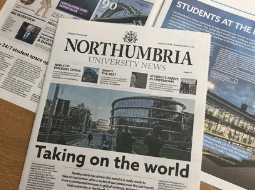
This is the place to find all the latest news releases, feature articles, expert comment, and video and audio clips from Northumbria University
Latest News and Features

From field waste to fuel – and a living wage for rural women
Academics from Northumbria University have secured funding to build Pakistan's first full-scale…
Northumbria University highlights support and guarantees hands-on practical experience and AI tools for students ahead of results day
Students choosing to study at Northumbria University after receiving their results on Thursday…
£4m investment in UK top-ranking physiotherapy and nursing facilities at Northumbria University
Northumbria University is investing £4 million to expand and upgrade facilities for physiotherapy,…
Record year for Northumbria as three academics named National Teaching Fellows
Three Northumbria University academics from across education, sport and the built environment…
Northumbria designers recognised at UK's biggest graduate showcase
Innovative designers and makers from Northumbria University have won a string of awards and…
Building bridges between science and Westminster: a Northumbria researcher's view from Parliament
The impact of research and technical expertise at Northumbria University has been highlighted…
Rare Norman Cornish painting donated to Northumbria University
A rare early painting by celebrated North East artist Norman Cornish has been donated to Northumbria…
Northumbria brings Westminster together to confront the nationwide opportunity gap
Northumbria University convened parliamentarians, policymakers, employers and sector leaders…
Upcoming events
NU-NHSA Launch Event
Northumbria University
-
