
The UK Space Agency has awarded almost £650,000 to Northumbria University to continue world-leading work to develop the first commercially available laser-based inter-satellite communications system.
Currently satellites use radio frequency to transmit data, but this is limited in terms of speed, capacity and data security. However, researchers at Northumbria University are working to develop a new laser-based communications system for small satellites, known as CubeSats, which has the potential to transform the satellite communications industry.
By using lasers instead of radio frequency, the CubeSats become much more secure and can transmit 1,000 times more data per second.
The University was awarded £360,000 last year to run the discovery phase of the project. This further funding – which brings the total amount awarded to more than £1 million – will enable the research team to build and test their laser system over the next 12 months.
Northumbria University is leading the research, working in partnership with Durham University’s Centre for Advanced Instrumentation, Gateshead-based satellite communications technology company e2E Group and telecoms and electronics manufacturing company SMS Electronics Limited, based in Nottingham.
They plan to piece together three CubeSats – making a device roughly the same size as a shoe-box – to hold the new laser communication system. This poses a significant challenge as it requires technologies normally used on much larger scales to be redesigned and redeveloped to fit into this much smaller device and withstand the atmospheric conditions in space.
Their ultimate aim is to develop an off-the-shelf product for major global organisations and telecoms providers which can be sent into orbit easily and cheaply and which will improve data transfer in space. It will also improve real-time satellite monitoring of environmental issues on Earth, enabling climate scientists to see high-resolution images and even live-streaming of remote areas.
It is hoped that the first devices will be ready for extensive testing in early 2023, with a goal to set them into orbit by 2025.
The UK Space Agency announced the award of almost £7 million of funding through its National Space Innovation Programme. Northumbria is one of eleven leading UK organisations, including a mixture of businesses and just three other universities – Cambridge, Edinburgh and the Open University – to have been awarded a share of the funding to put into action the latest advances in space innovation.
The majority of the projects focus on climate change or environmental management, but Northumbria’s is the only project relating to satellite communications to receive funding, giving recognition to the world-leading work being carried out in the North-East region around satellite communications technologies.

Dr Eamon Scullion, a solar physicist in Northumbria’s Solar-Terrestrial Science research group, is leading the project. He said: “We are absolutely delighted to have secured this funding to further our research. This award will enable us to move to the next phase of our plans, where we can put our ideas into practice to build and test our designs.
“This is no mean feat. We need to carefully design, test and miniaturise electronic boards, optical lasers, receivers and transmitters which can fit together in the satellites and be ‘space qualified’, meaning they will be tested to ensure they continue to work at an optimal level whilst in orbit, dealing with the impact of radiation, atmospheric drag and extremely cold space temperatures.”
Cyril Bourgenot, technology development lead at Durham University’s Centre for Advanced Instrumentation added: “This new technology will enable communication between satellites at an unprecedented speed. The challenge, in this project, is to fit all this cutting-edge technology in only three CubeSat units, basically the size of a whisky bottle box.”
Professor Louise Bracken, Pro-Vice-Chancellor for Research at Northumbria University, said: “The Government recently launched the National Space Strategy, which outlines its long-term plans to grow the UK space sector and satellite communications are a key element of this.
“Our Solar-Terrestrial Science research group has grown in recent years and is becoming one of Northumbria’s distinctive areas of research excellence, with a growing influence and recognition from major research funders and business partners.
“It is especially pleasing to see that Northumbria’s work in this area being recognised as so innovative, more so given the importance the government has placed on investing in satellite communications over the coming decade.”
Science Minister George Freeman said the awards would help the UK put into action the latest advances in space innovation.
“Satellites in space are helping us solve some of the most significant challenges we face,” he said. “Through the National Space Strategy we are putting the UK at the forefront of unleashing these innovations. This new funding will take game-changing ideas from the UK space sector and our brilliant scientists and turn them into reality.”
Northumbria University is becoming well known for its multi-disciplinary research into space. The University’s Solar-Terrestrial Science research group is leading studies to monitor and predict space weather to reduce the risks this poses to communications systems, satellites and power grids, while the Aerospace Medicine and Rehabilitation Laboratory is leading studies into the impact of reduced gravity on astronauts’ bodies and how this can be translated into conditions commonly faced on Earth, such as back pain. In addition, Northumbria University houses world-leading expertise in space law, undertaking pioneering work on the governance framework for human activity in outer space.
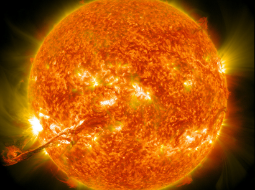
The Solar-Terrestrial Science group has a long-term research programme to investigate how the Sun drives space weather (a term describing a series of phenomena originating from the Sun).
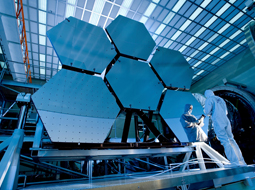
Department of Mathematics, Physics and Electrical Engineering
This department encompasses all of our work in Mathematics, Statistics and Physics including Astrophysics, Electrical and Electronic Engineering, Energy, Smart Materials, Microelectronics and Communications.

This is the place to find all the latest news releases, feature articles, expert comment, and video and audio clips from Northumbria University
Latest News and Features

UK network to accelerate the development of sustainable surface technologies
A new national network led by Newcastle University and Northumbria University, in partnership…

Criminologist wins acclaimed Philip Leverhulme Prize to pioneer a new criminology of the offshore world
A Northumbria University criminologist has been awarded a Philip Leverhulme Prize, one of the…
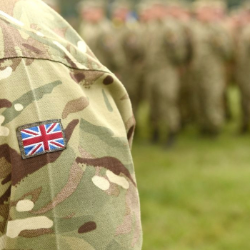
New platform maps charity support for the Armed Forces community
Pioneering data platform maps where the Armed Forces community receive support from charities

Northumbria co-leads study on fairer support for families
A major study co-led by Northumbria University will test whether attachment assessments lead…

New AHRC research shows how community innovation can power the next phase of devolution.
New research published today by the AHRC Creative Communities programme provides fresh evidence…

Free sessions to help families navigate the SEND system
Northumbria University's award-winning Student Law Office is launching SEND Decoded, a series…

New Doctoral Training Programme will tackle key polar science questions with a reduced carbon footprint
The Net Zero Polar Science (NZPS) Doctoral Training Programme (DTP) has welcomed its first…

New Student Health Hub brings joint health and wellbeing support
A new drop-in service is bringing health and wellbeing support for students at both Newcastle…
More events
Upcoming events

Next Stop Northumbria
Manchester Marriott Hotel Piccadilly
-

-
Magnetospheric Multiscale Science Working Team Meeting
Sutherland Building

Christmas Market and Tree lighting
Northumbria University
-
