
Any Questions?
Our Applicant Services team will be happy to help. They can be contacted on 0191 406 0901 or by using our Contact Form.
All information is accurate at the time of sharing.
Full time Courses are primarily delivered via on-campus face to face learning but could include elements of online learning. Most courses run as planned and as promoted on our website and via our marketing materials, but if there are any substantial changes (as determined by the Competition and Markets Authority) to a course or there is the potential that course may be withdrawn, we will notify all affected applicants as soon as possible with advice and guidance regarding their options. It is also important to be aware that optional modules listed on course pages may be subject to change depending on uptake numbers each year.
Contact time is subject to increase or decrease in line with possible restrictions imposed by the government or the University in the interest of maintaining the health and safety and wellbeing of students, staff, and visitors if this is deemed necessary in future.
Accessibility and Student Inclusion
Northumbria University is committed to developing an inclusive, diverse and accessible campus and wider University community and are determined to ensure that opportunities we provide are open to all.
We are proud to work in partnership with AccessAble to provide Detailed Access Guides to our buildings and facilities across our City, Coach Lane and London Campuses. A Detailed Access Guide lets you know what access will be like when you visit somewhere. It looks at the route you will use getting in and what is available inside. All guides have Accessibility Symbols that give you a quick overview of what is available, and photographs to show you what to expect. The guides are produced by trained surveyors who visit our campuses annually to ensure you have trusted and accurate information.
You can use Northumbria’s AccessAble Guides anytime to check the accessibility of a building or facility and to plan your routes and journeys. Search by location, building or accessibility feature to find the information you need.
We are dedicated to helping students who may require additional support during their student journey and offer 1-1 advice and guidance appropriate to individual requirements. If you feel you may need additional support you can find out more about what we offer here where you can also contact us with any questions you may have:
Latest News and Features
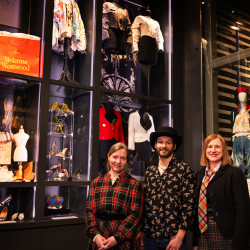
Northumbria University research unlocks the secrets of Vivienne Westwood's craft in a major new exhibition
A fashion researcher and educator from Northumbria University has created what is believed…
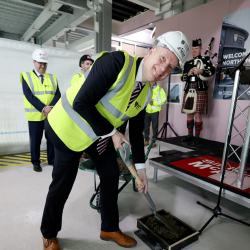
NESST topping out ceremony attendees receive traditional tankards to celebrate build milestone
Topping out ceremony marks pivotal moment for centre backed by £50 million investment set to…

From Netflix to Newcastle Northumbria graduate uses AI to revolutionise film and TV production
A Northumbria University graduate who co-created Bangkok Breaking — one of Thailand's biggest…

Northumbria University researcher brings death-positive arts festival to libraries across England
An arts festival exploring death, dying and end-of-life choices — led by a Northumbria University…
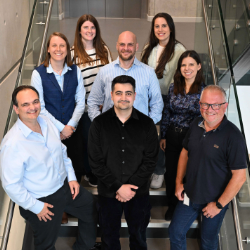
Northumbria University spinout achieves CE marking for deep lung breath sampling device — a first backed by peer-reviewed research
A medical device company spun out of Northumbria University has reached a significant milestone…
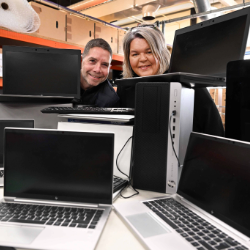
Northumbria University's IT recycling initiative recognised as national best practice
The equivalent weight of one and a half double-decker buses' worth of IT equipment has been…
Social
More events
Upcoming events

From sustenance to complete nourishment in a changing and uncertain climate
Ellison Building A, 001 (ELA 001)
-

Broken Bonds: New Perspectives on Marital Breakdown
The Great Hall
-

Smarter Supply Chains: Digital Innovation for Cost, Efficiency & Carbon
Northumbria University
-

Culture in Conversation: Rethinking Leadership & Organisational Practice
CCE1 Newcastle Business School
-
