Entry Requirements 2026/27
Standard Entry
Applicants should normally have:
A minimum of a 2:2 honours degree in an engineering or science discipline. Other subject qualifications, equivalent professional qualifications and/or relevant work experience will be considered on an individual basis.
Applicants from outside the European Economic Area (EEA) will need an ATAS certificate to enrol on this course. Without this certificate, a visa application will be refused. Please visit www.gov.uk/guidance/academic-technology-approval-scheme for more information.
International qualifications:
If you have studied a non UK qualification, you can see how your qualifications compare to the standard entry criteria, by selecting the country that you received the qualification in, from our country pages. Visit www.northumbria.ac.uk/yourcountry
English language requirements:
International applicants are required to have a minimum overall IELTS (Academic) score of 6.5 with 5.5 in each component (or approved equivalent*).
*The university accepts a large number of UK and International Qualifications in place of IELTS. You can find details of acceptable tests and the required grades you will need in our English Language section. Visit www.northumbria.ac.uk/englishqualifications
For further admissions guidance and requirements, please visit www.northumbria.ac.uk/admissionsguidance Please review this information before submitting your application.
Fees and Funding 2026/27 Entry
Full UK Fee:
£11,250
Tuition fees in the academic year 2027/28* will be £10,050. Fees are set in line with the UK Government's tuition fee cap. The University may increase fees in subsequent years in line with any changes to the tuition fee cap. Increases will be linked to inflation. For example, increases may be linked to RPIX (Retail Price Index excluding mortgage interest payments) Students will be notified of any increase ahead of it taking effect. Student fee loans rise in line with the tuition fees cap.
*if your course is longer than one year
Full International Fee:
£21,500
This is the tuition fee for your first year of study. You should expect to pay tuition fees for every year of study. The University may increase fees in the second and subsequent years of your course at our discretion in line with any inflationary or other uplift. Students will be notified of any increase ahead of it taking effect.
Scholarships and Discounts
Discover More about Fees, Scholarships and other Funding options available for UK and International applicants.
ADDITIONAL COSTS
There are no Additional Costs
Modules Overview 2026/27
Modules
Module information is indicative and is reviewed annually therefore may be subject to change. Applicants will be informed if there are any changes.
Year one
KB7060 -
Heat, Mass Transfer & Computational Fluid Dynamics (Core,20 Credits)
This module will evolve your understanding of and develop specialist knowledge in the subject area of heat and mass transfer systems. It aims to appraise practical methods in solving complex problems in the subject field using analytical, computational, and experimental approaches. Open-ended problems with no obvious and immediate solution, in topics such as viscous flow, heat transfer and turbulence will be considered and judged in the context of their industrial application. You will evaluate the characterisation and specification of complex systems and emerging technologies in this field in the context of global developments in this area of mechanical engineering.
More information
KB7061 -
Sustainable Development for Engineering Practitioners (Core,20 Credits)
This module explores the fundamentals of sustainable and ethical development for engineering practitioners, considering the role and responsibility of the engineer within society. The module will consider the elements of sustainable development as they relate to decision making in engineering, for example, consideration of legislation, economics, energy, materials, environment, and society. The challenges engineering activities present society are examined, and ethical solutions for the future of our planet are sought through the use of various techniques and tools such as the triple bottom line, stakeholder analysis, the circular economy, carbon footprint, material and energy supply chains and risk. A rational argument for sustainable solutions will be presented using both qualitative and quantitative data sources and tools using a wide range of published literature and from students’ own experience.
More information
KB7063 -
Technology Entrepreneurship and Product Development (Core,20 Credits)
This module relates the world of business and management to engineering design. You will develop a business model that exploits an open-ended concept for the start of a small business based around the development of a product. You will learn the importance of creative collaboration with your peers to develop these concepts and apply knowledge of engineering management principles within the context of commercial enterprise. You will explore and evaluate the use of risk management tools and techniques to mitigate the effects of uncertainty associated with entrepreneurial activities and start-up businesses.
More information
KB7068 -
Research Methods (Core,20 Credits)
You will learn to work both independently, and in a group environment, to develop knowledge, skills, and awareness essential to complex-problem-solving research and innovation in relevant engineering subjects. You will learn through the practice of identification of need, research planning including research idea generation and proposal development. You will learn to plan and carry research responsibly, assessing risks and constraints analysis in legislation, security, economics, energy, materials, equipment, health safety and environmental impact. You will also learn to make appropriate choices when executing your research investigation, for example, developing essential skills in qualitative and quantitative research methods that can be employed to achieve your designed aims and objectives.
More information
KB7070 -
Thermo-Mechanical Energy Conversion Systems (Core,20 Credits)
This module will evolve your understanding of and develop specialist knowledge in the subject area of technologies for the utilisation of renewable and sustainable energy sources for heat and power production using heat engines and other types of converters, such as: Solar, biomass, hydrogen and waste thermal energy resources, internal and external combustion engines, solar thermal energy, geothermal and hydrogen technology. You will explore energy conversion system theory and their application through practical classes where you will also be able to develop skills important to your future engineering practice. Open-ended problems with no obvious and immediate solution, in topics such as viscous flow, heat transfer and turbulence will be considered and judged in the context of their industrial application. You will evaluate the characterisation and specification of complex systems and emerging technologies in this field in the context of global developments in this area of renewable and sustainable energy engineering.
More information
KB7071 -
Wind, Photovoltaic and Hybrid Renewable Energy Systems (Core,20 Credits)
You will learn about the theory and application of the technology of wind, photovoltaic and hybrid renewable energy conversion systems. These technologies will be introduced such that their fundamental principles allow system design to be defined and performance optimised. Topics covered will be selected such that both stand-alone and hybrid systems may be specified, for example:
• Renewable resources, their characteristics and stochastic modelling
• Wind turbines: components and performance measures, conceptual design, structural loads, blade and tower structural design considerations, operation and control
• Aerodynamics of wind turbines: blade element momentum theory, blade aerodynamic design
• Photovoltaic: conversion theory and technology, sizing and design considerations
• Storage systems: power and cost modelling
• Hybrid systems: power, cost and reliability/availability analyses and system architecture design for various configurations including wind, PV, battery, diesel and fuel cell
More information
SE7000 -
Skills for Academic Success in a UK University (Core – for International and EU students only,0 Credits)
You will develop your understanding of academic conventions in UK higher education aligned to your level of study, including expectations around critical analysis, structure, argumentation, evidencing, and referencing. The module focuses on developing communication strategies that will help you express your ideas clearly and coherently in written assignments and spoken activities. You will also reflect on your current academic and language skills and develop strategies for development ahead of your assessments.
More information
Year two
KB7069 -
Research Project (Core,60 Credits)
You will learn to work independently, perform systems thinking, and bring together your specialist knowledge and skills within a research and development project. You will work with the guidance of a tutor to direct your learning and develop your abilities in areas such as project planning and management, detailed design of the proposed method, prototype fabrication or virtual system modelling and critical evaluation and identification of further developments. You will be provided with the opportunity to demonstrate to potential future employers the breadth and depth of your ability by not only using your specialist abilities, but also through the demonstration of your planning, organisational and independent working skills. You will be expected to incorporate unfamiliar knowledge as well as the wider social and environmental considerations of the engineering profession.
More information
Study Options
The following alternative study options are available for this course:
To start your application, simply select the month you would like to start your course.
Renewable and Sustainable Energy Technologies MSc
Any Questions?
Our Applicant Services team will be happy to help. They can be contacted on 0191 406 0901 or by using our Contact Form.
Accuracy of information
All information is accurate at the time of sharing.
How your course is delivered
Full time Courses are primarily delivered via on-campus face to face learning but could include elements of online learning.
Changes to your course
Most courses run as described on our website and in our marketing materials. Occasionally we may need to make changes, for example due to a change in the law or regulatory requirements, requirements of a Professional, Statutory or Regulatory Body, or our quality assurance processes. Where a change is significant (in line with the Competition and Markets Authority's guidance on "substantial changes"), we will consult with affected students in advance where the change is being decided, and will explain the reason for the change and inform you at the earliest opportunity.
If we make a significant variation to your programme, you are entitled to: request a transfer to an alternative, appropriate programme; withdraw and have your tuition fees adjusted; or raise a complaint through the Student Complaints Procedure.
Optional modules listed on course pages may be subject to change depending on uptake numbers each year. Where a module you selected is withdrawn, the options above apply.
Contact time
Contact time is subject to increase or decrease in line with possible restrictions imposed by the government or the University in the interest of maintaining the health and safety and wellbeing of students, staff, and visitors if this is deemed necessary in future.
Images and video
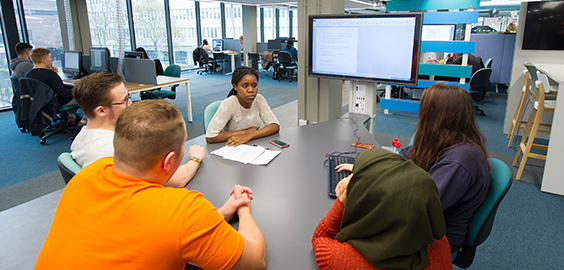
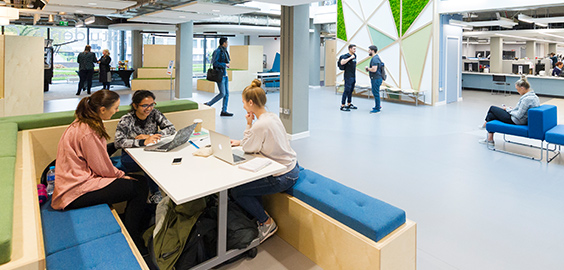
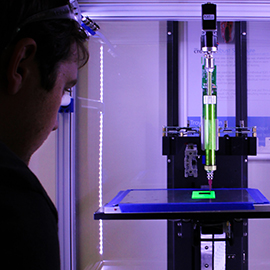
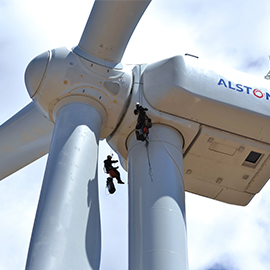
The photography and video on this page are used for illustration. They may have been taken at different times and in different parts of the University, and may show facilities, equipment, staff, students or activities that are not part of this course. They are not a guarantee of the specific facilities or equipment you will use.
The course content, entry requirements and fees sections of this page, together with the Programme Specification, set out what this course includes. Our facilities are updated over time and may change during your studies.
Accessibility and Student Inclusion
Northumbria University is committed to developing an inclusive, diverse and accessible campus and wider University community and are determined to ensure that opportunities we provide are open to all.
We are proud to work in partnership with AccessAble to provide Detailed Access Guides to our buildings and facilities across our City, Coach Lane and London Campuses. A Detailed Access Guide lets you know what access will be like when you visit somewhere. It looks at the route you will use getting in and what is available inside. All guides have Accessibility Symbols that give you a quick overview of what is available, and photographs to show you what to expect. The guides are produced by trained surveyors who visit our campuses annually to ensure you have trusted and accurate information.
You can use Northumbria’s AccessAble Guides anytime to check the accessibility of a building or facility and to plan your routes and journeys. Search by location, building or accessibility feature to find the information you need.
We are dedicated to helping students who may require additional support during their student journey and offer 1-1 advice and guidance appropriate to individual requirements. If you feel you may need additional support you can find out more about what we offer here where you can also contact us with any questions you may have:
Accessibility support
Student Inclusion support

 Option for Placement Year