-
Study
-
Quick Links
- Open Days & Events
- Real-World Learning
- Unlock Your Potential
- Tuition Fees, Funding & Scholarships
- Real World Learning
-
Undergraduate
- Application Guides
- UCAS Exhibitions
- Extended Degrees
- School & College Outreach
- Information for Parents
-
Postgraduate
- Application Guide
- Postgraduate Research Degrees
- Flexible Learning
- Change Direction
- Register your Interest
-
Student Life
- Students' Union
- The Hub - Student Blog
- Accommodation
- Northumbria Sport
- Support for Students
-
Learning Experience
- Real-World Learning
- Research-enriched learning
- Graduate Futures
- The Business Clinic
- Study Abroad
-
-
International
International
Northumbria’s global footprint touches every continent across the world, through our global partnerships across 17 institutions in 10 countries, to our 277,000 strong alumni community and 150 recruitment partners – we prepare our students for the challenges of tomorrow. Discover more about how to join Northumbria’s global family or our partnerships.
View our Global Footprint-
Quick Links
- Course Search
- Undergraduate Study
- Postgraduate Study
- Information for Parents
- London Campus
- Northumbria Pathway
- Cost of Living
- Sign up for Information
-
International Students
- Information for International Students
- Northumbria and your Country
- International Events
- Application Guide
- Entry Requirements and Education Country Agents
- Global Offices and Regional Teams
- English Requirements
- English Language Centre
- International student support
- Cost of Living
-
International Fees and Funding
- International Undergraduate Fees
- International Undergraduate Funding
- International Masters Fees
- International Masters Funding
- International Postgraduate Research Fees
- International Postgraduate Research Funding
- Useful Financial Information
-
International Partners
- Agent and Representatives Network
- Global Partnerships
- Global Community
-
International Mobility
- Study Abroad
- Information for Incoming Exchange Students
-
-
Business
Business
The world is changing faster than ever before. The future is there to be won by organisations who find ways to turn today's possibilities into tomorrows competitive edge. In a connected world, collaboration can be the key to success.
More on our Business Services-
Business Quick Links
- Contact Us
- Business Events
- Research and Consultancy
- Education and Training
- Workforce Development Courses
- Join our mailing list
-
Education and Training
- Higher and Degree Apprenticeships
- Continuing Professional Development
- Apprenticeship Fees & Funding
- Apprenticeship FAQs
- How to Develop an Apprentice
- Apprenticeship Vacancies
- Enquire Now
-
Research and Consultancy
- Space
- Energy
- AI and Tech
- CHASE: Centre for Health and Social Equity
- NESST
-
-
Research
Research
Northumbria is a research-rich, business-focused, professional university with a global reputation for academic quality. We conduct ground-breaking research that is responsive to the science & technology, health & well being, economic and social and arts & cultural needs for the communities
Discover more about our Research-
Quick Links
- Research Peaks of Excellence
- Academic Departments
- Research Staff
- Postgraduate Research Studentships
- Research Events
-
Research at Northumbria
- Interdisciplinary Research Themes
- Research Impact
- REF
- Partners and Collaborators
-
Support for Researchers
- Research and Innovation Services Staff
- Researcher Development and Training
- Ethics, Integrity, and Trusted Research
- University Library
- Vice Chancellors Fellows
-
Research Degrees
- Postgraduate Research Overview
- Doctoral Training Partnerships and Centres
- Academic Departments
-
Research Culture
- Research Culture
- Research Culture Action Plan
- Concordats and Commitments
-
-
About Us
-
About Northumbria
- Our Strategy
- Our Staff
- Our Schools
- Place and Partnerships
- Leadership & Governance
- University Services
- Northumbria History
- Contact us
- Online Shop
-
-
Alumni
Alumni
Northumbria University is renowned for the calibre of its business-ready graduates. Our alumni network has over 253,000 graduates based in 178 countries worldwide in a range of sectors, our alumni are making a real impact on the world.
Our Alumni - Work For Us
Our academics offer their expert opinions on the General Election results...
Howard Elcock, Emeritus Professor of Government:

Like the pollsters and most of my colleagues in the political science trade, I called the election wrong – I predicted that Labour would be the largest party in a “hung” House of Commons.. No-one seems sure about what went wrong with the polls, although Lionel Shriver has an interesting piece in today’s (Tuesday 12th May) Guardians arguing that people are reluctant to admit to voting Tory because they feel intimidated by a domineering argumentative Left Wing. There seemed to be more people than usual declaring that they were undecided during the campaign – maybe they were the “shy Tories”?
As to the reasons for the Labour defeat, the explanation is emerging among senior Party figures that not enough was done to maintain the “Blairite” coalition of the poor, working people and “middle England – the aspirant working and middle class people who hope to better their lives, or their children’s lives. This could be right – a glance at many of re discussions of Labour's failure are endorsing that view, as well as David Miliband and Lord Mandelson but do we know for sure? Also Labour performed well in some parts of the country but badly in others, especially the Midlands and the South. Labour did well in most of the North -, for example my MP, Chi Onwurah, almost doubled her majority. However, Labour failed to win two of its Northern target seats – Carlisle and Stockton South, but won convincingly in the third – Redcar and Cleveland. Elsewhere the results were generally bad for Labour except in London – there were seats in Nuneaton, Plymouth and Southampton, together with many others that should have gone Labour but didn't.
The Scottish story is different. Labour has taken its Scottish support for granted for far too long. The election results in the Scottish Parliament’s last elections, when the SNP gained a majority was a warning sign, as was the referendum result in that the heaviest Yes votes occurred in Labour's heartlands in Glasgow and Dundee. These signs should have been more noticed by the party hierarchy as signs that things were changing. There was also the former Scottish Labour Leader (whose name I cannot remember for the life of me) who resigned complaining that she was the head only of a branch of the London Labour HQ. The Scottish Labour Party must be given more scope to respond to local issues and it needs a new, younger, more attractive leader than Jim Murphy.
Dr Lee Barron, Principal Lecturer in the Deparment of Media and Communication Design: The results to the 2015 General Election have been read in terms of a ‘shock’ result with the Conservatives winning 318 seats to Labour’s 228 seats and establishing a Conservative majority government, with the previous coalition firmly rejected and the Liberal Democrats losing a substantial degree of their political visibility and influence with just 8 seats won.

The five years that the Liberal Democrats have spent as part of the coalition have arguably led to something of an ‘identity crisis’ with voters regarding their precise ideological qualities and they seem to have paid the electoral price. In a wider context, while my prediction has certainly not come to pass post-Election day, this was a difficult election to predict. The feelings in the media pointed to a low-key Conservative campaign that only really came to life in the late stages contrasted with Ed Miliband’s increasing confidence.
However, my observation that the SNP would play be a crucial role has been realized, albeit to the detriment to Labour given their historical landslide victory in Scotland in winning 56 seats and transforming the Scottish political landscape rendering all other parties now largely irrelevant. This is of course a serious blow to Labour as they have traditionally looked to Scotland for strong support. Compounding this factor, the Conservative’s message on economic recovery has been a potent one throughout the campaign and media representations of Ed Miliband as unlikely Prime Minster material and lacking in presence have also proved to be effective (with his appearance on The Trews with Russell Brand seen as an ill-advised tactic). In the longer term, the SNP’s dominance in Scotland will have long-reaching effects on Labour’s future electoral strength and the issue of leadership will be a paramount factor in their oppositional strategies and political identity.
Last week I was asked to offer my predictions for the outcome of the general election. Whilst I successfully predicted that the Conservative Party would win the most seats I failed, along with perhaps everybody else in the country, to foresee that they would win a majority. As a result of this the implications for the country are perhaps even more profound as the government is now able to pursue its neoliberalist agenda unhindered by the Liberal moderating force present in the previous coalition.
Jonathan Blackie, Visiting Professor and Culture Partnership
Manager for the Association of North East Councils:
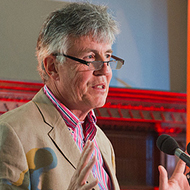
Tuesday 12th May. Well that’s it, until May 2020, but including a referendum on the European Union by 2017, at the latest. Perhaps also a Constitutional Convention on Scotland and the devolved administrations, including a ‘Devo’ offer to the English cities and Combined Authorities?
We have the prospect of trains full of Scottish MPs speeding their way through the North East, on their way to London. Will it improve our transport links, or lead to further delays in investment? We can imagine a region squeezed between the South and the border with Scotland, facing further reductions in public expenditure.
On the other hand how might we build bridges across the border, in the many areas where we share a common interest and heritage, and to the new Government in London?
Scotland, Manchester and many other areas admire our cultural infrastructure. They aspire to have such an excellent concert hall in Sage Gateshead. We have a formidable array of talent in our culture sector. We have similar parallels in our business community. The arrival of Hitachi, to produce the high speed trains of the future, in County Durham, is a much anticipated event, on a par with the arrival of Nissan several decades ago.
Our prospects probably lie in our ability to make the most of this moment, to build a relationship with the new Government, and recognise the bridges that cross the border to the North.
Professor Karen Ross, Professor of Media:

Professional pollsters’ predictions are always wreathed all around with umpteen caveats, mostly about the conspicuous imprecision of their forecasts, so much so it’s a wonder that they bother to say anything at all but there we are, psephology as both art and craft but scientific accuracy not so much. Of course, these folks are somewhat at the mercy of what people choose to tell them when asked about their voting intentions and we know from our own experiences of being polled for different products and services – and political parties are marketed as brands in the same way as everything else – that veracity is not always at the forefront of our answers.
So it should not have come as too much of a surprise that come election night, the Exit Poll of people who had actually voted was showing something rather different to what the other 11 polls carried out on Election Eve were suggesting. At least two inferences can be drawn from this: one is that people lie to random pollsters but are more likely to tell the truth to people hanging around outside polling stations perhaps because of some assumed authority; the other is that more people were genuinely undecided than had been predicted. What was rather amusing to watch was the refusal to accept what the Exit Poll was saying amongst the BBC commentators and guests who were stuffed into BBC Election HQ for what turned out to be a very long night, Paddy Ashdown going so far as to say he’d ‘eat his own hat’ on camera if the predictions came aright.
He qualified this rash intent by saying it had to be made of marzipan but even so, his comment exemplified the shared disbelief that so many of the previous polls could have got things so wrong. Ironically, if anything, the Exit Poll underplayed the extent of the Tory victory although the actual share of the votes won by each party demonstrated yet again the heavy price paid for a system in which the winner takes all and the runner-up, not matter how close, gets nowt, shy or otherwise, as they say in the North East. Whilst there were jubilant winners and sad losers and not a few senior resignations, one group of politicians who did well were the women.
Their success has increased the number of women MPs at Westminster to 29%, the highest in the Parliament’s history, due in no small part to the SNP’s very creditable record in fielding women candidates: one of those new Scottish MPs is Mhairi Black who, at 20 years old, is the youngest MP since 1667. When Parliament sits for the first time after the election, it will be a very different place to what it was on March 30th. More women politicians will make a difference, come on the girls!
Alex Hope, Senior Lecturer in Business Ethics: As I predicted in my pre-election piece, we now face the prospect of an increased North/South divide with the North of England perhaps more sympathetic to the social-democratic agenda of an SNP dominated Scotland than slash and burn Westminster austerity. The gulf between rich and poor will continue to become more pronounced as the promised tax cuts for top earners and tough benefit cuts begin to bite. Then there is the now inevitable EU referendum which has the potential to see the UK, or England at least, become even more of an Island state at a time when nations need to be working together to tackle large scale ‘wicked’ issues such as climate change, international poverty and global security. There is then the real potential for communities to feel increasingly divided, and for the UK to perhaps become alienated on the world stage.

Despite this seemingly gloomy outlook, I am an optimist by nature. Rather than staring gloomily into the bottom of my coffee cup this morning, I feel renewed purpose and intend to spend the next five years working hard to demonstrate that the principles of sustainability, equality and social democracy are not incompatible with those of business, the government or the economy. Ultimately what's good for society and for the planet, must be good for business and the economy as the latter cannot exist without the former.
Dr Hans-Christian Andersen, Senior Lecturer at Newcastle Business School:
Who saw that coming? The Conservatives with a majority of ten and the British two-party system restored to its former, well, is it its “glory”? The First Past the Post System has, once more, created a majority government out of a minority share of the vote and a large section of the electorate sees itself without democratic representation. After five years of coalition government, that seems a strikingly unreasonable outcome, as if the two-party system was the default system and as if unfairness is the acceptable foundation for a modern democracy.
But David Cameron does, of course, deserve congratulations. To gain an increased mandate in Parliament is highly unusual for a sitting Prime Minister and this demonstrates that the electorate have been satisfied with the performance of its government (and distrustful of the alternative parties). Perhaps he also deserves commiserations. He has won the regalia of prime ministerial power but he is also wearing the golden shackles of a Prime Minister whose ambition is to hold together a United Kingdom which, in some senses, seems disunited as from this morning; and whose party will make the most of his promise to hold a EU referendum and (here he may want to ring Tony Blair for advice) to abandon his post as Prime Minister before the end of his second term. “When, David?” as Boris Johnson will soon begin to ask him.
This has, of course, been one of the most exciting national elections to follow in many years, a cliff-hanger up until the last moment, costing three party leaders their posts and who knows how many polling firm bosses will find a P45 in their next wage packet. I do not imagine that political life will become less exciting after this week.
News
- First cohort of Civil Engineering Degree Apprentices graduate from Northumbria
- Venice Biennale Fellowship
- Northumbria expands results day support for students
- Northumbria academic recognised in the British Forces in Business Awards 2025
- £1.2m grant extends research into the benefits of breast milk for premature babies
- Northumbria graduate entrepreneur takes the AI industry by storm
- Study identifies attitudes towards personal data processing for national security
- Lifetime Brands brings student design concept to life
- New study reveals Arabia’s ‘green past’ over the last 8 million years
- How evaluation can reform health and social care services
- Researchers embark on a project to further explore the experiences of children from military families
- Northumbria University's pioneering event series returns with insights on experiential and simulated learning
- Support for doctoral students to explore the experiences of women who have been in prison
- Funding boost to transform breastfeeding education and practice
- A new brand of coffee culture takes hold in the North East
- BBRSC awards £6m of funding for North East Bioscience Doctoral Students
- £3m funding to evaluate health and social care improvements
- Balfour Beatty apprentices graduate from Northumbria University
- Long COVID research team wins global award
- Northumbria researchers lead discussions at NIHR event on multiple and complex needs
- Healthcare training facility opens to support delivery of new T-level course
- Young people praise Northumbria University for delivery of HAF Plus pilot
- Nursing academics co-produce new play with Alphabetti Theatre
- Research project to explore the experiences of young people from military families
- Academy of Social Sciences welcomes two Northumbria Professors to its Fellowship
- Northumbria University set to host the Royal College of Nursings International Nursing Research Conference 2024
- 2.5m Award Funds Project To Encourage More People Into Health Research Careers
- Advice available for students ahead of A-level results day
- Teaching excellence recognised with two national awards
- Northumbria law student crowned first Apprentice of the Year for the region
- Northumbria University launches summer activities to support delivery of Holiday Activities and Food programme
- UK health leader receives honorary degree from Northumbria University
- Use of AI in diabetes education achieves national recognition
- Research animation explores first-hand experiences of receiving online support for eating disorders
- Careers event supports graduate employment opportunities
- Northumbria University announces £50m space skills, research and development centre set to transform the UK space industry
- The American Academy of Nursing honours Northumbria Professor with fellowship
- New report calls for more support for schools to improve health and wellbeing in children and young people
- AI experts explore the ethical use of video technology to support patients at risk of falls
- British Council Fellows selected from Northumbria University for Venice Biennale
- Prestigious nomination for Northumbria cyber security students
- Aspiring Architect wins prestigious industry awards
- Lottery funding announced to support mental health through creative education
- Early intervention can reduce food insecurity among military veterans
- Researching ethical review to support Responsible AI in Policing
- Northumbria named Best Design School at showcase New York Show
- North East universities working together
- Polar ice sheet melting records have toppled during the past decade
- Beyond Sustainability
- Brewing success: research reveals pandemic key learnings for future growth in craft beer industry
- City's universities among UK best
- Famous faces prepare to take to the stage to bring a research-based performance to life
- Insights into British and other immigrant sailors in the US Navy
- International appointment for law academic
- Lockdown hobby inspires award-winning business launch for Northumbria student
- Lasting tribute to Newcastle’s original feminist
- Outstanding service of Northumbria Professor recognised with international award
- Northumbria academics support teenagers to take the lead in wellbeing research
- Northumbria University becomes UK's first home of world-leading spectrometer
- Northumbria's Vice-Chancellor and Chief Executive to step down
- Out of this world experience for budding space scientists
- Northumbria engineering graduate named as one of the top 50 women in the industry
- Northumbria University signs up to sustainable fashion pledge
- Northumbria demonstrates commitment to mental health by joining Mental Health Charter Programme
- Virtual reality tool that helps people to assess household carbon emissions to go on display at COP26
- EXPERT COMMENT: Why thieves using e-scooters are targeting farms to steal £3,000 quad bikes, and what farmers can do to prevent it
- Exhibition of lecturer’s woodwork will help visitors reimagine Roman life along Hadrian’s Wall
- Students reimagine food economy at international Biodesign Challenge Summit
- Northumbria storms Blackboard Catalyst Awards
- Breaking news: Northumbria’s Spring/Summer Newspaper is here!
- UK’s first ever nursing degree apprentices graduate and join the frontline
- Massive decrease in fruit and vegetable intake reported by children receiving free school meals following lockdown
- Northumbria awards honorary degrees at University’s latest congregations
Latest News and Features
Report calls on the UK banking industry to consider interventions that "design out" economic abuse
Researchers have published the findings of a ground-breaking study which brought together victim-survivors…
Northumbria's ‘Banana Split: Unpeeling a New Energy Source’ project highly commended at prestigious Green Gown Awards
A Northumbria University research project has been highly commended at the 2025 Green Gown…
Northumbria ranked most sustainable university in the North East for fifth consecutive year
Northumbria University has been rated as ‘1st class’ for sustainability and is once again the…
Northumbria expert delivers training to help address victim-blaming language
A Northumbria University academic is leading pioneering training to support police forces across…
Northumbria University launches national AI challenge inviting young people to imagine a hopeful future
Northumbria University has launched the Hopeful Futures AI Challenge, a groundbreaking national…
Student volunteering partnership expands following five years of community impact
Following the success of a Law in the Community project, Northumbria University is expanding…
Funding awarded for innovative space technology projects
The North East Space Communications Accelerator (NESCA) has successfully awarded its first…
First cohort of Civil Engineering Degree Apprentices graduate from Northumbria
The inaugural cohort of Civil Engineering degree apprentices have graduated from Northumbria…
Upcoming events
Collaborating for Capability: Shaping the Future of Supply Chain Talent
City Campus East, Northumbria University CCE1-403
-
Archives to Action: Historical Evidence for Policy Reform
Virtual Workshop
-
Viruses of Microbes-UK (VoM-UK) Conference 2026
Northumbria University
Commercialising SHAPE Innovations and Impact
Northumbria University
-