-
Study
-
Quick Links
- Open Days & Events
- Real-World Learning
- Unlock Your Potential
- Tuition Fees, Funding & Scholarships
- Real World Learning
-
Undergraduate
- Application Guides
- UCAS Exhibitions
- Extended Degrees
- School & College Outreach
- Information for Parents
-
Postgraduate
- Application Guide
- Postgraduate Research Degrees
- Flexible Learning
- Change Direction
- Register your Interest
-
Student Life
- Students' Union
- The Hub - Student Blog
- Accommodation
- Northumbria Sport
- Support for Students
-
Learning Experience
- Real-World Learning
- Research-enriched learning
- Graduate Futures
- The Business Clinic
- Study Abroad
-
-
International
International
Northumbria’s global footprint touches every continent across the world, through our global partnerships across 17 institutions in 10 countries, to our 277,000 strong alumni community and 150 recruitment partners – we prepare our students for the challenges of tomorrow. Discover more about how to join Northumbria’s global family or our partnerships.
View our Global Footprint-
Quick Links
- Course Search
- Undergraduate Study
- Postgraduate Study
- Information for Parents
- London Campus
- Northumbria Pathway
- Cost of Living
- Sign up for Information
-
International Students
- Information for International Students
- Northumbria and your Country
- International Events
- Application Guide
- Entry Requirements and Education Country Agents
- Global Offices and Regional Teams
- English Requirements
- English Language Centre
- International student support
- Cost of Living
-
International Fees and Funding
- International Undergraduate Fees
- International Undergraduate Funding
- International Masters Fees
- International Masters Funding
- International Postgraduate Research Fees
- International Postgraduate Research Funding
- Useful Financial Information
-
International Partners
- Agent and Representatives Network
- Global Partnerships
- Global Community
-
International Mobility
- Study Abroad
- Information for Incoming Exchange Students
-
-
Business
Business
The world is changing faster than ever before. The future is there to be won by organisations who find ways to turn today's possibilities into tomorrows competitive edge. In a connected world, collaboration can be the key to success.
More on our Business Services-
Business Quick Links
- Contact Us
- Business Events
- Research and Consultancy
- Education and Training
- Workforce Development Courses
- Join our mailing list
-
Education and Training
- Higher and Degree Apprenticeships
- Continuing Professional Development
- Apprenticeship Fees & Funding
- Apprenticeship FAQs
- How to Develop an Apprentice
- Apprenticeship Vacancies
- Enquire Now
-
Research and Consultancy
- Space
- Energy
- AI and Tech
- CHASE: Centre for Health and Social Equity
- NESST
-
-
Research
Research
Northumbria is a research-rich, business-focused, professional university with a global reputation for academic quality. We conduct ground-breaking research that is responsive to the science & technology, health & well being, economic and social and arts & cultural needs for the communities
Discover more about our Research-
Quick Links
- Research Peaks of Excellence
- Academic Departments
- Research Staff
- Postgraduate Research Studentships
- Research Events
-
Research at Northumbria
- Interdisciplinary Research Themes
- Research Impact
- REF
- Partners and Collaborators
-
Support for Researchers
- Research and Innovation Services Staff
- Researcher Development and Training
- Ethics, Integrity, and Trusted Research
- University Library
- Vice Chancellors Fellows
-
Research Degrees
- Postgraduate Research Overview
- Doctoral Training Partnerships and Centres
- Academic Departments
-
Research Culture
- Research Culture
- Research Culture Action Plan
- Concordats and Commitments
-
-
About Us
-
About Northumbria
- Our Strategy
- Our Staff
- Our Schools
- Place and Partnerships
- Leadership & Governance
- University Services
- Northumbria History
- Contact us
- Online Shop
-
-
Alumni
Alumni
Northumbria University is renowned for the calibre of its business-ready graduates. Our alumni network has over 253,000 graduates based in 178 countries worldwide in a range of sectors, our alumni are making a real impact on the world.
Our Alumni - Work For Us
Selina Sutton, PhD student at Northumbria University, writes about the complex issues surrounding emoji design in the modern society.
You can’t deny the popularity of emoji. If the fact that July 17th is World Emoji Day isn’t enough to convince you, then consider that the Emoji Movie will be released in early August, and that Oxford Dictionaries Word of the Year 2015 was the emoji: “face with tears of joy” 😂.
But where do emoji come from? While the term has been widened to refer to any digital pictograph, true emoji are those that are included in the Unicode Standard, the international standard for digital fonts that aims to make a character available regardless of platform or operating system. That is, the Unicode Standard allows for you to see this star symbol ★ regardless of the device or software you are using. 😉
So, how does an emoji get included in the Unicode Standard? The first step is to submit a formal proposal – a document that details why the emoji should be included based on a selection criteria set out by Unicode. The proposal is then reviewed against these criteria by a series of Unicode committees, whose members represent various major tech companies. Once reviewed, the proposal is either rejected 👎, returned to the authors with feedback, or advanced onto the next stage. Then, once a year, the decision is made as to which emoji candidates will be released as a part of the next Unicode Standard. After this, each company that displays emoji on their devices has the opportunity to create their own version based on Unicode’s example. This is why emoji can look slightly different across platforms.
You may well be surprised 😮 at the bureaucratic process behind such colourful, playful characters – and the issues that arise as a result. First, which emoji are available and what they look like are dictated by Unicode – so the meanings that can be communicated with them are also down to Unicode. When it comes to speech anyone can make a new word by putting speech sounds together, and anyone can decide on a spelling for a word by putting alphabet letters together. Whether a new word endures is down to how much and how widely it is used. In the digital realm, anyone can make an emoticon by putting the elements of punctuation, numbers and letters together. But emoji are single units that cannot be manipulated or edited by their users. Therefore, although language-like in their use, the creation of emoji can be likened to Newspeak in Orwell’s 1984 – they are tightly controlled by the few for the many.
Second, there is an irony in how Unicode select the emoji for release. Unicode assesses emoji proposals against a series of selection criteria. These are as follows:
1) Frequency of use: the more likely that the emoji is to be used the more likely it is to be released. 2) Multiple usages: the more meanings an emoji could be used to communicate the more likely it is to be released. 3) Image distinctiveness: which is necessary to avoid confusion. 4) Frequently requested: many people have previously, or are currently, calling for that emoji to be available.
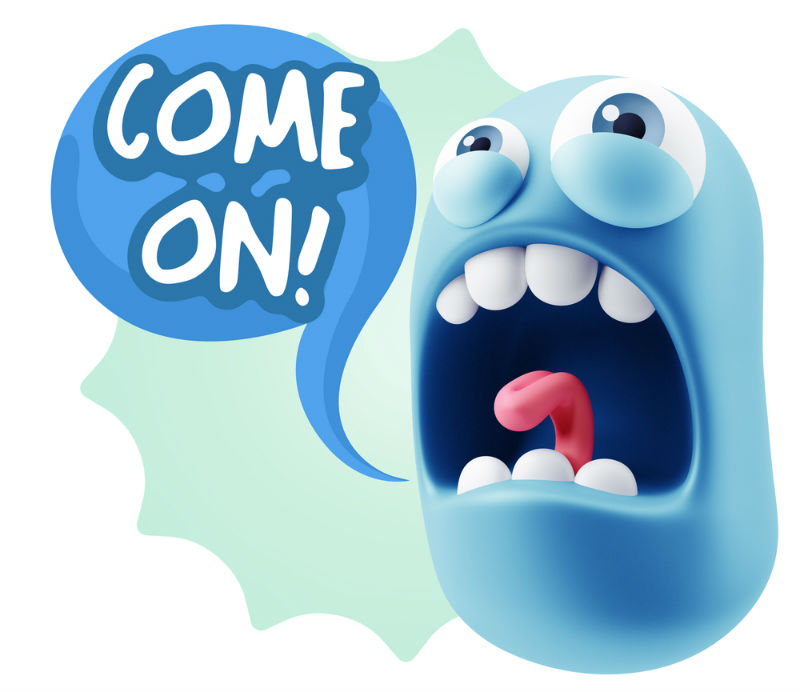
![]()
A new emoji needs to be talked about. Shutterstock.
But can you test a potential new emoji against these selection criteria without hearing the opinions of lots of people from all walks of life?
Listening to emoji users
It appears that there is little engagement with emoji users in the design and selection process and, as a result, users have voiced their frustration. There was uproar at Apple once for changing the “gun” emoji to look more like a “water pistol” 🔫, and again when they released draft designs that would change the peach emoji to look less like a bum 🍑 (because it is rarely used to refer to the fruit).
Beyond this, the lack of certain emoji leads to the inability to discuss certain topics, especially those that may be taboo or important among emoji’s most regular users – teens and young people. For example, there have been two campaigns for the inclusion of a “period emoji” over the past couple of years, one from BodyForm and the other from Plan International.
The main issue, however, is one of representation and how emoji reflects many of society’s inherent socio-political biases. Previous frustrations that have now (nearly) been resolved include the availability of a range of skin tones and a female equivalent for every emoji – and soon, emoji will be able to have ginger hair after a petition of more than 21,000 signatures was collected and sent to Unicode.
So, how can the masses have a say in the design of emoji? How can we ensure that more voices are heard? We propose a potential solution. A platform where anyone can propose an emoji, describe how it can be used and why it is important – and then gain support for it through comments and votes. We have called it EmojiDesignOnline. In a year, we will propose to the Unicode Consortium the emoji that has received the most support. So, next time you think “why is there no [X] emoji?” let us know.
This article was originally written for The Conversation. Read the original article here.
News
- National Fellowship honours Northumbria nursing leader
- Venice Biennale Fellowship
- First cohort of Civil Engineering Degree Apprentices graduate from Northumbria
- Northumbria expands results day support for students
- Northumbria academic recognised in the British Forces in Business Awards 2025
- £1.2m grant extends research into the benefits of breast milk for premature babies
- Northumbria graduate entrepreneur takes the AI industry by storm
- Study identifies attitudes towards personal data processing for national security
- Lifetime Brands brings student design concept to life
- New study reveals Arabia’s ‘green past’ over the last 8 million years
- How evaluation can reform health and social care services
- Researchers embark on a project to further explore the experiences of children from military families
- Northumbria University's pioneering event series returns with insights on experiential and simulated learning
- Support for doctoral students to explore the experiences of women who have been in prison
- Funding boost to transform breastfeeding education and practice
- A new brand of coffee culture takes hold in the North East
- BBRSC awards £6m of funding for North East Bioscience Doctoral Students
- £3m funding to evaluate health and social care improvements
- Balfour Beatty apprentices graduate from Northumbria University
- Long COVID research team wins global award
- Northumbria researchers lead discussions at NIHR event on multiple and complex needs
- Healthcare training facility opens to support delivery of new T-level course
- Young people praise Northumbria University for delivery of HAF Plus pilot
- Nursing academics co-produce new play with Alphabetti Theatre
- Research project to explore the experiences of young people from military families
- Academy of Social Sciences welcomes two Northumbria Professors to its Fellowship
- Northumbria University set to host the Royal College of Nursings International Nursing Research Conference 2024
- 2.5m Award Funds Project To Encourage More People Into Health Research Careers
- Advice available for students ahead of A-level results day
- Teaching excellence recognised with two national awards
- Northumbria law student crowned first Apprentice of the Year for the region
- Northumbria University launches summer activities to support delivery of Holiday Activities and Food programme
- UK health leader receives honorary degree from Northumbria University
- Use of AI in diabetes education achieves national recognition
- Research animation explores first-hand experiences of receiving online support for eating disorders
- Careers event supports graduate employment opportunities
- Northumbria University announces £50m space skills, research and development centre set to transform the UK space industry
- The American Academy of Nursing honours Northumbria Professor with fellowship
- New report calls for more support for schools to improve health and wellbeing in children and young people
- AI experts explore the ethical use of video technology to support patients at risk of falls
- British Council Fellows selected from Northumbria University for Venice Biennale
- Prestigious nomination for Northumbria cyber security students
- Aspiring Architect wins prestigious industry awards
- Lottery funding announced to support mental health through creative education
- Early intervention can reduce food insecurity among military veterans
- Researching ethical review to support Responsible AI in Policing
- Northumbria named Best Design School at showcase New York Show
- North East universities working together
- Polar ice sheet melting records have toppled during the past decade
- Beyond Sustainability
- Brewing success: research reveals pandemic key learnings for future growth in craft beer industry
- City's universities among UK best
- Famous faces prepare to take to the stage to bring a research-based performance to life
- Insights into British and other immigrant sailors in the US Navy
- International appointment for law academic
- Lockdown hobby inspires award-winning business launch for Northumbria student
- Lasting tribute to Newcastle’s original feminist
- Outstanding service of Northumbria Professor recognised with international award
- Northumbria academics support teenagers to take the lead in wellbeing research
- Northumbria University becomes UK's first home of world-leading spectrometer
- Northumbria's Vice-Chancellor and Chief Executive to step down
- Out of this world experience for budding space scientists
- Northumbria engineering graduate named as one of the top 50 women in the industry
- Northumbria University signs up to sustainable fashion pledge
- Northumbria demonstrates commitment to mental health by joining Mental Health Charter Programme
- Virtual reality tool that helps people to assess household carbon emissions to go on display at COP26
- EXPERT COMMENT: Why thieves using e-scooters are targeting farms to steal £3,000 quad bikes, and what farmers can do to prevent it
- Exhibition of lecturer’s woodwork will help visitors reimagine Roman life along Hadrian’s Wall
- Students reimagine food economy at international Biodesign Challenge Summit
- Northumbria storms Blackboard Catalyst Awards
- Breaking news: Northumbria’s Spring/Summer Newspaper is here!
- UK’s first ever nursing degree apprentices graduate and join the frontline
- Massive decrease in fruit and vegetable intake reported by children receiving free school meals following lockdown
- Northumbria awards honorary degrees at University’s latest congregations
Latest News and Features
National Fellowship honours Northumbria nursing leader
A leading academic in palliative and end-of-life care at Northumbria University has been recognised…
£1.3m national study launches to evaluate changes to police involvement in mental health crisis responses
A major new research project will examine how changes to police involvement in mental health…
Royal Honour as leading researcher awarded Polar Medal
Professor John Woodward has been awarded The Polar Medal in recognition of his outstanding…
Report calls on the UK banking industry to consider interventions that "design out" economic abuse
Researchers have published the findings of a ground-breaking study which brought together victim-survivors…
Northumbria's ‘Banana Split: Unpeeling a New Energy Source’ project highly commended at prestigious Green Gown Awards
A Northumbria University research project has been highly commended at the 2025 Green Gown…
Northumbria ranked most sustainable university in the North East for fifth consecutive year
Northumbria University has been rated as ‘1st class’ for sustainability and is once again the…
Northumbria expert delivers training to help address victim-blaming language
A Northumbria University academic is leading pioneering training to support police forces across…
Northumbria University launches national AI challenge inviting young people to imagine a hopeful future
Northumbria University has launched the Hopeful Futures AI Challenge, a groundbreaking national…
Upcoming events
Archives to Action: Historical Evidence for Policy Reform
Virtual Workshop
-
Viruses of Microbes-UK (VoM-UK) Conference 2026
Northumbria University
Holocaust Memorial Day 2026 - Bridging Generations: Generational Voices and Silences
The Great Hall
-
Commercialising SHAPE Innovations and Impact
Northumbria University
-