
Northumbria University is spearheading a major international research initiative that explores how people have related to international organisations over the past century – and how these relationships can inform today's pressing global challenges.
Led by historian Professor Daniel Laqua, the project “Global Governance, Trust and Democratic Engagement in Past and Present” (GLO) is part of the Trans-Atlantic Platform for the Social Sciences and Humanities (T-AP), a groundbreaking collaboration between research funders from South America, North America, Europe and Africa.
 The GLO project is led by
academics from Northumbria University (UK), the University of Waterloo
(Canada), the Graduate Institute Geneva (Switzerland) and the University of
Chicago (USA) and also includes team members from Durham University (UK) and
Leiden University (Netherlands).
The GLO project is led by
academics from Northumbria University (UK), the University of Waterloo
(Canada), the Graduate Institute Geneva (Switzerland) and the University of
Chicago (USA) and also includes team members from Durham University (UK) and
Leiden University (Netherlands).
Together, they tackle a timely and complex issue – how people perceive and interact with global institutions such as the United Nations, European Union, African Union, International Monetary Fund, and a host of non-governmental organisations (NGOs).
These institutions were designed to address international problems, but they have often been criticised, from across the political spectrum, for feeling remote and unaccountable.
 “Many global organisations
were founded on ideals of cooperation and representation, yet there’s been
longstanding tension between those ideals and people’s actual experiences,”
said Professor Laqua, a historian within Northumbria University’s School of Humanities and Social Sciences.
“Many global organisations
were founded on ideals of cooperation and representation, yet there’s been
longstanding tension between those ideals and people’s actual experiences,”
said Professor Laqua, a historian within Northumbria University’s School of Humanities and Social Sciences.
“GLO looks at how civil society groups and individuals engaged with, or challenged, these bodies, and what this history tells us about trust, democracy and governance today.”
By investigating civil society campaigns, lobbying efforts, and grassroots activism – from early 20th-century international women’s movements to Amnesty International and Greenpeace – GLO will explore how global institutions have been sites of both democratic opportunity and contestation.
The project takes a long view, tracing engagement from the League of Nations and the creation of the International Labour Organization after World War I, through to the United Nations and more recent campaigns such as Jubilee 2000.
In doing so, it uncovers recurring patterns and shifts in how people sought to influence global governance, often turning to international platforms when domestic political avenues were blocked.
GLO’s two core lines of enquiry are:
- How civil society movements have pushed for the creation, reform or even abolition of global institutions.
- How these groups have sought to enlist international bodies in support of domestic or transnational causes, revealing both faith in and frustration with global mechanisms.
The project’s outputs will include a co-authored book incorporating insights from Africa, South Asia, East Asia and the Caribbean, as well as academic journal articles and a collection of essays on proposals for global governance reform.
The first GLO workshop took place in April 2025, hosted by the Canadian project partners at the University of Waterloo, taking place at the Balsillie School of International Affairs.
Entitled Global Governance Reform: Perspectives from the Twentieth Century, the two-day event discussed different ways in which existing forms of international order were being critiqued, and future alternatives envisaged.
In October 2025, Northumbria University hosted a public-facing workshop in Newcastle, connecting researchers with representatives from community groups, NGOs and local governments to examine how global issues intersect with local concerns.
One month later, team members also ran interactive workshop activities with NGO representatives in Brussels.
In January this year, the US project partner at the University of Chicago held an event at the Chicago Center on Democracy, bringing together political scientists, sociologists and historians to explore The International Dynamics of Democratic Backsliding.
Participants considered international factors that contribute to democratic erosion in different countries, as well as the consequences of these developments for the international order.
Next week, the Geneva Graduate Institute will host the latest project conference, an event dedicated to Love, Hate, and the Fate of International Institutions, in cooperation with the Pierre du Bois Foundation.
“We want to challenge the idea that international governance is something distant or abstract,” said Professor Laqua. “Instead, we aim to reflect on how global challenges are felt and acted upon locally.”
The UK-based component of the project is funded by the Economic and Social Research Council (ESRC) with a grant of £323,961, with the overall GLO project valued at £800,000 and supported by funders in the four participating countries.
The project’s website offers regular updates, resources, and findings as the research progresses.
At Northumbria’s School of Humanities and Social Sciences, we empower you to understand the world – and shape its future.
This is the place to find all the latest news releases, feature articles, expert comment, and video and audio clips from Northumbria University
Latest News and Features

Criminologist wins acclaimed Philip Leverhulme Prize to pioneer a new criminology of the offshore world
A Northumbria University criminologist has been awarded a Philip Leverhulme Prize, one of the…
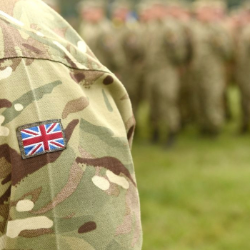
New platform maps charity support for the Armed Forces community
Pioneering data platform maps where the Armed Forces community receive support from charities

Northumbria co-leads study on fairer support for families
A major study co-led by Northumbria University will test whether attachment assessments lead…

New AHRC research shows how community innovation can power the next phase of devolution.
New research published today by the AHRC Creative Communities programme provides fresh evidence…

Free sessions to help families navigate the SEND system
Northumbria University's award-winning Student Law Office is launching SEND Decoded, a series…

New Doctoral Training Programme will tackle key polar science questions with a reduced carbon footprint
The Net Zero Polar Science (NZPS) Doctoral Training Programme (DTP) has welcomed its first…

New Student Health Hub brings joint health and wellbeing support
A new drop-in service is bringing health and wellbeing support for students at both Newcastle…

Researchers aim to grow optical fibres using biology instead of machinery
A new project led by Northumbria University aims to grow optical fibres using proteins, mimicking…
More events
Upcoming events

Next Stop Northumbria
Manchester Marriott Hotel Piccadilly
-

-
Magnetospheric Multiscale Science Working Team Meeting
Sutherland Building

Christmas Market and Tree lighting
Northumbria University
-
