
The longest satellite record ever assembled shows that Greenland and Antarctica have lost 11.3 trillion tonnes of ice since the 1970s, raising global sea levels by more than 3 centimetres – and that most of the loss has come from glaciers flowing faster into the ocean, not from melting at the surface.
 An international team of polar scientists has produced the most complete picture of ice loss from Greenland and Antarctica to date. The Ice Sheet Mass Balance Inter-comparison Exercise (IMBIE) Team combined 42 independent satellite surveys, drawing on 27 satellite missions and reaching back to 1972 for Greenland and 1979 for Antarctica using the early Landsat archive.
The findings show the two ice sheets lost 11,309 billion tonnes of ice between 1979 and 2023, pushing global sea levels up by 31.4 millimetres. Greenland accounts for the larger share and Antarctica contributed 13.3 millimetres. Strikingly, 84% of the combined loss was driven by glaciers speeding up and pouring more ice into the ocean, with just 16% due to surface melting. The polar ice sheets are now responsible for around a quarter of all global sea level rise.
The assessment was led by Dr Inès Otosaka and Professor Andrew Shepherd at Northumbria University, and Dr Tyler Sutterley of the University of Washington Applied Physics Laboratory. It is supported by the European Space Agency (ESA) and the US National Aeronautics and Space Administration (NASA) and is published in the journal Scientific Data.
Dr Inès Otosaka, who led the study, said: “By reaching back to the 1970s, we can now see how the ice sheets have changed across half a century. More than four-fifths of the ice lost was discharged into the ocean by faster-flowing glaciers, rather than melted at the surface – which tells us the long-term trend is being driven by the dynamic response of the ice sheets to a warming ocean.”
The record shows ice losses climbing steeply from the 1990s onwards. Greenland, close to balance in the 1970s, saw its rate of loss rise from around 60 billion tonnes a year in the 1980s to 264 billion in the 2010s, a decade marked by repeated extreme summer melt events.
 Antarctica’s rate rose from around 48 billion tonnes a year in the 1980s to 202 billion in the 2010s, with all of its net loss caused by ocean melting of its outlet glaciers; West Antarctica’s ice discharge, led by Pine Island and Thwaites glaciers, has risen in every decade of the record.
The most recent years (2020–2023) brought a temporary slowdown in ice loss. Record snowfall over East Antarctica have offset some of the continent’s glacier losses elsewhere, while a run of milder Greenland summers roughly halved its surface melting. Scientists caution these are short-term fluctuations against a clear long-term trend, not a reversal of ice loss.
The findings also underline the ice sheets’ central role in future sea level rise. Their response to a warming climate is the single largest source of uncertainty in sea level projections: high-end estimates of global sea level rise by 2150 increase by a factor of 2.6 once the risk of ice-sheet instability is accounted for. A continuous, half-century record of how the ice sheets are behaving is therefore vital to anticipating the risks facing the hundreds of millions of people who live in low-lying coastal areas.
Professor Andrew Shepherd, Head of the School of Geography and Natural Science at Northumbria University and founder of IMBIE, said: “Three centimetres of sea level rise may sound small, but that puts another six to nine million people at risk of coastal flooding and erosion. With the ice sheets set to lose much more ice in the decades ahead, global assessments like IMBIE are vital to protecting communities impacted by climate change.”
Dr Tyler Sutterley, IMBIE co-lead, said: “The added length of the record, the larger pool of participating teams and our improved ability to assess uncertainties make this the most robust assessment of ice sheet mass balance produced so far. Satellites give us continent-wide, year-on-year evidence of what is happening now, and that is exactly what we need to test models and narrow the uncertainties in projections of future sea level rise.”
Dr Diego Fernández, Head of the Science Section at ESA, said: “These findings show the fundamental importance of using satellites to monitor the ice sheets and to evaluate the models used to predict the effects of climate change. Sustaining missions such as CryoSat-2 and the Sentinels, and maintaining the long-term ice-sheet climate data record, is critical for the decades ahead.”
The paper Mass balance of the Greenland and Antarctic ice sheets from the 1970s to 2023 by the IMBIE Team is published in Scientific Data.
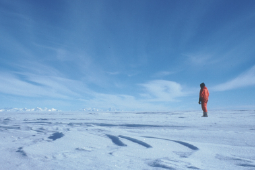
At Northumbria’s School of Geography and Natural Sciences, we are driven by one goal: protecting planetary health and building a more resilient future for both people and the natural world.
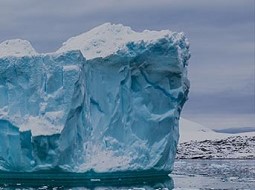
Northumbria's academics are studying the future of ice sheets and glaciers worldwide in a warming world. This involves understanding the causes of ongoing changes in Antarctica, Greenland and alpine areas, as well as assessing future changes and resulting impacts on human environments globally.

This is the place to find all the latest news releases, feature articles, expert comment, and video and audio clips from Northumbria University
Latest News and Features

New AHRC research shows how community innovation can power the next phase of devolution.
New research published today by the AHRC Creative Communities programme provides fresh evidence…

Free sessions to help families navigate the SEND system
Northumbria University's award-winning Student Law Office is launching SEND Decoded, a series…

New Doctoral Training Programme will tackle key polar science questions with a reduced carbon footprint
The Net Zero Polar Science (NZPS) Doctoral Training Programme (DTP) has welcomed its first…

New Student Health Hub brings joint health and wellbeing support
A new drop-in service is bringing health and wellbeing support for students at both Newcastle…

Researchers aim to grow optical fibres using biology instead of machinery
A new project led by Northumbria University aims to grow optical fibres using proteins, mimicking…

Training the next generation of space scientists
Northumbria University has hosted a major international workshop, bringing together leading…

International design competition to grow the colour of the future
Researchers at Northumbria University and Imperial College London have launched an international…

Northumbria graduates celebrated at North East Business Awards
Graduate entrepreneurs from Northumbria University are celebrating after winning recognition…
More events
Upcoming events

Next Stop Northumbria
Europa Hotel
-
The Past We Inherit. The Future We Build: Better Decisions Happen Together
The Great Hall, Sutherland Building
-
Next Stop Northumbria
Manchester Marriott Hotel Piccadilly
-
