
The Unit has a vibrant community of early career researchers undertaking exciting and innovative projects that reach around the globe. Find out more about some of our early career researchers and their work below.
Dr Kate Winter
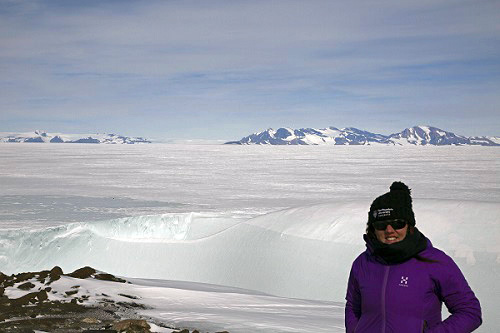
Dr Kate Winter is a Vice Chancellor's Research Fellow in the Department of Geography and Environmental Sciences within the Faculty of Engineering and Environment. In 2018, Dr Winter was awarded the prestigious Baillet Latour Antarctica Fellowship, enabling her to lead two research campaigns in East Antarctica, collecting valuable information about the complex interactions between rock and ice.
Dr Winter is passionate about education and outreach – teaching on a variety undergraduate courses, supervising a number of research students, and working closely with NUSTEM to help share her passion for science in the polar regions with the local community. Dr Winter is also an ad-hoc member of the Antarctic Place-names Committee and served on the local organising committee for the International Glaciological Society British Branch meeting hosted by Northumbria University in September 2019.
Find out more about Kate’s work
- Northumbria brings Antarctica’s unseen world to the screen
- Giant canyons discovered in Antarctica
- Antarctica has enormous mountain ranges and valleys deep beneath its ice
- Antarctica’s first zero emission research station shows that sustainable living is possible anywhere
Dr Natasha Jeffrey 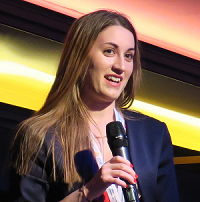
In 2019, Natasha joined Northumbria University as a Vice Chancellor's Research Fellow. Natasha’s research studies solar flares which are huge releases of energy in the Sun’s atmosphere and an important component of space weather. Solar flares provide a unique astrophysical laboratory for understanding many different high energy processes in physics. Her work uses a combination of X-ray observations and kinetic models to study flare-produced energetic particles. In 2021, she received a Science and Technology Facilities Council (STFC) funded New Applicant (ECR) award to explore the understudied connection between flare-accelerated particles at the Sun and those detected in the heliosphere by new space missions such as Solar Orbiter. Natasha is currently the deputy chair of UK Solar Physics, a specialist scientific group affiliated to the Royal Astronomical Society, a position to which she was elected by her peers.
Dr Sebastian Breitenbach
Sebastian is palaeoclimatologist with a passion for speleothem science, environmental monitoring, geochronology, and isotope geochemistry. Sebastian received his PhD in 2009 at Potsdam University for his research on Holocene changes of the Indian monsoon system. As postdoc at ETH Zurich and University of Cambridge, he then focused on clumped isotope geothermometry. In 2016, Sebastian took a post as Research Associate at Ruhr University Bochum. In January 2020, he joined the Department of Geography and Environmental Sciences at Northumbria University to build the Northumbria Isotope and Clumped geothermometry for Environmental Studies (NICEST) Laboratory. Recently, he also took on the role as the Department’s liaison officer for research laboratories. Sebastian previously served as PI of the EU RISE project QUEST and in 2020 was awarded a four-year research project grant by The Leverhulme Trust, allowing him to continue his decade-long research activities in Siberia.
Climate Change - Sebastian Breitenbach from Northumbria University on Vimeo.
Dr Jacob Miller 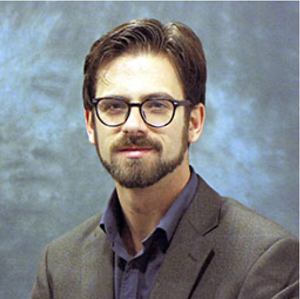
Dr Jacob Miller’s research focuses mainly on the role of affect, emotion and identity in the built environments of consumption and urban spaces more broadly. Jacob is currently focused on a controversial shopping mall development at the Chiloé archipelago in southern Chile. Using primarily ethnographic methodologies, his aim is to better understand how the embodied (affective and emotional) dynamics of everyday life inform the polarized controversy around this mega-retail development. Fieldwork conducted in 2015 focused on gathering different kinds of qualitative data around community responses to the mall and its broader contexts of a rapidly changing landscape that includes industrial aquaculture, new tourism developments and other mega-retail and infrastructure projects. Using classic methods like interviews and participant observation as well as mobile interviews and photo-elicitation, Jacob was able to get closer to the affective and emotional dimensions of rapid landscape change and the controversy around the new shopping mall as emblematic of post-dictatorship consumer society and neoliberal urbanism.
Most recently, Jacob has focused on the (geo)politics of consumption, from tourist geographies and state formation, to the role of consumer culture in the emerging far-right and post-truth politics of Trumpism in the U.S. In Jacob’s first book, Spectacle and Trumpism: An Embodied Assemblage Approach he puts forward a new approach to spectacle by drawing on the assemblage theories of Deleuze and Guattari, and others, to explain the arrival of Trump and Trumpism. This analysis contributes fresh insights to the rise of Trump and the politics of everyday consumer culture today. Read blog post about Jacob’s book
Dr Andrew Suggitt
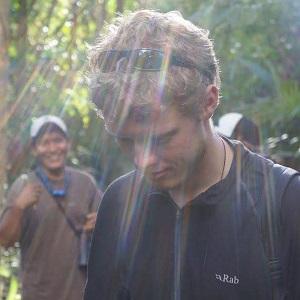
Dr Andrew Suggitt joined Northumbria as a Vice Chancellor's Senior Research Fellow in 2019. His research explores the effects of environmental changes on the natural world. Andrew is particularly focused on the extent to which an organism’s local climate, its ‘microclimate’, interacts with wider climatic conditions to define its prospects under contemporary climate warming.
Andrew’s latest research projects combine state-of-the-art microclimate modelling techniques with a new digitised map of land use in Great Britain to investigate how long-term changes in our climate and land use affect extinction risk in plant and animal species. He is also working to inform climate change adaptation efforts by identifying and describing climatic refugia for range-retracting species.
Find out more about Andrew’s work on his vimeo channel
Follow Andrew on twitter
View Andrew’s publications on Google Scholar
Dr Katie Oven
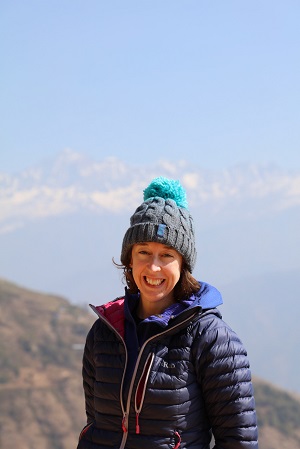
Dr Katie Oven is a geographer researching the social production of vulnerability to natural hazards (earthquakes and landslides), with a particular focus on South and Central Asia (Nepal, Northern India and Kazakhstan). Katie is currently involved in a range of projects that allow her to explore this area of research, working with collaborators in the UK and internationally.
Much of Katie’s time is currently devoted to a new GCRF-funded project on multi-hazards and systematic risks in Nepal. Sajag-Nepal: Preparedness and Planning for the Mountain Hazard and Risk Chain in Nepal (2021–2023), which brings together social and natural scientists, policy makers and practitioners from Nepal, the UK, Canada and New Zealand. Katie co-leads a work package exploring how the social, political and economic transformations associated with federalisation, development and geopolitics impact geohazard risk in rural Nepal. Here, her research focuses on everyday lives and resilience; how disaster risk is governed; and the role of social and natural science, and local knowledge, in decision-making around multi-hazards and systemic risks.
Dr Francis Masse
Dr Francis Masse is a human geographer who uses a political-ecology approach to research illegal wildlife economies (poaching and the wildlife trafficking) and its intersection with ecological, development and criminal concerns. Much of this research has focused on the ways in which states are responding to the illegal wildlife trade through conservation law enforcement and policing interventions, and how these are re-shaping conservation, human-wildlife relations, and related socio-economic outcomes in and around conservation areas. Much of his research is based on ethnographic and long-term research in Mozambique while also connecting it to broader, global dynamics. Francis is routinely involved in research to support policy and practice initiatives to develop sustainable and just ways to address poaching and wildlife trafficking.
Building on this background, Francis has recently begun research on a new GCRF-funded project on the impacts of COVID-19 on the wildlife trade. The project, 'Identifying and mitigating the impacts of COVID-19 on legal and sustainable wildlife trade in LMICs', brings together researchers from Northumbria University, the University of Birmingham, Manchester University, the University of Sheffield and the Centre for International Forestry Research to understand how COVID-19 is reshaping the wildlife trade landscape and to develop evidence-based guidelines for regulating wildlife trade to mitigate ecological and public health risks in the (post-)COVID-19 era. Find out more about this research. Francis’ research on this project will help him develop approaches to understand and research the intersections of political ecologies of joint health-environmental concerns.
More events
Upcoming events

Broken Bonds: New Perspectives on Marital Breakdown
The Great Hall
-
Supporting Survivors of Sexual Violence and Abuse Conference 2026
CCE1 - City Campus East 1
-
