Criminologist wins acclaimed Philip Leverhulme Prize to pioneer a new criminology of the offshore world
A Northumbria University criminologist has been awarded a Philip Leverhulme Prize, one of the…

 Case study: Supporting elite athletes by improving use of cryotherapy in recovery
Staff: Professor Glyn Howatson, Dr Stuart Goodall, Dr Kirsty Hicks
Cold water immersion (CWI), a form of cryotherapy, is routinely deployed after competition and other strenuous exercise to accelerate athletes’ recovery and provide a competitive edge. The English Institute of Sport (EIS) provides science and medicine support services to the British Olympic and Paralympic sports teams. Research from the University of Northumbria shaped the development of cryotherapy guidelines for the EIS. These guidelines formed the basis of training developed for EIS practitioners and physiotherapists who work with elite athletes. In the lead-up to and throughout the 2016 Rio Olympics, advice was adopted by the British Olympic Association, and the new guidelines were used by athletes across 23 Team GB sports to enhance recovery. Since then, additional research has led to the innovative application of phase change material (PCM) enabling more athletes to use cryotherapy, more often, and with greater benefits. This approach has been used by athletes in international competition, and six teams are using it in preparation for the Tokyo Olympics. Since 2019, all five EIS key treatment centres have also used the new technique.
Leeder, J., Gissane, C., van Someren, K. Gregson, W. and Glyn Howatson (2012). ‘Cold water immersion and recovery from strenuous exercise’ British Journal of Sports Medicine, 46: 233-240
Leeder, J., Godfrey, M., Gibbon, D., Gaze, D., Davison, G., van Someren, K. and Glyn Howatson (2019). ‘Cold water immersion improves recovery of sprint speed following a simulated tournament’ European Journal of Sport Science 19: 1166-1174 https://doi.org/10.1080/17461391.2019.1585478
Kwiecien, S., McHugh, M. and Glyn Howatson (2018). ‘The efficacy of cooling with phase change material for the treatment of exercise-induced muscle damage: pilot study’ Journal of Sport Science 36: 407-413
Kwiecien, S., McHugh, M., Stuart Goodall., Kirsty Hicks., Hunter, A. and Glyn Howatson (2019). ‘Exploring the efficacy of a safe cryotherapy alternative: physiological temperature changes from Cold Water Immersion vs Phase Change Material cooling’ International Journal of Sports Physiology and Performance 14: 1288-1296
Clifford, T., Abbott, W., Kwiecien, S., Glyn Howatson and McHugh, M. (2018). ‘Cryotherapy re-invented: application of phase change material for recovery in elite soccer’ International Journal of Sports Physiology and Performance 13: 584-589
Mullaney, M., *McHugh., *Kwiecien, S., **Ioviero, N., **Fink, A. and Glyn Howatson (2020). ‘Accelerated muscle recovery in baseball pitchers using Phase Change Material cooling’ Medicine & Science in Sports & Exercise

A Northumbria University criminologist has been awarded a Philip Leverhulme Prize, one of the…
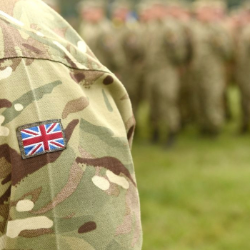
Pioneering data platform maps where the Armed Forces community receive support from charities

A major study co-led by Northumbria University will test whether attachment assessments lead…

New research published today by the AHRC Creative Communities programme provides fresh evidence…

Northumbria University's award-winning Student Law Office is launching SEND Decoded, a series…

The Net Zero Polar Science (NZPS) Doctoral Training Programme (DTP) has welcomed its first…

A new drop-in service is bringing health and wellbeing support for students at both Newcastle…

A new project led by Northumbria University aims to grow optical fibres using proteins, mimicking…

Manchester Marriott Hotel Piccadilly
-

Sutherland Building

Northumbria University
-
Page last reviewed: 25 January 2024
