Networks and Cyber Security BSc (Hons)
 Option for Placement Year
Option for Study Abroad

Option for Placement Year
Option for Study Abroad
Networks and Cyber Security BSc (Hons) at Northumbria University has been created to meet global demand for skilled individuals who understand how networks are designed, built and configured, how Cybersecurity works in an age where the online world is so vulnerable to attacks, and how software is used to monitor and secure these systems.
As we increasingly move our lives online, there is high demand for network and cyber security skills. So, this may be a future-proof career choice for people ready to rise to the challenge.
Starting with computer science essentials, you will become an expert in network engineering, digital security and forensics by the time you graduate. Specifically, you will study Advanced Network and Security modules and have the opportunity to opt for Cisco CCNA modules certifications through Cisco Net Academy.
The course highlight is a final year module involving a project focusing on topics related to advanced network and security technologies using state-of-the-art virtual machines, simulation or programming tools that could include AI or Machine learning.
Networks and Cyber Security is one of the fastest-growing areas of computer science. Every organisation needs protecting against cyber risk - from business to healthcare, and education to entertainment. That means, when you graduate, you will be qualified for a valuable job and be in high demand from a wide range of employers.
Experiential Learning: At Northumbria, every undergraduate course guarantees real-world experience.
You will have plenty of chances to practice your skills. During the course, you will take part in a business consultancy project, delivering solutions to real-world problems. This can be here in Newcastle or at our partner campus in London.
As well as this, you can opt for an optional year in industry or studying abroad. This can be a great opportunity to develop and enhance your intellectual and professional skills, broadening your overall learning experience.
UCAS Code
G417
Level of Study
Undergraduate
Mode of Study
3 years Full Time or 4 years with a placement (sandwich)/study abroad
School
Computer Science
Location
City Campus, Northumbria University
City
Newcastle
Start
September 2027
Fees
Fee Information
Modules
Module Information
Hear what it is really like to study Computer and Information Sciences from our students and staff
Find out more about what our department has to offer.

School

Business

Northumbria University launches Centre for Responsible AI.
Read the news story.
Northumbria graduate entrepreneur takes the AI industry by storm.
Read the news story
Northumbria to host Digital Civics Exchange in spring.
Read the news story.
Sensors built into wearable patches could signal the future.
Read the news story
Wearable device provides support for Parkinsons patients.
Read the news storyVisit an Open Day to get an insight into what it's like to study Networks and Cyber Security. Speak to staff and students from the course and get a tour of the facilities.
Visit an Open Day to get an insight into what it's like to study Networks and Cyber Security. Speak to staff and students from the course and get a tour of the facilities.
View their profiles to read about their research interests, academic journey, and publications.



Visit an Open Day to get an insight into what it's like to study Networks and Cyber Security. Speak to staff and students from the course and get a tour of the facilities.
We work very closely with companies in the North-East England and support them in their cyber security work.
The Department of Computer and Information Sciences is home to a variety of facilities and equipment to help enhance your studies.
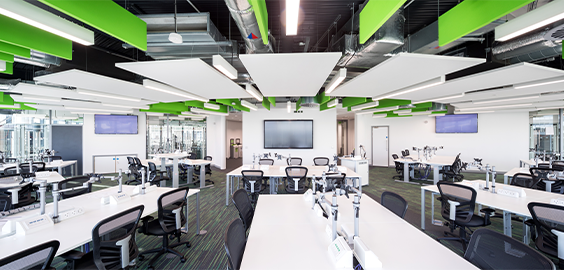


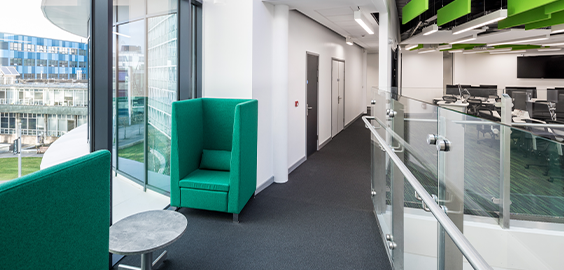
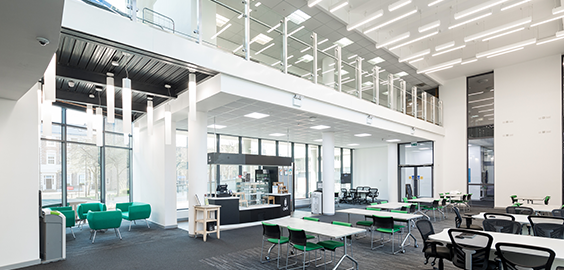
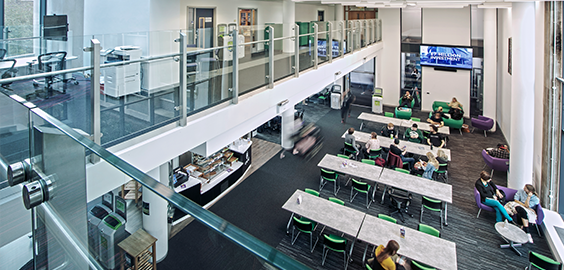
At the heart of each Northumbria campus, our libraries provide a range of study space and technology to suit every learning style.
Visit an Open Day to get an insight into what it's like to study Networks and Cyber Security. Speak to staff and students from the course and get a tour of the facilities.

Digital Health & Wellbeing

Network Systems and Security (NetSyS)

Computer and Information Sciences
See more research from this department

Visit an Open Day to get an insight into what it's like to study Networks and Cyber Security. Speak to staff and students from the course and get a tour of the facilities.
From first year through to final year and beyond graduation, we are here to help.

Real-World Learning
Discover the opportunities for learning beyond lectures

Careers and Employment Services
More about the support available during your studies and beyond
Visit an Open Day to get an insight into what it's like to study Networks and Cyber Security. Speak to staff and students from the course and get a tour of the facilities.
Standard Offer 112 UCAS Tariff Points
From a combination of acceptable Level 3 qualifications which may include: A-level, T Level, BTEC Diplomas/Extended Diplomas, Scottish and Irish Highers, Access to HE Diplomas, or the International Baccalaureate.
Find out how many points your qualifications are worth by using the UCAS Tariff calculator: www.ucas.com/ucas/tariff-calculator
Contextual Admissions 96 UCAS Tariff points
Northumbria University is committed to supporting all individuals to achieve their ambitions and we understand that every applicant’s circumstances can be different, which is why we take a flexible approach and assess your individual circumstances and potential when reviewing your application.
To find out more, review our Northumbria Entry Requirement Essential Information page for further details www.northumbria.ac.uk/entryrequirementsinfo
GCSE Requirements:
Applicants will need Maths, Statistics, or Physics and English Language at minimum grade 4/C, or equivalents.
International Qualifications:
We welcome applicants with a range of qualifications which may not match those shown above.
If you have qualifications from outside the UK, find out what you need by visiting www.northumbria.ac.uk/yourcountry
English Language Requirements:
International applicants should have a minimum overall IELTS (Academic) score of 6.0 with 5.5 in each component (or an approved equivalent*).
*The university accepts a large number of UK and International Qualifications in place of IELTS. You can find details of acceptable tests and the required grades in our English Language section: www.northumbria.ac.uk/englishqualifications
UK Fee in Year 1: £10,050
The UK tuition fee for 26/27 is £9,790 and is set in line with the UG Government's tuition fee cap. The University may increase this fee in subsequent years in line with any changes to the tuition fee cap. Students will be notified of any increase ahead of it taking effect. The remaining fees relate to the International Soccer Academy and accommodation fees. Accommodation fees may increase in subsequent years. Students will be notified of any increase ahead of the re-issuing of tenancy agreements. Tuition fees in the academic year 2027/28* will be £10,050. Fees are set in line with the UK Government's tuition fee cap. The University may increase fees in subsequent years in line with any changes to the tuition fee cap. Increases will be linked to inflation. For example, increases may be linked to RPIX (Retail Price Index excluding mortgage interest payments) Students will be notified of any increase ahead of it taking effect. Student fee loans rise in line with the tuition fees cap. *if your course is longer than one year
* Fees subject to annual increases over the course of the period of study. Students will be liable for payment of any/all tuition fees which are not sponsored by their employer or other third party.
International Fee in Year 1:
This is the tuition fee for your first year of study. You should expect to pay tuition fees for every year of study. The University may increase fees in the second and subsequent years of your course at our discretion in line with any inflationary or other uplift. Students will be notified of any increase ahead of it taking effect.
Tuition fees in the academic year 2027/28* will be £10,050. Fees are set in line with the UK Government's tuition fee cap. The University may increase fees in subsequent years in line with any changes to the tuition fee cap. Increases will be linked to inflation. For example, increases may be linked to RPIX (Retail Price Index excluding mortgage interest payments) Students will be notified of any increase ahead of it taking effect. Student fee loans rise in line with the tuition fees cap.
This is the programme fee for your first year of study. The programme fee includes the international tuition fee, International Soccer Academy and accommodation fees. Accommodation fees may increase in subsequent years. Students will be notified of any increase ahead of the re-issuing of tenancy agreements.
ADDITIONAL COSTS
There are no Additional Costs
* At Northumbria we are strongly committed to protecting the privacy of personal data. To view the University’s Privacy Notice please click here
Module information is indicative and is reviewed annually therefore may be subject to change. Applicants will be informed if there are any changes.
KV4006 -
Computational Thinking (Core,20 Credits)
Thinking like a computing professional means more than being able to program a computer. It requires solving problems at multiple levels of abstraction. Before any programming begins the solution to the problem must be understood. Using real world case studies, in this module you will develop skills to decode client’s problems developing skills of abstraction and systems design to specify solutions. A key skill employers seek is the ability to solve problems, in this module you will develop computational thinking to achieve this. Computational thinking is a range of mental tools such as algorithms, modelling, logic, generalisation, decomposition, abstraction, pattern recognition and others that reflect the full breadth of Computer Science. Computational thinking is about solving problems, designing systems and understanding human behaviour. This module will teach you to reformulate seemingly difficult problems into solvable ones by using processes such as reduction, embedding, transformation or simulation.
Computational thinking can be applied to a wide variety of subject areas beyond computing, to the sciences, the arts and business. Whether developing a start-up for the latest sustainable product or fighting for social justice you will learn to be able to apply computational thinking’s vocabulary (for example algorithm, precondition, non-determinism, etc.) to many non-digital problems. In this module you will learn not to program but to conceptualize. You will learn not by rote skill, but instead by leveraging fundamental principles, by engaging with ideas not artefacts, and by embedding learning and exploration in your experience. Computational thinking has implications for everyone, everywhere and it will be integral to your future in both digital and real-life endeavours.
During ‘Computational thinking’ you will work through a series of exercises, making use of Northumbria’s state-of-the-art computer labs and digital security lab. You will also critically engage with research outputs as part of your research-rich learning. The principal elements of assessment will involve decomposing and analysing a real-world problem correctly, and identifying a solution before trying to design and implement it.
KV4007 -
Computers & Society (Core,20 Credits)
What is a ‘good’ technology? This module will provide an introduction to the range of effects, opportunities and unintended consequences, that computing has upon society. The design decisions taking in developing technologies can have far reaching consequences across all areas of society, from big philosophical questions such as ‘can computers ever be sentient’, to shopping for groceries, and biohacking.
This module will provide a foundation in concepts such as the forms of harms which can arise from the design, development, and use of technologies, including algorithmic harms, and compounding existing inequalities. Conversely you will be familiarised with where disruption provides new opportunities and challenges society to re-evaluate the status quo. This is approached through a framing which considers broader attitudes towards technology, sustainability, what drives the development of technology for profit, and how users may stage resistance against authority/power using computers. Topics include algorithmic harms, the digital citizen and pro/anti-social behaviours, morality and ethical design, and future of a digital society.
During ‘Computers & Society’ you will engage in research-rich critical analyses of harm arising through the development of technology, learn how to develop evidence-driven arguments, and position yourself as a responsible computing professional by identifying what harms you might unintentionally contribute to, and how you might avoid or mitigate doing so.
KV4008 -
Computing Fundamentals (Core,20 Credits)
This module aims to provide you with a theoretical and practical foundation required to understand the fundamental underpinnings of a computing system. You will be introduced to the basic concepts and first principles involved in computer software, information representation and the operations and components used in computer system architectures. You will gain an understanding of the underlying theory of computation as well as the major computational and programming paradigms. To complement this theoretical underpinning, you will also study the standard von Neumann computer architecture and von Neumann machine programming.
This module will help you develop logical reasoning, computational thinking and problem-solving skills employers look for. An introductory understanding of computer architecture and assembly programming improves your career options in areas such as embedded systems. Practising and developing mathematical skills and problem-solving improves your employability and allows you to develop this area further at later stages of the programme. A broad understanding of the theoretical principles of computing allows you to extend this understanding into areas of theoretical research. It also allows you to engage with wider discussions in the computing community. The module examines current computational paradigms and principles of design of computer hardware and their environmental impact.
KV4009 -
Data Fundamentals (Core,20 Credits)
This module focuses on core data concepts, and the design, implementation and use of database systems. It introduces database systems, the tools for manipulating data in databases, and design principles that ensure data security and integrity. Topics include database management systems architecture, data modelling and database design, query languages, data preparation and cleansing techniques and security, legal and ethical issues concerning the use of databases in society. You will consider issues such as the sustainability of data, and the ethics of responsible data capture and use.
You will work with database systems and data services used in industry. The module follows some of the same topics as the MS Azure Data Fundamentals (DP-900) certification course, therefore students may wish to pursue this certification during their programme.
During ‘Data Fundamentals’ you will work through a series of exercises, making use of Northumbria’s state-of-the-art computer labs. You will also engage with research outputs as part of your research-rich learning. One assessment component (50%) will be a written report that demonstrates your understanding of ethical, legal and security related issues concerning data and databases, based on current research. The other assessment component (50%) will be a practical assessment that assesses your knowledge and skills relating to key data concepts, analysis, and techniques.
‘Data Fundamentals’ will prepare you for later modules such as ‘Data Mining’, as well as for a placement in your third year. Employers are looking for skilled graduates who have technology-based certifications such as MS Azure Data Fundamentals (DP-900) that validate their skills in analysing data and applying effective solutions to computing problems.
KV4011 -
Introduction to Networks and Cyber Security (Core,20 Credits)
This module will cover the basics of computer networking through the TCP/IP reference model, discussing different network layers with applications and explore security topics like general security threats, network attacks, device attacks and mitigations.
‘Introduction to Networks and Cyber Security’ will prepare you for later modules such as 'Network Switching and Routing', 'Network Switching and Routing' and ‘Computing Dissertation’, as well as for a placement in your third year. Employers are looking for skilled network and security specialists who can work as individuals and as members of a team in analysing computer network problems and applying effective network and security solutions.
During ‘Introduction to Networks and Cyber Security’ you will work through a series of exercises, making use of Northumbria’s state-of-the-art computer labs and digital security lab. You will also critically engage with research outputs as part of your research-rich learning. The main element in assessment (100%) will be a final network and cyber security assignment that will bring together all your new skills and techniques.
KV4012 -
Programming (Core,20 Credits)
During this module you will learn how to create software using a high-level programming language such as Python. You will learn to select and apply standard programming structures for appropriate situations. The module will cover the use of variables, conditions, loops, subprograms, abstraction mechanisms and structured data types. You will learn to apply your skills using a professional development library, such as Flask, to build interactive user interfaces.
You will practise solving problems by breaking them down into smaller tasks. As well as constructing software that works, you will also start to consider the quality of your code and produce software that is reliable and maintainable by working to professional standards. You will learn to test, debug and maintain software of an appropriate size and to manage your time in constructing well-structured software products. We will study one programming language in detail on this module. This course will powerfully contribute to your employability by beginning your journey into software development, a skill which many employers will test before interview. As the course develops you will get to use professional software development libraries to aid your graduate employability. You will be encouraged and supported to go beyond the essential skills in and advance your development experience.
During ‘Programming’ you will work through a series of exercises, making use of Northumbria’s state-of-the-art computer labs and digital security lab. You will also critically engage with research outputs as part of your research-rich learning. The main elements of assessment are a set of programming assignments that will bring together all your new skills and techniques.
SE5000 -
Skills for Academic Success in a UK University (Core – for International and EU students only,0 Credits)
You will develop your understanding of academic conventions in UK higher education aligned to your level of study, including expectations around critical analysis, structure, argumentation, evidencing, and referencing. The module focuses on developing communication strategies that will help you express your ideas clearly and coherently in written assignments and spoken activities. You will also reflect on your current academic and language skills and develop strategies for development ahead of your assessments.
More informationKV5035 -
Software Architecture (Optional,20 Credits)
This module will give you an essential foundation in software architecture. You will learn about the importance of making high-level design choices when developing software systems. You will learn how to model and reason about architectural design choices and to take account of multiple perspectives and concerns. You will be introduced to a range of architectural styles and to their application. You will learn about the relationship between software architecture and software quality, including security, dependability, and scalability. The module will combine ways of thinking and reasoning about software systems with practical approaches to implementation. You will learn how to use appropriate frameworks and libraries, how to use tools for managing quality and risk, and how to create interfaces between system components. As part of the work you will build a component-based system.
‘Software Architecture’ will prepare you for your final year, providing approaches that will be valuable if you develop software for your Group and Individual Projects. Employers are looking for skilled software architects who can work as individuals and as members of a team in making high-level design choices and framing technical standards. Software Architect roles are often among the highest paid in the software industry.
During ‘Software Architecture’ you will work through practical exercises, making use of Northumbria’s state-of-the-art computer labs. You will also critically engage with research outputs as part of your research-rich learning. The assessment will be a final assignment to design, implement and document a software system following architectural principles.
KV5036 -
Computer Vision (Optional,20 Credits)
This module will give you a good understanding of the mathematical principles and practical implementation of computer vision systems. You will be taught the fundamental mathematics, statistics, and machine learning algorithms that allow you to build computer vision systems to gain insight into the contents of images and videos.
You will develop a computer vision system that is designed for a specific application, for example the detection and classification of speed limit signs for an autonomous car, the detection and recognition of a face for secure access systems, or the detection and classification of human activity in a video. You will follow rigorous engineering principles to build the system architecture and adopt a holistic and proportionate approach to mitigate security risks in system running. You will also be required to conduct independent learning of state-of-the-art computer vision techniques and gain the knowledge to continuously improve the system performance. Furthermore, you will need to evaluate the environmental and societal impacts of the solution you have built and recommend measures to minimise adverse outcomes.
KV5037 -
Computing Consultancy Project (Optional,20 Credits)
This module is a practical hands-on application of business principles. It aims to put you – and a group of your peers - into the real-world situation of solving problems for businesses. This will include contacting the client to negotiate, agree and confirm initial project requirements and then working towards a deliverable that is acceptable to the client within the given time frame. This process requires the application and development of several key skills associated with project management and consultancy such as team organisation, working with others, planning and timekeeping. Employers are looking for students with these transferable skills who can adapt and work as individuals and as members of a team in analysing computing problems and applying effective programming solutions.
The consultancy projects vary year-on-year many technology-based and, therefore, students are expected to use and develop their own expertise in this area. At the end of the module, each group will be expected to present their findings via the deliverable and to give a formal presentation for the benefit of the tutors. The projects will be supplemented by lectures and seminars introducing the skills required for such consultancy and project management work especially during the first third of the module.
KV5040 -
Data Visualization (Optional,20 Credits)
This module uses your computer programming skills to develop an understanding of the theory and practice of data visualization. Data visualization is an essential part every data scientist’s toolkit. Using a range of techniques and tools you will explore complex datasets and communicate the findings of your data analysis activities. The wide availability of dashboards, programming languages such as R and Python, and interactive literate programming environments such as Jupyter Lab and Google Colab have made data visualization a much sought-after skill.
Employers seek people who can analyse their datasets and use visualization techniques to generate rich insights into the processes and phenomena from which the datasets were generated. These insights are then used to create value for the employer by, for example, improving practice, generating new leads, identifying productivity challenges, and so forth.
You will work through a series of exercises, making use of Northumbria’s state-of-the-art computer labs to anaylse and visualize a range of datasets. You will also critically engage with research outputs as part of your research-rich learning. You will also consider how to minimise
the environmental impact of data visualization, through the use of, for example, sustainable practices in data centres and using energy-efficient hardware. Ethical issues around how data visualizations can be used will be explored.
The main assessment will be a data visualization assignment that will bring together your newly developed skills and techniques and apply them to a data analysis and visualization problem which will be written up in the form of a research article supported by the source code of your visualization solution.
KV5041 -
Digital Forensics Incident Response (Optional,20 Credits)
This module provides a broad and practical introduction to the fundamentals of digital security and forensics. The module will foster your skills in problem solving by applying investigative skills within the strict boundaries of the law and in keeping with ethical and professional codes of practice. Increasingly, employers are looking for network and cybersecurity professionals who understand how digital forensics can support the response to cybersecurity incidents, an area of digital forensics known as digital forensics incident response (DFIR). This module will provide you with the knowledge and skills to understand this area of cyber security.
The theoretical material on digital security and forensics will be re-enforced through the analysis and discussion of case studies in seminar sessions as well as sessions on the use of security and digital forensics tools in the analysis of chosen case studies in lab-based practical sessions.
You will develop analytical and evaluative skills in the appropriate use of industry software for solving problems in a variety of DFIR environments and problem situations. The ethical responsibilities of studying digital security and forensics and the need to address personal and professional integrity will be included in the module.
You will also critically engage with research outputs as part of your research-rich learning. The main element in assessment (100%) will be a written report that will bring together all your new skills and techniques.
KV5045 -
Human Factors in Cyber Security (Core,20 Credits)
This module is set in the context of human-centred security and highlights the symbiotic relationship between both parties for holistic security solutions. You will learn about the role of humans in security ecosystems, and how they can both be the weakest and strongest link across any threats or countermeasures. You will also learn how to tailor security processes and tools to different job roles, and move towards understanding security as a process rather than as a solution. Topics include basic definitions of terminology alongside practical and theoretical frameworks to help you identify key usability and security issues, and explore potential preventative measures.
Human Factors in Cyber Security will prepare you for later modules, including your final year project, where you will be required to plan and execute individual work as part of your research-rich learning. Employers are looking for graduates with knowledge of technical and social security to ensure that organisations are fully protected against modern cyber threats, and this module will complement your technical portfolio of knowledge.
KV5048 -
IT Service Management (Optional,20 Credits)
This module will give you an understanding of the principles, concepts and practices of IT Service Management and the associated areas of Project Management, Value Management, and Change Management. These skills are essential to the successful use of Information Technology within organisations and are highly sought after by employers.
The module builds on the foundations of computing and business developed in the first year to focus on the methods and techniques used by IT professionals to manage the organisational change resulting from the implementation and use of Information Technology and Information Systems.
This includes an understanding of best practice frameworks such as ITIL.
Larger changes require the use of Projects and so this module will also provide an introduction to Project Management practices, techniques and terminologies including Project Specification, Monitoring and Controlling, and Risk Management.
The formative exercises in the workshops will include some group work but the final summative assessment is an individual assignment applying the concepts learnt within this module to a case study.
KV5049 -
Mobile & Web App Development (Optional,20 Credits)
This module will give you knowledge of the principles and practice of developing cross platform, progressive mobile web applications for location aware, networked devices, using relevant technologies, and of issues relating to their use, such as accessibility. You will learn to design, develop and test mobile web applications.
‘Mobile Computing’ will provide you with knowledge and skills that are useful for later modules such as Computing Dissertation, as well as for a placement in your third year. Employers are looking for skilled mobile web application developers who can analyse problems and apply solutions.
During ‘Mobile Computing’ you will work through a series of practical exercises, making use of Northumbria’s state-of-the-art computer labs. The assessment will involve developing a mobile web application.
KV5050 -
Network Switching and Routing (Core,20 Credits)
This module will provide you with technical knowledge regarding routing and switching strategies for data packets in computer networks, how to design Local Area Networks (LANs) using routers and switches and a hands-on experience of implementing LANs. NETWORK SWITCHING AND ROUTING module will prepare you for later ‘Enterprise Networks and Security’ module.
Moreover, this module will prepare you for placement opportunities in the domain of networks. A particular feature of the module is that it closely follows the programme for CCNA 2 of Cisco’s Networking Academy programme, and you will have the opportunity to get the CCNA2 certification. This module will equip you with skills that are much sought after by the employers looking for candidates with practical experience in network design and development while the CCNA2 certification is an added benefit that will enhance your career opportunities.
There is an emphasis on practical work in the delivery of the module and you will have an opportunity to work directly with industry standard networking hardware and software at the Northumbria’s state-of-the-art CISCO-based computer labs. The main assignment (100%) will be the final assessment that will allow you to apply the theoretical and practical knowledge.
KV5057 -
Indie Games Studio (Optional,20 Credits)
This module introduces you to technologies and processes involved in the production of innovative and creative games and entertainment technologies.
Through this module, you will learn how to work collaboratively and creatively in a studio start-up environment. You will have access to the University’s state-of-the-art software and hardware kits for your learning and be able to hone your skills in building creative technologies using software development toolkits (SDKs) and game engines. In the process, you will gain the ability to prioritise requirements and critically evaluate a creative technology.
The ability to develop games and entertainment technologies attracts the attention of employers from a diverse range of industries, including but not limited to software engineering, graphics programming, 3D modelling, and human-computer interaction. The creative and development skills covered in this module can enhance your employability in those and related fields
KV5058 -
Secure Operating Systems (Core,20 Credits)
This module aims to provide experience in the practical use and application of an operating system in a network environment and how to secure them. You will learn to design and implement essential network services required for a commercial organisation within different operating systems, and learn about how to protect them.
‘Secure Operating Systems’ will prepare you for later modules such as Computing Group Project, Advanced Security and Enterprise Networks and Security, as well as for a placement in your third year. Employers are looking for skilled cybersecurity engineers who can work as individuals and as members of a team in analysing computer networking problems and applying effective solutions with the knowledge of operating systems.
During ‘Secure Operating Systems’ you will work through a series of exercises, implement network services and apply them to business needs, make use of Northumbria’s state-of-the-art computer labs and digital security lab. You will also critically engage with research outputs as part of your research-rich learning. The main element in assessment (100%) will be a final assignment that will bring together all your new skills and techniques.
LD5007 -
Contemporary Issues in Computing and Digital Technologies (Optional,20 Credits)
As a computing and digital technology student, it is imperative for you to maintain an up to date knowledge and understanding of contemporary research and technological developments relating to this ever evolving discipline. The syllabus of this module will be shaped by current scholarly and practitioner research and technological developments relevant to computing and digital technologies. This module particularly provides you opportunities to learn about developments in Computing and Digital Technologies both theoretical and technological as you prepare for your experiential learning semester where you will be working with a range of employers who are facing contemporary organisational challenges.
Indeed, the module will help you recognise, explore and develop knowledge and skills in areas of contemporary significance as they affect the wider computing and digital technologies discipline. Potential topics covered (with a focus on their relevance towards your experiential learning) could include, for example:
• Technological developments, research and issues related with contemporary technologies such as Internet of Things (IoT), Blockchain, AI, Cloud and Immersive Technologies
• Cyber Security
• Decision Intelligence, Data Fabric and Big Data
• Contemporary social, ethical and sustainability issues.
The assessment will be a literature review (3000 words) on a contemporary topic in computing and digital technologies as agreed with your tutor.
LD5008 -
Developing Digital and Professional Competence (Optional,20 Credits)
As part of your experiential learning journey you will develop a range of digital and professional competences as outlined by the Computing Curricula 2020. Computing and Digital Technologies is a wide field in which professionals can find themselves working within a number of different roles and specialisms, each requiring specific knowledge, skills and dispositions related to the tasks they perform. This module builds on the knowledge, skills and dispositions developed so far to provide an opportunity for you to tailor the learning conducted within level 5 of your programme towards acquiring those competencies that will help you develop towards becoming a professional specialising in Computing with Technology/Computing with Cybersecurity Technology/Computing with Data Science and Big Data Technology/Computing with AI technology/Computing with IT Management.
As such this module is intended to develop your understanding of these essential digital and professional competences and your ability to recognise the need for and to enter into the process of personal and professional development. Your experiential learning during your internship or consultancy or professional practice activity will specifically enable you to develop professional competencies such as being adaptable, collaborative, inventive, meticulous, passionate, proactive, professional, purpose driven, responsible, responsive and a self -directed learner to name but a few. Additionally, you will also develop digital and technical competencies as supported through experiential learning activities. These may include but not limited to systems modelling, systems architecture, computing systems fundamentals, software development, algorithms, programming, data and information management and cyber security.
This module will support you in demonstrating an increased self-awareness and self-understanding of your existing technical, management and wider professional competence, underpinned by use of theoretical concepts and models. You will conduct self analysis of your competencies using and develop a plan You will also develop an understanding of management competence by engaging in self- and social-development processes; identifying personal and professional competence development needs; recording and evaluating their competence development and identifying continuing personal and professional competence development needs.
The module is assessed through a reflective journal in which you will present and review your competence development and implications for your future career aspirations.
LD5009 -
London Campus UG Internship (Optional,20 Credits)
This module aims to provide you with an experiential learning opportunity in a workplace setting that utilises skills and knowledge acquired during the first half of your study on the programme. Indeed the Internship module is designed to deepen your knowledge and enhance employability in your specialist field. Specifically you will develop resilience and flexibility as you adapt to a different learning environment, and gain a new perspective in comparison with your taught studies. Computing and Digital Technologies is a wide discipline in which professionals can find themselves working within a number of different roles and specialisms, each requiring a specific technical skillset. This module builds on the skills developed so far to provide an opportunity for you to tailor the learning conducted so far in your programme towards acquiring those skills that will help you develop towards becoming a professional specialising in Computing with Technology/Computing with Cybersecurity Technology/Computing with Data Science and Big Data Technology/Computing with AI technology/Computing with IT Management.
Indeed, the skills and knowledge demonstrated within this module will vary on an individual basis, dependent on the area of work experience gained through placement. It is expected, however, that this is utilised as an opportunity to develop yourself within an area that is relevant to the BSc (Hons) Computing with subject specialisms, and which is an area of priority given your planned professional development.
This is an optional module, and you will be guided about the options available by your programme and career teams during semester 2 of your level 4 studies and again in semester one of your Level 5 studies. You will confirm your option to choose either Internship or consultancy project or professional practice. working with the careers team, module academic team and your personal tutor, you will conduct a skills audit to identify internship opportunities and roles that can be undertaken within the area of your subject specialism. If you are a part time learner you may also be able to use your existing workplace. Indeed, to support securing your internship you will attend workshops throughout your degree. You will also have access to careers portal hosting a wealth of employability and careers development resources.
You will be given guidance on how to identify suitable internship opportunities. The successful internship is subject to rigorous selectin process by the relevant employer. The careers and employability team will provide guidance on CV writing, interview techniques and build an attractive employability profile. While careers and employability team will assist you to find a suitable internship for you, however this is not guaranteed.
Your Internship will vary according to your specialist pathway programme of study and the host organisation, but each Internship undertaken will meet the following general requirements:
• that you will undertake work in an organisation that will last one semester in duration;
• that you will undertake work, where appropriate or necessary for professional body requirements, which are directly relevant to your programme of study.
• that the Internship will be approved by the University
Indicative syllabus:
• On the job training and work experience dependent on your role as an internee. Some examples could include, but are not limited to:
o Cyber security, Data Analytics and Big Data, Machine Learning, AI, DevOps, Enterprise Architecture, Ethical Hacking, Networks, Business Analysis.
• Refining a personal development plan.
• Reflective frameworks for evaluation
You will be encouraged to critically engage with outside practices, and to reflect on your educational development in the context of the challenges posed by an unfamiliar social, cultural and economic environment. The assessment consists of evidenced based portfolio Report (2000 words), weighted at 70% and a Poster Presentation, weighted at 30%.
LD5010 -
London Campus Undergraduate Professional Practice (Optional,20 Credits)
This module is designed to develop your self-guided learning skills and knowledge and develop your own professional development needs in the context of your degree in Computing and Technology with subject specialisms of your choice. Computing and Digital Technologies is a wide field in which professionals can find themselves working within a number of different roles and specialisms, each requiring a specific technical skillset. This module builds on the skills developed so far to provide an opportunity for you to tailor the learning conducted within level 5 of your programme towards acquiring those skills that will help you develop towards becoming a professional specialising in Computing with Technology/Computing with Cybersecurity Technology/Computing with Data Science and Big Data Technology/Computing with AI technology/Computing with IT Management.
This is an optional module, and you will be guided about the options available by your programme and career teams during semester 2 of your level 4 studies and again in semester one of your Level 5 studies. You will confirm your option to choose either Internship or consultancy project or professional practice. Working with the module academic team, your personal tutor, academic supervisor and careers team, you will conduct a skills analysis to identify relevant training that can be undertaken within the area of your subject specialism. This training can take a number of forms, be it:
• Technical training delivered in the form of a skills bootcamp within the class environment or
• Structured online learning or
• A mini project
• Or, another appropriate form approved by the academic team.
Following completion of the training, the acquired skills will be focused towards a specified project or business challenge.
The skills and knowledge demonstrated within this module will vary on an individual basis, dependent on the area of professional development identified for study. It is expected, however, that this is utilised as an opportunity to develop yourself within an area that is relevant to the BSc (Hons) Computing with subject specialisms, and which is an area of priority given your planned professional development.
Indicative syllabus:
• Technical training dependent on identified need. Some examples could include, but are not limited to:
o Cyber security, Data Analytics and Big Data, Machine Learning, AI, DevOps, Enterprise Architecture, Ethical Hacking, Networks, Business Analysis.
• Refining a personal development plan.
• Methodologies to support system/software development/secure development (e.g. Systems Engineering).
• Reflective frameworks for evaluation.
LD5015 -
London Campus UG Group Consultancy Project (Optional,20 Credits)
This module aims to provide you with an experiential learning opportunity in a workplace setting that utilises skills and knowledge acquired during the first half of your study on the programme. The Advanced Practice Group UG Consultancy Project module is designed to deepen your knowledge and enhance employability in your specialist field. You will develop resilience and flexibility as you adapt to a different learning environment and gain a new perspective in comparison with your taught studies. The module will help you develop your abilities as a problem solver with valued investigative, theoretical and practical skills to implement a work-based group consultancy project.
Through this consultancy project, you will help develop hand-on experience of working on real life project that experience is directly transferrable to be utilised to the world of work after your graduation.
Computing and Digital Technologies is a wide discipline in which professionals can find themselves working within a number of different roles and specialisms, each requiring a specific technical skillset, knowledge and behaviours. This module builds on the skills developed so far to provide an opportunity for you to tailor the learning conducted within level 5 of your programme towards acquiring those skills that will help you develop towards becoming a professional specialising in Computing with Technology/Computing with Cybersecurity Technology/Computing with Data Science and Big Data Technology/Computing with AI technology/Computing with IT Management.
This is an optional module, and you will be guided about the options available by your programme and career teams during semester 2 of your level 4 studies and again in semester one of your Level 5 studies. You will confirm your option to choose either Internship or consultancy project or professional practice. You will work as a group (3 to 5 students) on a complex technical or organisational problem or commercial opportunity for the length of a semester. Your consultancy project will align to your degree specialism. You will develop a client-oriented solution along with a management report and presentation alongside an individual literature review and a personal reflection. You will be allocated academic supervisor who will support you throughout the semester. You will have regular meetings with academic supervisor who will also organise meetings with client organisation.
The assessment for this module consists of a Group Consultancy Report (2,000 words) along with presentation weighted at 50% and an Individual Assignment (2000 words) comprising a literature review (1000 words) and Reflective Learning Statement (1000 words), weighted at 50%.
Indicative syllabus:
• The project scoping documentation will be shared to scope out the expectations of consultancy project at the start of the semester. The examples could include, but are not limited to consultancy projects in the following areas of specialism:
o Cyber security, Data Analytics and Big Data, Machine Learning, AI, DevOps, Enterprise Architecture, Ethical Hacking, Networks, Business Analysis.
• Refining a personal development plan.
• Reflective frameworks for evaluation
Assessment on the module is designed to focus on the awareness of the impact of the time spent in an external learning environment, on your knowledge and understanding of the discipline. You will be encouraged to critically engage with outside practices, and to reflect on your educational development in the context of the challenges posed by an unfamiliar social, cultural and economic environment.
SE5000 -
Skills for Academic Success in a UK University (Core – for International and EU students only,0 Credits)
You will develop your understanding of academic conventions in UK higher education aligned to your level of study, including expectations around critical analysis, structure, argumentation, evidencing, and referencing. The module focuses on developing communication strategies that will help you express your ideas clearly and coherently in written assignments and spoken activities. You will also reflect on your current academic and language skills and develop strategies for development ahead of your assessments.
More informationKV5007 -
Work placement year (Optional,120 Credits)
This module is designed for all standard full-time undergraduate programmes within the Faculty of Engineering and Environment to provide you with the option to take a one year work placement as part of your programme.
You will be able to use the placement experience to develop and enhance appropriate areas of your knowledge and understanding, your intellectual and professional skills, and your personal value attributes, relevant to your programme of study, as well as accreditation bodies such as BCS, IET, IMechE, RICS, CIOB and CIBSE within the appropriate working environments. Due to its overall positive impact on employability, degree classification and graduate starting salaries, the University strongly encourages you to pursue a work placement as part of your degree programme.
This module is a Pass/Fail module so does not contribute to the classification of your degree. When taken and passed, however, the Placement Year is recognised both in your transcript as a 120 credit Work Placement Module and on your degree certificate.
Your placement period will normally be full-time and must total a minimum of 40 weeks.
KV5008 -
Study abroad year (Optional,120 Credits)
This module is designed for all standard full-time undergraduate programmes within the Faculty of Engineering and Environment and provides you with the option to study abroad for one full year as part of your programme.
This is a 120 credit module which is available between Levels 5 and 6. You will undertake a year of study abroad at an approved partner University where you will have access to modules from your discipline, but taught in a different learning culture. This gives you the opportunity to broaden your overall experience of learning. The structure of study will be dependent on the partner and will be recorded for an individual student on the learning agreement signed by the host University, the student, and the home University (Northumbria).
Your study abroad year will be assessed on a pass/fail basis. It will not count towards your final degree classification but, it is recognised in your transcript as a 120 credit Study Abroad module and on your degree certificate in the format – “Degree title (with Study Abroad Year)”.
KV6009 -
Advanced Security (Core,20 Credits)
The aim of this module is to equip students with the advanced knowledge and practical skills necessary to effectively analyse, defend, and respond to complex cybersecurity threats.
The module covers a range of topics and starts with building an understanding of the basics of Cryptography by exploring the fundamentals of encryption and decryption, the modern cryptographic algorithms, security protocols and their role in secure communication.. The module also discusses the mathematical functions used in these algorithms, such as Euclid’s algorithm, prime numbers and primitive roots. In the later weeks, the module discusses topics that aid students to learn how to think like an attacker to identify vulnerabilities, help develop skills in penetration testing, vulnerability assessment, and exploit mitigation to strengthen system defences. The module will also explore the inner workings of firewalls and Intrusion Detection Systems (IDS). Students will learn how to configure, analyse, and optimize network defences to safeguard critical infrastructure and systems. This module helps the students to build the knowledge required to safeguard the modern day system. This knowledge is going to give the students an edge when applying for jobs that are related to ethical hacking and cyber security analyst. Students from all backgrounds will gain expertise in core concepts of cryptography, ethical hacking, network security, and risk assessment, utilizing industry-standard tools and technologies for comprehensive protection of digital assets in an inclusive and collaborative learning environment.
KV6013 -
Computing Project (40 Credits)
This is your major final year project module where you will undertake a substantial individual practical computing project related to your programme of study. You will become knowledgeable in your chosen topic including important concepts and literature. You will use and further develop skills learnt elsewhere in your programme and acquire new skills and expertise to carry out the practical computing work. These could be technical skills such as a new programming language, experimental methods, and/or the use of statistical techniques to analyse your results. You will also acquire or further develop your professional skills including communication skills (both oral presentation and report writing), literature searching and review, research methods and design, project management and personal time management. Both the technical and professional skills developed through the project module will enhance your career and employability competencies.
You will have the freedom to choose a topic of your interest or select one provided by academic staff. Your project must include you undertaking practical work of some sort using computing/IT technology. This is most frequently achieved by the creation of an artefact as the focus for covering all or part of an implementation lifecycle. However, there are a diversity of approaches you can take. For example, you could choose to conduct a more product-focused project where the main deliverable is a product of some kind such as a piece of software, a game, a computer network, an information strategy. Or it could be a more investigative and/or research-focused project such as a digital forensics investigation, a comparison analysis of AI algorithms, a user experience investigation. Or your project could be a mix of both such as building a simulated network to investigate security vulnerabilities and mitigation schemes, creating a prototype to test the effectiveness of a digital technology. Projects based solely on literature review activity and/or user/market surveys are not acceptable. You could also work with an external enterprise client to create a product in terms of their business requirements.
KV6014 -
Computing Group Project (Core,20 Credits)
In this Module you will work in a small group of your peers to undertake a computing group project. Each Project will involve the specification, design, implementation, documentation and demonstration of a technical artefact, showing your ability to synthesise information, ideas and practices to provide a quality solution together with an evaluation of that solution. This module is intended to bring together many of the concepts and skills learned in other modules prior to this point in your studies.
Collaboration and teamwork, the capability to work with other people, from a range of cultures, to achieve common goals, for example through group work, group projects and group presentations is a key set of understanding and skills that are highly valued by employers. This Module seeks to equip you with these very skills as well as deepen an awareness/sensitivity to diversity in terms of people and cultures. Moreover, the Module will encourage networking with peers and horizon scanning to identify opportunities to advance digital capabilities and create computing solutions that seek to create a better society. In particular the module will revisit how computing products and services increasingly impact on sustainability issues.
KV6016 -
Data Security and Governance (Core,20 Credits)
This module is set in the context of today’s society and the organisations within. Social behaviour, often in the virtual environment, creates a range of ethical issues centering on information security and governance. In addition to exploring these social and ethical issues, legal and regulatory frameworks that have been developed in recent years to try to address these issues are examined. You will also learn about security in organisations and will be introduced to a range of common threats and countermeasures. Topics include basic definitions of terminology alongside practical and theoretical frameworks to help you identify key governance and security issues and explore potential preventative measures. You will be covering terms such as ‘governance’ and ‘security’, frameworks which include the information life cycle, regulations and guidelines relating to professional conduct, privacy and data protection,
More informationKV6017 -
Enterprise Networks and Security (Core,20 Credits)
This module will provide you with a detailed examination of Enterprise and Wide Area Networks (WANs) and their secure implementations. You will learn the theory and practical implementation of relevant protocols and security strategies. A particular feature of the module is the incorporation of subject areas from the final module of Cisco’s Networking Academy programme CCNA. The incorporation of Cisco’s Networking Academy programme is designed to strengthen your skills relevant for future graduate employment by giving you the opportunity to demonstrate the application of appropriate digital technologies in an Enterprise and WAN context, and by encouraging you to strengthen your self-management when completing your CCNA learning.
The main topics you will engage with on this module include:
1. Introduction to Enterprise and Wide Area Networks (WANs): Theory and practice of relevant protocols and technologies, including: PPP, OSPF, MPLS, GRE, VPN, IPSec.
2. Topics related to Enterprise and WANs including NAT, PAT, DHCP.
3. Network performance and security in an Enterprise and WAN context.
There is an emphasis on practical work in the delivery of the module, and you will have an opportunity to work directly with industry standard networking hardware and software. You will also make extensive use of appropriate network simulation software which will aid the accessibility of the module content.
You will be introduced to the fundamental theoretical concepts of Enterprise Networks and WANs during the lectures. The lab classes will give you an opportunity to apply and extend your understanding through a series of challenging problem-solving exercises.
SE6000 -
Skills for Academic Success in a UK University (Core – for International and EU students only,0 Credits)
You will develop your understanding of academic conventions in UK higher education aligned to your level of study, including expectations around critical analysis, structure, argumentation, evidencing, and referencing. The module focuses on developing communication strategies that will help you express your ideas clearly and coherently in written assignments and spoken activities. You will also reflect on your current academic and language skills and develop strategies for development ahead of your assessments.
More informationTo start your application, simply select the month you would like to start your course.
Our Applicant Services team will be happy to help. They can be contacted on 0191 406 0901 or by using our Contact Form.
All information is accurate at the time of sharing.
Full time Courses are primarily delivered via on-campus face to face learning but could include elements of online learning.
Most courses run as described on our website and in our marketing materials. Occasionally we may need to make changes, for example due to a change in the law or regulatory requirements, requirements of a Professional, Statutory or Regulatory Body, or our quality assurance processes. Where a change is significant (in line with the Competition and Markets Authority's guidance on "substantial changes"), we will consult with affected students in advance where the change is being decided, and will explain the reason for the change and inform you at the earliest opportunity.
If we make a significant variation to your programme, you are entitled to: request a transfer to an alternative, appropriate programme; withdraw and have your tuition fees adjusted; or raise a complaint through the Student Complaints Procedure.
Optional modules listed on course pages may be subject to change depending on uptake numbers each year. Where a module you selected is withdrawn, the options above apply.
Contact time is subject to increase or decrease in line with possible restrictions imposed by the government or the University in the interest of maintaining the health and safety and wellbeing of students, staff, and visitors if this is deemed necessary in future.
The photography and video on this page are used for illustration. They may have been taken at different times and in different parts of the University, and may show facilities, equipment, staff, students or activities that are not part of this course. They are not a guarantee of the specific facilities or equipment you will use.
The course content, entry requirements and fees sections of this page, together with the Programme Specification, set out what this course includes. Our facilities are updated over time and may change during your studies.
Northumbria University is committed to developing an inclusive, diverse and accessible campus and wider University community and are determined to ensure that opportunities we provide are open to all.
We are proud to work in partnership with AccessAble to provide Detailed Access Guides to our buildings and facilities across our City, Coach Lane and London Campuses. A Detailed Access Guide lets you know what access will be like when you visit somewhere. It looks at the route you will use getting in and what is available inside. All guides have Accessibility Symbols that give you a quick overview of what is available, and photographs to show you what to expect. The guides are produced by trained surveyors who visit our campuses annually to ensure you have trusted and accurate information.
You can use Northumbria’s AccessAble Guides anytime to check the accessibility of a building or facility and to plan your routes and journeys. Search by location, building or accessibility feature to find the information you need.
We are dedicated to helping students who may require additional support during their student journey and offer 1-1 advice and guidance appropriate to individual requirements. If you feel you may need additional support you can find out more about what we offer here where you can also contact us with any questions you may have:
Page last reviewed: 15 October 2026