Mechanical and Civil Engineering Foundation Year
 Option for Placement Year
Option for Study Abroad

Option for Placement Year
Option for Study Abroad
Please note: From September 2026, Foundation Years at Northumbria are changing and will become integrated 'Extended Degrees'. Register your interest to be kept in the loop about 2026 entry.
If you are inspired by challenge, are analytical and creative in your thinking, and interested in design, technology and how these solve problems in the world around us; then our Mechanical and Civil Engineering Foundation Year may be your first step towards realising your ambitions.
Successful completion of the foundation year will allow you to progress onto any of the following degrees:
Students that perform well during their second-year level 5 of degree study, will also have the opportunity to progress onto our MEng programmes.
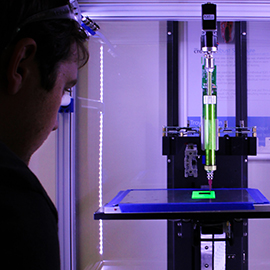
Undertaking the Mechanical and Civil Engineering Foundation Year will equip you with the essential skills and knowledge to develop effective, sustainable solutions and products that meet the varied needs of today’s and tomorrow’s society. You will be taught and guided by a student-oriented and well-rounded team of experienced engineering practitioners, researchers, and a knowledgeable technical support team. Equipped with dedicated lab and workshop facilities, the course seeks to provide an engaging and practical learning experience to apply engineering principles to real-world problems.
Many students who undertake the foundation year are still thinking about which sub-discipline of engineering to specialise in. The course covers mechanical, civil and automotive engineering, so you will be able to explore and challenge your preferences to make an informed decision about which degree to study upon completion of the foundation year.
UCAS Code
H3M5
Level of Study
Undergraduate
Mode of Study
1 year Full Time followed by a further 3 years Full Time or 4 years with a placement (sandwich)/study abroad
School
Engineering, Physics and Mathematics
Location
City Campus, Northumbria University
City
Newcastle
Fees
Fee Information
Modules
Module Information
Find out more about our department, facilities and what other students are taking part in.

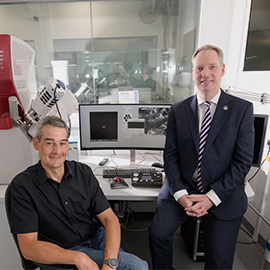
£3 million award to transform Northumbria's Engineering facilities.
Read the news story.
Women in Engineering award for Northumbria academic.
Read the news story.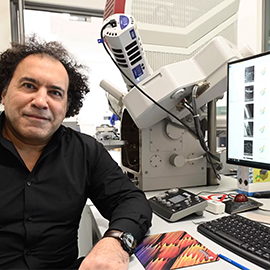
Northumbria Professor leads development of 'wonder material'.
Read the news story.
We are an enthusiastic, committed, knowledgeable and likeable staff team, who are here to motivate you and propel you through your degree and beyond.

Dr Martin Birkett
Professor Birkett currently leads the Engineering Materials and Mechanics Group (EM2G) and mainly teaches on the Mechanical Engineering degree programmes.
Read More
Dr Brabha Nagaratnam

Dr Christopher Connor
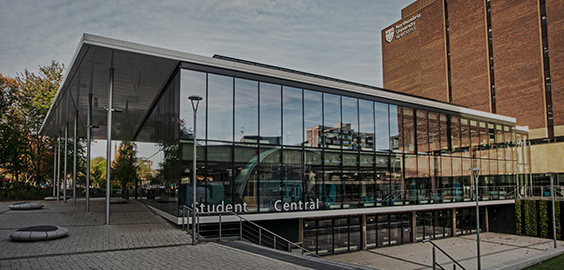
The Department of Engineering has modern laboratory and computing resources for learning, teaching, research, innovation and business engagement.
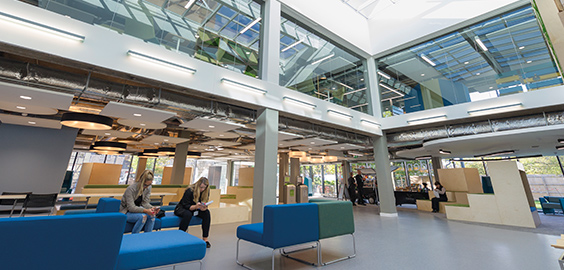
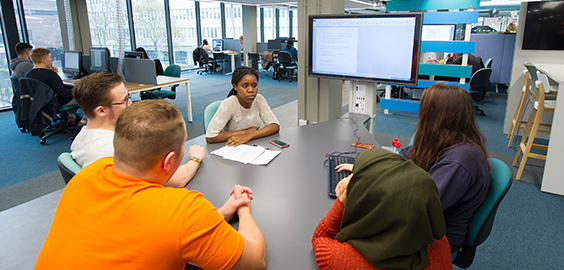
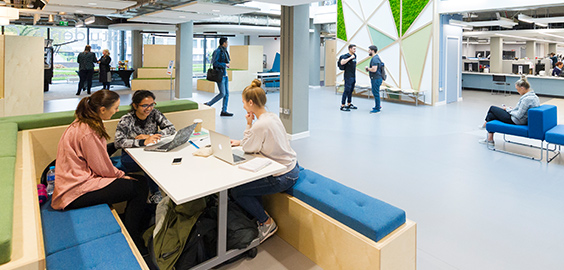
At the heart of each Northumbria campus, our libraries provide a range of study space and technology to suit every learning style.
Find out more about the research taking place in this department.
From first year through to final year and beyond graduation, we are here to help.
Visit an Open Day to get an insight into what it's like to study Engineering. Speak to staff and students from the course and get a tour of the facilities.
80 UCAS Tariff points
From a combination of acceptable Level 3 qualifications which may include: A-level, T Level, BTEC Diplomas/Extended Diplomas, Scottish and Irish Highers, Access to HE Diplomas, or the International Baccalaureate.
Find out how many points your qualifications are worth by using the UCAS Tariff calculator: www.ucas.com/ucas/tariff-calculator
Northumbria University is committed to supporting all individuals to achieve their ambitions. We have a range of schemes and alternative offers to make sure as many individuals as possible are given an opportunity to study at our University regardless of personal circumstances or background. To find out more, review our Northumbria Entry Requirement Essential Information page for further details www.northumbria.ac.uk/entryrequirementsinfo
Subject Requirements:
There are no specific subject requirements for this course.
GCSE Requirements:
Applicants will need Maths and English Language at minimum grade 4/C, or an equivalent.
Additional Requirements:
There are no additional requirements for this course.
International Qualifications:
We welcome applicants with a range of qualifications which may not match those shown above.
If you have qualifications from outside the UK, find out what you need by visiting www.northumbria.ac.uk/yourcountry
English Language Requirements:
International applicants should have a minimum overall IELTS (Academic) score of 5.5 with 5.5 in each component (or an approved equivalent*).
*The university accepts a large number of UK and International Qualifications in place of IELTS. You can find details of acceptable tests and the required grades in our English Language section: www.northumbria.ac.uk/englishqualifications
UK Fee in Year 1: TBC
The UK tuition fee for 26/27 is £9,790 and is set in line with the UG Government's tuition fee cap. The University may increase this fee in subsequent years in line with any changes to the tuition fee cap. Students will be notified of any increase ahead of it taking effect. The remaining fees relate to the International Soccer Academy and accommodation fees. Accommodation fees may increase in subsequent years. Students will be notified of any increase ahead of the re-issuing of tenancy agreements. Tuition fees in the academic year 2027/28* will be £10,050. Fees are set in line with the UK Government's tuition fee cap. The University may increase fees in subsequent years in line with any changes to the tuition fee cap. Increases will be linked to inflation. For example, increases may be linked to RPIX (Retail Price Index excluding mortgage interest payments) Students will be notified of any increase ahead of it taking effect. Student fee loans rise in line with the tuition fees cap. *if your course is longer than one year
* Fees subject to annual increases over the course of the period of study. Students will be liable for payment of any/all tuition fees which are not sponsored by their employer or other third party.
International Fee in Year 1: TBC
This is the tuition fee for your first year of study. You should expect to pay tuition fees for every year of study. The University may increase fees in the second and subsequent years of your course at our discretion in line with any inflationary or other uplift. Students will be notified of any increase ahead of it taking effect.
Tuition fees in the academic year 2027/28* will be £10,050. Fees are set in line with the UK Government's tuition fee cap. The University may increase fees in subsequent years in line with any changes to the tuition fee cap. Increases will be linked to inflation. For example, increases may be linked to RPIX (Retail Price Index excluding mortgage interest payments) Students will be notified of any increase ahead of it taking effect. Student fee loans rise in line with the tuition fees cap.
This is the programme fee for your first year of study. The programme fee includes the international tuition fee, International Soccer Academy and accommodation fees. Accommodation fees may increase in subsequent years. Students will be notified of any increase ahead of the re-issuing of tenancy agreements.
ADDITIONAL COSTS
There are no Additional Costs
* At Northumbria we are strongly committed to protecting the privacy of personal data. To view the University’s Privacy Notice please click here
Please use the Apply Now button at the top of this page to submit your application.
Certain applications may need to be submitted via an external application system, such as UCAS, Lawcabs or DfE Apply.
The Apply Now button will redirect you to the relevant website if this is the case.
You can find further application advice, such as what to include in your application and what happens after you apply, on our Admissions Hub Admissions | Northumbria University
Module information is indicative and is reviewed annually therefore may be subject to change. Applicants will be informed if there are any changes.
KB3017 -
Engineering Principles (Core,20 Credits)
You will learn to apply a range of basic principles and methodologies involving models of physical systems, matter, energy and waves, and forces and fields. You will be assisted in developing your understanding of measurement and error to test predictions against evidence using a range of experimental methods and practical exercises. Appropriate computational and analytical techniques will be applied to enable you to solve well-defined problems involving physical systems using standardised engineering approaches.
More informationKB3018 -
Foundational Engineering Approaches 1 (Core,20 Credits)
In this module you will be presented with authentic engineering problems derived and adapted to give you opportunities to explore ways in which you would resolve such problems to produce appropriate engineering solutions. This module will, within the supportive environment offered by staff and your peers, allow you to develop your approach to resolving engineering problems that may involve research, experimentation, creativity and the acquisition and utilisation of new engineering skills. Well bounded and defined problems within well understood constraints will allow you to develop confidence in resolving problems where there may be several factors to consider. It is expected that there will be a limited range of solutions that might be considered appropriate based upon engineering judgement and perception associated with the topic. Problems will span a range of engineering subjects to help you in making decisions towards your future degree programme.
More informationKB3019 -
Analytical Skills in Problem Solving (Core,20 Credits)
You will build upon your knowledge and understanding of a range of mathematical tools and techniques that you can apply to a wide variety of engineering activities. You will learn to apply and manipulate formulae so that you can apply these skills within the engineering disciplines. You will enhance your appreciation of techniques in algebra and trigonometry, such as those used by engineers to determine the shape, size, slope, mass, etc., of objects and spaces as well as when and how objects will move or interact. You will apply these techniques to determine the unknown components in systems such as mechanical, fluid and thermal transfer and flow systems, which are also applied to the solution of design problems such as those involving force, motion and electrical power. You will further develop foundations in the skills required to apply these techniques using software tools as you progress towards complex engineering activities and prepare for entering an engineering degree programme.
More informationKB3020 -
Engineering Systems (Core,20 Credits)
You will learn to use a range of engineering systems and approaches to develop a holistic approach to tackling different engineering challenges and how these can be utilised in different engineering environments. You will build upon and apply a range of basic principles and methodologies involving models of physical systems, matter, energy and waves, and forces and fields. You will learn to implement and interpret a range of experimental methods and practical exercises to validate predictions obtained through analytical and computational tools.
More informationKB3021 -
Foundational Engineering Approaches 2 (Core,20 Credits)
The inclusion of this application focussed module in your studies will build on Foundational Engineering Approaches I by allowing you to expand the areas of investigation and further develop your problem-solving, teamwork and communication skills. Again, you will be presented with authentic engineering problems derived and adapted to give you opportunities to explore ways in which you would resolve such problems to produce appropriate engineering solutions and further develop professional knowledge. This module will, within the supportive environment offered by staff and your peers, allow you to develop your approach to resolving engineering problems that may involve research, experimentation, creativity and the acquisition and utilisation of new engineering skills. The incorporation of a limited degree of uncertainty in the problem definition will allow you to develop confidence in resolving problems where there may be incomplete information and several answers that might be considered appropriate based upon engineering judgement and perception associated with the problem. Problems will span a range of engineering subjects to help you in making decisions towards your future degree programme.
More informationKB3022 -
Foundations of Mathematical Methods (Core,20 Credits)
You will learn to use a range of mathematical tools and techniques that you can apply to a wide variety of engineering activities. These skills and practices also underpin more advanced engineering design and analysis tools, so gaining a good understanding of the basic principles now will help as your progress through this programme and enter the world of engineering. You will become familiar in working with formulae so that you can apply these skills within the engineering disciplines, for example, when investigating changes in processes and systems and when representing mechanical quantities. You will learn techniques in algebra and trigonometry, such as those used by engineers to determine the shape, size, slope, mass, etc., of objects and spaces as well as when and how objects will move or interact. These techniques are important to determine the unknown components in systems such as mechanical, fluid and thermal transfer and flow systems. These techniques are also applied to the solution of design problems such as those involving force, motion and electrical power.
More informationOur Applicant Services team will be happy to help. They can be contacted on 0191 406 0901 or by using our Contact Form.
Full time Courses are primarily delivered via on-campus face to face learning but could include elements of online learning. Most courses run as planned and as promoted on our website and via our marketing materials, but if there are any substantial changes (as determined by the Competition and Markets Authority) to a course or there is the potential that course may be withdrawn, we will notify all affected applicants as soon as possible with advice and guidance regarding their options. It is also important to be aware that optional modules listed on course pages may be subject to change depending on uptake numbers each year.
Contact time is subject to increase or decrease in line with possible restrictions imposed by the government or the University in the interest of maintaining the health and safety and wellbeing of students, staff, and visitors if this is deemed necessary in future.
Northumbria University is committed to developing an inclusive, diverse and accessible campus and wider University community and are determined to ensure that opportunities we provide are open to all.
We are proud to work in partnership with AccessAble to provide Detailed Access Guides to our buildings and facilities across our City, Coach Lane and London Campuses. A Detailed Access Guide lets you know what access will be like when you visit somewhere. It looks at the route you will use getting in and what is available inside. All guides have Accessibility Symbols that give you a quick overview of what is available, and photographs to show you what to expect. The guides are produced by trained surveyors who visit our campuses annually to ensure you have trusted and accurate information.
You can use Northumbria’s AccessAble Guides anytime to check the accessibility of a building or facility and to plan your routes and journeys. Search by location, building or accessibility feature to find the information you need.
We are dedicated to helping students who may require additional support during their student journey and offer 1-1 advice and guidance appropriate to individual requirements. If you feel you may need additional support you can find out more about what we offer here where you can also contact us with any questions you may have:
Page last updated 22/07/26