Mechanical Engineering MSc
16 Months Full-Time | September and January Start
Option for Placement Year
Option for Study Abroad

International
Northumbria’s global footprint touches every continent across the world, through our global partnerships across 17 institutions in 10 countries, to our 277,000 strong alumni community and 150 recruitment partners – we prepare our students for the challenges of tomorrow. Discover more about how to join Northumbria’s global family or our partnerships.
View our Global FootprintBusiness
The world is changing faster than ever before. The future is there to be won by organisations who find ways to turn today's possibilities into tomorrows competitive edge. In a connected world, collaboration can be the key to success.
More on our Business ServicesResearch
Northumbria is a research-rich, business-focused, professional university with a global reputation for academic quality. We conduct ground-breaking research that is responsive to the science & technology, health & well being, economic and social and arts & cultural needs for the communities
Discover more about our ResearchAlumni
Northumbria University is renowned for the calibre of its business-ready graduates. Our alumni network has over 253,000 graduates based in 178 countries worldwide in a range of sectors, our alumni are making a real impact on the world.
Our AlumniIf you’d like to receive the latest updates from Northumbria about our courses, events, finance & funding then enter your details below.
* At Northumbria we are strongly committed to protecting the privacy of personal data. To view the University’s Privacy Notice please click here
Option for Placement Year
Option for Study Abroad

Please note: This course is closed for January 2026 entry.
At a time when there is an international shortage of mechanical engineers there has never been a better time to enter this dynamic and rewarding industry.
The Mechanical Engineering MSc course will provide you with advanced knowledge and skills in key aspects of mechanical engineering. Throughout the duration of this course, you will develop a critical awareness of ethical and environmental considerations, in addition to learning about advanced mechanical engineering practice and theory.
Candidates must hold a CEng accredited BEng/BSc (Hons) undergraduate first degree to comply with full CEng registration requirements.
The Mechanical Engineering MSc course will equip you with all of the skills required to progress within the engineering industry and competition of your master’s degree will give you a competitive edge thanks to the additional skills and knowledge you will acquire.
Accredited by the Institution of Mechanical Engineers (IMechE) on behalf of the Engineering Council as the course meets the requirements for Further Learning for registration as a Chartered Engineer. Candidates must hold a CEng accredited BEng/BSc (Hons) undergraduate first degree to comply with full CEng registration requirements.
Our accreditation with the IMechE ensures that this course’s content is in-line with the latest developments within this sector, making our course highly valued by employers. By completing this course, you will have completed the academic requirement to become a Chartered Engineer, a status that is associated with improved employability and higher salaries.
Employability is embedded throughout all aspects of your course, and you will leave with enhanced key skills such as communication, computing, and teamwork.
See other similar courses you may be interested in: Electrical Power Engineering MSc, Sustainable Civil Engineering MSc, Aerospace Satellite Engineering MSc
Please note: This course is closed for January 2026 entry.
At a time when there is an international shortage of mechanical engineers there has never been a better time to enter this dynamic and rewarding industry.
The Mechanical Engineering MSc course will provide you with advanced knowledge and skills in key aspects of mechanical engineering. Throughout the duration of this course, you will develop a critical awareness of ethical and environmental considerations, in addition to learning about advanced mechanical engineering practice and theory.
Candidates must hold a CEng accredited BEng/BSc (Hons) undergraduate first degree to comply with full CEng registration requirements.
The Mechanical Engineering MSc course will equip you with all of the skills required to progress within the engineering industry and competition of your master’s degree will give you a competitive edge thanks to the additional skills and knowledge you will acquire.
Accredited by the Institution of Mechanical Engineers (IMechE) on behalf of the Engineering Council as the course meets the requirements for Further Learning for registration as a Chartered Engineer. Candidates must hold a CEng accredited BEng/BSc (Hons) undergraduate first degree to comply with full CEng registration requirements.
Our accreditation with the IMechE ensures that this course’s content is in-line with the latest developments within this sector, making our course highly valued by employers. By completing this course, you will have completed the academic requirement to become a Chartered Engineer, a status that is associated with improved employability and higher salaries.
Employability is embedded throughout all aspects of your course, and you will leave with enhanced key skills such as communication, computing, and teamwork.
See other similar courses you may be interested in: Electrical Power Engineering MSc, Sustainable Civil Engineering MSc, Aerospace Satellite Engineering MSc
Level of Study
Postgraduate
Mode of Study
16 months Full Time
School
Engineering, Physics and Mathematics
Location
City Campus, Northumbria University
City
Newcastle
Start
September or January
Fees
Fee Information
Modules
Module Information
Find out more about our department, facilities and what other students are taking part in.
Discover more about life in Newcastle and studying at Northumbria.
Accommodation
Discover our residences
There are many different reasons to choose to study at Northumbria but we got Alice, Reza and Jasmine to narrow it down to just three reasons each on why they wanted to come study here.
Newcastle
City Life
Student Life at Northumbria
Discover More
The Hub
Student Blog
Social Wall
#IAmNorthumbria
Visit an Open Day to get an insight into what it’s like to study Mechanical Engineering. Speak to staff and students from the course and get a tour of the facilities.
The initial semesters of this course focus on taught subjects that cover topics such as computational fluid dynamics and heat transfer, multidisciplinary design and engineering optimisation, composite materials and lightweight structures, advanced stress and analysis and thermo-mechanical energy conversion systems.
Teaching is primarily delivered by lectures, seminars, and workshops, all of which are assessed by methods such as assignments, exams, and technical reports. All of this course’s assessments have been devised to closely mirror the outputs required in a real working environment.
On completion of the taught modules, you will undertake a substantial piece of research related to an area of mechanical engineering that particularly interests you. Our teaching team will be on-hand to offer support and guidance throughout every stage of your course.
Here what it is really like to study our Mechanical Engineering MSc from our current students.
You’ll be taught by tutors who have many years of experience in the various aspects of the engineering industry. Their experience, combined with their on-going active research, will provide an excellent foundation for your learning.
The quality of their research has ranked Northumbria University in the top 25 in the UK for the research power in engineering, with 90% of research outputs being rated as world-leading or internationally excellent (Research Excellence Framework 2021).
Our reputation for quality is reflected by the range and depth of our collaborations with industry partners. We’ve built up numerous industrial links during the 50+ years that we’ve been offering engineering courses. These links help ensure high quality placements and collaborative projects.
Northumbria has the advantage of being located in the North East of England, which is a centre of manufacturing and technical innovation. As well as Nissan, the region’s #1 company, there is a strong concentration of automotive, engineering, chemicals, construction, and manufacturing companies.
Dr Farnoosh Farhad
Senior Lecturer
Dr Shaun Shen
Programme Lead

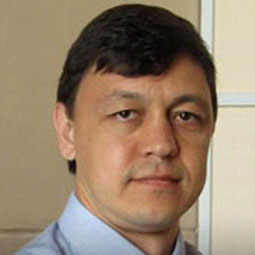
Khamid Mahkamov
Professor
Dr Ulugbek Azimov
Senior Lecturer
Visit an Open Day to get an insight into what it’s like to study Mechanical Engineering. Speak to staff and students from the course and get a tour of the facilities.
Throughout the duration of your course, you will have access to our dedicated engineering laboratories that are continuously updated to reflect real-time industry practice.
Our facilities include mechanical and energy systems experimentation labs, rapid product development and performance analysis, materials testing and characterisation, 3D digital design and manufacturing process performance.
You will be given the opportunity to get hands-on with testing, materials processing, moulding, thermal analysis, and 3D rapid manufacture to help you create the products and systems required for the projects you will work on during your course.
Your learning journey will also be supported by technology such as discussion boards and video tutorials. You will also participate in IT workshops where you will learn how to use the latest industry-standard software.
Videos of lectures will on many occasions be made available through Panopto video software to further support teaching delivery.
You will also have access to all Northumbria University’s state-of-the-art general learning facilities such as dedicated IT suites and learning areas.
The Department of Mechanical Engineering has modern laboratory and computing resources for learning, teaching, research, innovation and business engagement.

Facilities
From designing the components and assessing the strength of materials to 3D printing and rapid prototyping skills, the knowledge I picked up on my Masters was vital to me kick-starting my career. So many of the basics from the modules on my course, I still use every day in my work.
Samidha Anand
Student
Come and explore our outstanding facilities in this interactive virtual tour.
Please note: This course is closed for January 2026 entry.
At a time when there is an international shortage of mechanical engineers there has never been a better time to enter this dynamic and rewarding industry.
The Mechanical Engineering MSc course will provide you with advanced knowledge and skills in key aspects of mechanical engineering. Throughout the duration of this course, you will develop a critical awareness of ethical and environmental considerations, in addition to learning about advanced mechanical engineering practice and theory.
Candidates must hold a CEng accredited BEng/BSc (Hons) undergraduate first degree to comply with full CEng registration requirements.
The Mechanical Engineering MSc course will equip you with all of the skills required to progress within the engineering industry and competition of your master’s degree will give you a competitive edge thanks to the additional skills and knowledge you will acquire.
Accredited by the Institution of Mechanical Engineers (IMechE) on behalf of the Engineering Council as the course meets the requirements for Further Learning for registration as a Chartered Engineer. Candidates must hold a CEng accredited BEng/BSc (Hons) undergraduate first degree to comply with full CEng registration requirements.
Our accreditation with the IMechE ensures that this course’s content is in-line with the latest developments within this sector, making our course highly valued by employers. By completing this course, you will have completed the academic requirement to become a Chartered Engineer, a status that is associated with improved employability and higher salaries.
Employability is embedded throughout all aspects of your course, and you will leave with enhanced key skills such as communication, computing, and teamwork.
See other similar courses you may be interested in: Electrical Power Engineering MSc, Sustainable Civil Engineering MSc, Aerospace Satellite Engineering MSc
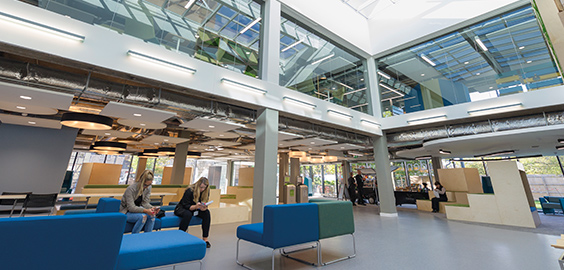
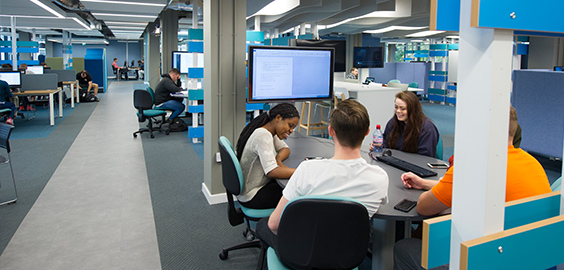
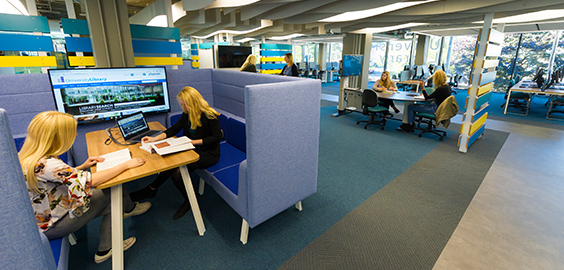
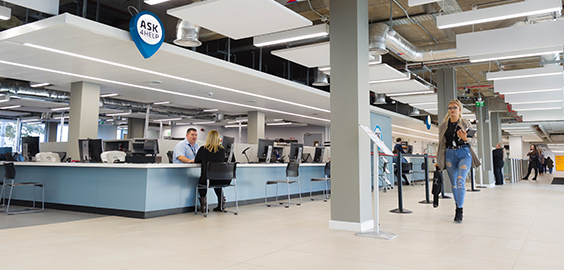
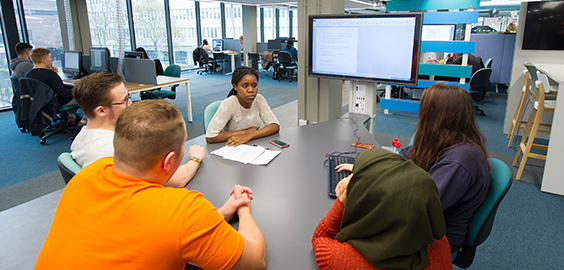
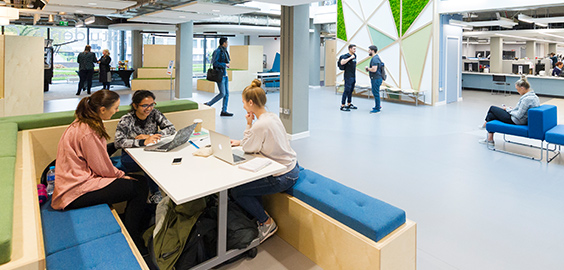
At the heart of each Northumbria campus, our libraries provide a range of study space and technology to suit every learning style.
Visit an Open Day to get an insight into what it’s like to study Mechanical Engineering. Speak to staff and students from the course and get a tour of the facilities.
When studying at Northumbria University you will be taught by our team of specialist staff who boast a wealth of multi-dimensional expertise.
Our teaching team includes a dynamic mix of research-active industrial practitioners, renowned researchers and technologists, whose combined knowledge ensures you leave with an in-depth understanding of key mechanical engineering practice and research.
You will be encouraged to undertake your own research–based learning where you will evaluate and critique scientific papers and write research-based reports based on the information gathered.
We aim to regularly welcome industry specialists to deliver guest lecturers to further enable you to understand real-world issues and how they link to the concepts, theories and philosophies taught throughout your course.
Find out more about the research taking place in this department.
Visit an Open Day to get an insight into what it’s like to study Mechanical Engineering. Speak to staff and students from the course and get a tour of the facilities.
The MSc Mechanical Engineering course will equip you with all of the skills required to progress within the engineering industry and competition of your master’s degree will give you a competitive edge thanks to the additional skills and knowledge you will acquire.
Our accreditation with the IMechE ensures that this course’s content is in-line with the latest developments within this sector, making our course highly valued by employers.
By completing this course, you will have completed the academic requirement to become a Chartered Engineer, a status that is associated with improved employability and higher salaries.
Employability is embedded throughout all aspects of your course, and you will leave with enhanced key skills such as communication, computing, and teamwork.
Mechanical Engineering overlaps with a number of engineering disciplines meaning there are many career paths available to you once you have completed this course.
Many graduates choose to pursue a career in the expansive engineering sector, in roles such as designers, analysts, project managers or consultants.
You may also wish to progress your knowledge to PhD level and this course will provide you with a solid foundation that you can easily build on and advance to an even higher level.
Our Graduate Futures team are there to help you throughout your studies and beyond.

We have a fantastic service for students' to use to gain advice and tips on furthering careers and enhancing their employability.
Careers and Employment Services
Visit an Open Day to get an insight into what it’s like to study Mechanical Engineering. Speak to staff and students from the course and get a tour of the facilities.
Applicants should normally have:
A minimum of a 2:2 honours degree in an engineering or science discipline. Other subject qualifications, equivalent professional qualifications and/or relevant work experience will be considered on an individual basis.
International applicants (apart from exempt nationalities) will need an ATAS certificate to enrol on this course. Without this certificate, a visa application will be refused. Please visit: www.gov.uk/guidance/academic-technology-approval-scheme for more information.
International qualifications:
If you have studied a non UK qualification, you can see how your qualifications compare to the standard entry criteria, by selecting the country that you received the qualification in, from our country pages. Visit www.northumbria.ac.uk/yourcountry
English language requirements:
International applicants are required to have a minimum overall IELTS (Academic) score of 6.5 with 5.5 in each component (or approved equivalent*).
*The university accepts a large number of UK and International Qualifications in place of IELTS. You can find details of acceptable tests and the required grades you will need in our English Language section. Visit www.northumbria.ac.uk/englishqualifications
For further admissions guidance and requirements, please visit www.northumbria.ac.uk/admissionsguidance Please review this information before submitting your application.
Applicants should normally have:
A minimum of a 2:2 honours degree in an engineering or science discipline. Other subject qualifications, equivalent professional qualifications and/or relevant work experience will be considered on an individual basis.
International applicants (apart from exempt nationalities) will need an ATAS certificate to enrol on this course. Without this certificate, a visa application will be refused. Please visit: www.gov.uk/guidance/academic-technology-approval-scheme for more information.
International qualifications:
If you have studied a non UK qualification, you can see how your qualifications compare to the standard entry criteria, by selecting the country that you received the qualification in, from our country pages. Visit www.northumbria.ac.uk/yourcountry
English language requirements:
International applicants are required to have a minimum overall IELTS (Academic) score of 6.5 with 5.5 in each component (or approved equivalent*).
*The university accepts a large number of UK and International Qualifications in place of IELTS. You can find details of acceptable tests and the required grades you will need in our English Language section. Visit www.northumbria.ac.uk/englishqualifications
For further admissions guidance and requirements, please visit www.northumbria.ac.uk/admissionsguidance Please review this information before submitting your application.
Full UK Fee: £11,000
Full International Fee: £20,950
Scholarships and Discounts
ADDITIONAL COSTS
There are no Additional Costs
Full UK Fee: £11,250
Full International Fee: £21,500
Scholarships and Discounts
ADDITIONAL COSTS
There are no Additional Costs
* At Northumbria we are strongly committed to protecting the privacy of personal data. To view the University’s Privacy Notice please click here
Module information is indicative and is reviewed annually therefore may be subject to change. Applicants will be informed if there are any changes.
KB7053 -
Academic Language Skills for Mechanical and Construction Engineering (Core – for International and EU students only,0 Credits)
Academic skills when studying away from your home institution can differ due to cultural and language differences in teaching and assessment practices. This module is designed to support your transition in the use and practice of technical language and subject specific skills around assessments and teaching provision in your chosen subject area in the Department of Architecture and Built Environment. The overall aim of this module is to develop your abilities to read and study effectively for academic purposes; to develop your skills in analysing and using source material in seminars and academic writing and to develop your use and application of language and communications skills to a higher level.
The topics you will cover on the module include:
• Understanding assignment briefs and exam questions.
• Developing academic writing skills, including citation, paraphrasing, and summarising.
• Practising ‘critical reading’ and ‘critical writing’.
• Planning and structuring academic assignments (e.g. essays, reports and presentations).
• Avoiding academic misconduct and gaining credit by using academic sources and referencing effectively.
• Listening skills for lectures.
• Speaking in seminar presentations.
• Giving discipline-related academic presentations, experiencing peer observation, and receiving formative feedback.
• Speed reading techniques.
• Discussing ethical issues in research, and analysing results.
• Describing bias and limitations of research.
• Developing self-reflection skills.
KB7059 -
Advanced Stress and Structural Analysis (Core,20 Credits)
Advanced stress and structural analysis will enhance and evolve your understanding of and develop specialist knowledge in the design and analysis of continuous mechanical and structural systems from a mechanics perspective. The module aims to evaluate design and analysis methods in solving complex mechanical and structural problems using analytical, computational, and experimental approaches. You will investigate the advanced mechanics of material non-linearity and failure, how to design structures and components to avoid failure and the environmental and societal impact of structural design and failure.
More informationKB7060 -
Heat, Mass Transfer & Computational Fluid Dynamics (Core,20 Credits)
This module will evolve your understanding of and develop specialist knowledge in the subject area of heat and mass transfer systems. It aims to appraise practical methods in solving complex problems in the subject field using analytical, computational, and experimental approaches. Open-ended problems with no obvious and immediate solution, in topics such as viscous flow, heat transfer and turbulence will be considered and judged in the context of their industrial application. You will evaluate the characterisation and specification of complex systems and emerging technologies in this field in the context of global developments in this area of mechanical engineering.
More informationKB7061 -
Sustainable Development for Engineering Practitioners (Core,20 Credits)
This module explores the fundamentals of sustainable and ethical development for engineering practitioners, considering the role and responsibility of the engineer within society. The module will consider the elements of sustainable development as they relate to decision making in engineering, for example, consideration of legislation, economics, energy, materials, environment, and society. The challenges engineering activities present society are examined, and ethical solutions for the future of our planet are sought through the use of various techniques and tools such as the triple bottom line, stakeholder analysis, the circular economy, carbon footprint, material and energy supply chains and risk. A rational argument for sustainable solutions will be presented using both qualitative and quantitative data sources and tools using a wide range of published literature and from students’ own experience.
More informationKB7062 -
Engineering Optimisation and Design (Core,20 Credits)
In this module, you will investigate and apply optimisation techniques and tools to aid in engineering design to solve complex problems. This will involve evaluating available data using engineering principles and engineering judgment to work with information that may be uncertain or incomplete, discussing the limitations of the techniques employed. A number of conflicting goals mean that the selection and implementation of optimisation approaches requires significant insight and formulation. You will explore how optimisation is integral to the design of components and systems and how it is used in new and emerging technologies to push the envelope of current performance.
More informationKB7068 -
Research Methods (Core,20 Credits)
You will learn to work both independently, and in a group environment, to develop knowledge, skills, and awareness essential to complex-problem-solving research and innovation in relevant engineering subjects. You will learn through the practice of identification of need, research planning including research idea generation and proposal development. You will learn to plan and carry research responsibly, assessing risks and constraints analysis in legislation, security, economics, energy, materials, equipment, health safety and environmental impact. You will also learn to make appropriate choices when executing your research investigation, for example, developing essential skills in qualitative and quantitative research methods that can be employed to achieve your designed aims and objectives.
More informationKB7070 -
Thermo-Mechanical Energy Conversion Systems (Core,20 Credits)
This module will evolve your understanding of and develop specialist knowledge in the subject area of technologies for the utilisation of renewable and sustainable energy sources for heat and power production using heat engines and other types of converters, such as: Solar, biomass, hydrogen and waste thermal energy resources, internal and external combustion engines, solar thermal energy, geothermal and hydrogen technology. You will explore energy conversion system theory and their application through practical classes where you will also be able to develop skills important to your future engineering practice. Open-ended problems with no obvious and immediate solution, in topics such as viscous flow, heat transfer and turbulence will be considered and judged in the context of their industrial application. You will evaluate the characterisation and specification of complex systems and emerging technologies in this field in the context of global developments in this area of renewable and sustainable energy engineering.
More informationKB7069 -
Research Project (Core,60 Credits)
You will learn to work independently, perform systems thinking, and bring together your specialist knowledge and skills within a research and development project. You will work with the guidance of a tutor to direct your learning and develop your abilities in areas such as project planning and management, detailed design of the proposed method, prototype fabrication or virtual system modelling and critical evaluation and identification of further developments. You will be provided with the opportunity to demonstrate to potential future employers the breadth and depth of your ability by not only using your specialist abilities, but also through the demonstration of your planning, organisational and independent working skills. You will be expected to incorporate unfamiliar knowledge as well as the wider social and environmental considerations of the engineering profession.
More informationModule information is indicative and is reviewed annually therefore may be subject to change. Applicants will be informed if there are any changes.
KB7053 -
Academic Language Skills for Mechanical and Construction Engineering (Core – for International and EU students only,0 Credits)
Academic skills when studying away from your home institution can differ due to cultural and language differences in teaching and assessment practices. This module is designed to support your transition in the use and practice of technical language and subject specific skills around assessments and teaching provision in your chosen subject area in the Department of Architecture and Built Environment. The overall aim of this module is to develop your abilities to read and study effectively for academic purposes; to develop your skills in analysing and using source material in seminars and academic writing and to develop your use and application of language and communications skills to a higher level.
The topics you will cover on the module include:
• Understanding assignment briefs and exam questions.
• Developing academic writing skills, including citation, paraphrasing, and summarising.
• Practising ‘critical reading’ and ‘critical writing’.
• Planning and structuring academic assignments (e.g. essays, reports and presentations).
• Avoiding academic misconduct and gaining credit by using academic sources and referencing effectively.
• Listening skills for lectures.
• Speaking in seminar presentations.
• Giving discipline-related academic presentations, experiencing peer observation, and receiving formative feedback.
• Speed reading techniques.
• Discussing ethical issues in research, and analysing results.
• Describing bias and limitations of research.
• Developing self-reflection skills.
KB7059 -
Advanced Stress and Structural Analysis (Core,20 Credits)
Advanced stress and structural analysis will enhance and evolve your understanding of and develop specialist knowledge in the design and analysis of continuous mechanical and structural systems from a mechanics perspective. The module aims to evaluate design and analysis methods in solving complex mechanical and structural problems using analytical, computational, and experimental approaches. You will investigate the advanced mechanics of material non-linearity and failure, how to design structures and components to avoid failure and the environmental and societal impact of structural design and failure.
More informationKB7060 -
Heat, Mass Transfer & Computational Fluid Dynamics (Core,20 Credits)
This module will evolve your understanding of and develop specialist knowledge in the subject area of heat and mass transfer systems. It aims to appraise practical methods in solving complex problems in the subject field using analytical, computational, and experimental approaches. Open-ended problems with no obvious and immediate solution, in topics such as viscous flow, heat transfer and turbulence will be considered and judged in the context of their industrial application. You will evaluate the characterisation and specification of complex systems and emerging technologies in this field in the context of global developments in this area of mechanical engineering.
More informationKB7061 -
Sustainable Development for Engineering Practitioners (Core,20 Credits)
This module explores the fundamentals of sustainable and ethical development for engineering practitioners, considering the role and responsibility of the engineer within society. The module will consider the elements of sustainable development as they relate to decision making in engineering, for example, consideration of legislation, economics, energy, materials, environment, and society. The challenges engineering activities present society are examined, and ethical solutions for the future of our planet are sought through the use of various techniques and tools such as the triple bottom line, stakeholder analysis, the circular economy, carbon footprint, material and energy supply chains and risk. A rational argument for sustainable solutions will be presented using both qualitative and quantitative data sources and tools using a wide range of published literature and from students’ own experience.
More informationKB7062 -
Engineering Optimisation and Design (Core,20 Credits)
In this module, you will investigate and apply optimisation techniques and tools to aid in engineering design to solve complex problems. This will involve evaluating available data using engineering principles and engineering judgment to work with information that may be uncertain or incomplete, discussing the limitations of the techniques employed. A number of conflicting goals mean that the selection and implementation of optimisation approaches requires significant insight and formulation. You will explore how optimisation is integral to the design of components and systems and how it is used in new and emerging technologies to push the envelope of current performance.
More informationKB7068 -
Research Methods (Core,20 Credits)
You will learn to work both independently, and in a group environment, to develop knowledge, skills, and awareness essential to complex-problem-solving research and innovation in relevant engineering subjects. You will learn through the practice of identification of need, research planning including research idea generation and proposal development. You will learn to plan and carry research responsibly, assessing risks and constraints analysis in legislation, security, economics, energy, materials, equipment, health safety and environmental impact. You will also learn to make appropriate choices when executing your research investigation, for example, developing essential skills in qualitative and quantitative research methods that can be employed to achieve your designed aims and objectives.
More informationKB7070 -
Thermo-Mechanical Energy Conversion Systems (Core,20 Credits)
This module will evolve your understanding of and develop specialist knowledge in the subject area of technologies for the utilisation of renewable and sustainable energy sources for heat and power production using heat engines and other types of converters, such as: Solar, biomass, hydrogen and waste thermal energy resources, internal and external combustion engines, solar thermal energy, geothermal and hydrogen technology. You will explore energy conversion system theory and their application through practical classes where you will also be able to develop skills important to your future engineering practice. Open-ended problems with no obvious and immediate solution, in topics such as viscous flow, heat transfer and turbulence will be considered and judged in the context of their industrial application. You will evaluate the characterisation and specification of complex systems and emerging technologies in this field in the context of global developments in this area of renewable and sustainable energy engineering.
More informationKB7069 -
Research Project (Core,60 Credits)
You will learn to work independently, perform systems thinking, and bring together your specialist knowledge and skills within a research and development project. You will work with the guidance of a tutor to direct your learning and develop your abilities in areas such as project planning and management, detailed design of the proposed method, prototype fabrication or virtual system modelling and critical evaluation and identification of further developments. You will be provided with the opportunity to demonstrate to potential future employers the breadth and depth of your ability by not only using your specialist abilities, but also through the demonstration of your planning, organisational and independent working skills. You will be expected to incorporate unfamiliar knowledge as well as the wider social and environmental considerations of the engineering profession.
More informationOur Applicant Services team will be happy to help. They can be contacted on 0191 406 0901 or by using our Contact Form.
Full time Courses are primarily delivered via on-campus face to face learning but could include elements of online learning. Most courses run as planned and as promoted on our website and via our marketing materials, but if there are any substantial changes (as determined by the Competition and Markets Authority) to a course or there is the potential that course may be withdrawn, we will notify all affected applicants as soon as possible with advice and guidance regarding their options. It is also important to be aware that optional modules listed on course pages may be subject to change depending on uptake numbers each year.
Contact time is subject to increase or decrease in line with possible restrictions imposed by the government or the University in the interest of maintaining the health and safety and wellbeing of students, staff, and visitors if this is deemed necessary in future.
Northumbria University is committed to developing an inclusive, diverse and accessible campus and wider University community and are determined to ensure that opportunities we provide are open to all.
We are proud to work in partnership with AccessAble to provide Detailed Access Guides to our buildings and facilities across our City, Coach Lane and London Campuses. A Detailed Access Guide lets you know what access will be like when you visit somewhere. It looks at the route you will use getting in and what is available inside. All guides have Accessibility Symbols that give you a quick overview of what is available, and photographs to show you what to expect. The guides are produced by trained surveyors who visit our campuses annually to ensure you have trusted and accurate information.
You can use Northumbria’s AccessAble Guides anytime to check the accessibility of a building or facility and to plan your routes and journeys. Search by location, building or accessibility feature to find the information you need.
We are dedicated to helping students who may require additional support during their student journey and offer 1-1 advice and guidance appropriate to individual requirements. If you feel you may need additional support you can find out more about what we offer here where you can also contact us with any questions you may have:
If you’d like to receive the latest updates from Northumbria about our courses, events, finance & funding then enter your details below.
* At Northumbria we are strongly committed to protecting the privacy of personal data. To view the University’s Privacy Notice please click here