
Christina Dodds, PhD researcher at Northumbria, writes about female members of the armed forces this Armistice Day for The Conversation.
On this Armistice Day, stop to remember all those that have given so much for their country over the years. Then pause and ask yourself how you picture our veterans. In your mind’s eye, do you ever see a woman?
As a woman veteran, I feel it is important that women veterans are acknowledged alongside their male counterparts. This Armistice Day, I hope that no one asks me again: “Are those medals your husband’s – or your father’s or grandfather’s?”. The answer is no, they are mine. I served my country, as have many women and they continue to do so – in all areas that the military serves.
When I became a veteran, I no longer wore the uniform – and it sometimes feels like society forgets the women who have also handed in theirs. We are your friends, sisters, daughters, mothers, wives, your partner, your grandmother. We are the homeless women, the policewoman, the nurse, the volunteer, the woman in the hospital bed with no family who visit. There are many of us and we have our own stories to tell – we just need people to ask, listen, understand and remember.
In 2015, the percentage of women in the Armed Forces stood at 10.1%, which equated to about 14,500 people. While the true number of UK veterans is not known, current estimates are based upon those in receipt of pensions, which only equates to a small percentage of the veteran community. The Ministry of Defence estimates the number of veterans based upon the Royal British Legion’s Household Survey, last published in 2014. At that time, they estimated that 11.2% of veterans – around 32,000 – were women.
Women serve in every theatre, from Northern Ireland to Iraq and Afghanistan. They operate in a vast number of different roles: there are female fighter pilots, women in the Royal Marines, women in the Tank Regiment, in logistics, intelligence. From July 2016, women have been cleared to serve in close combat roles, so that, as the then prime minister, David Cameron, said: “The armed forces can make the most of all their talent”.
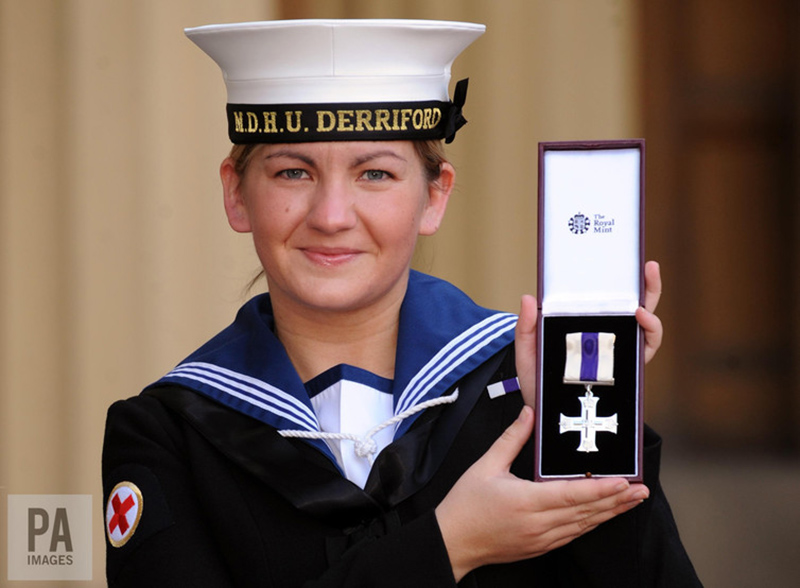
The type of talent – and courage – that saw Michelle “Chuck” Norrisbeing awarded the Military Medal for gallantry after the teenage medic braved heavy sniper fire for three minutes when she climbed on top of a Warrior armoured vehicle to pull her sergeant to safety after he was wounded in the head in Iraq.
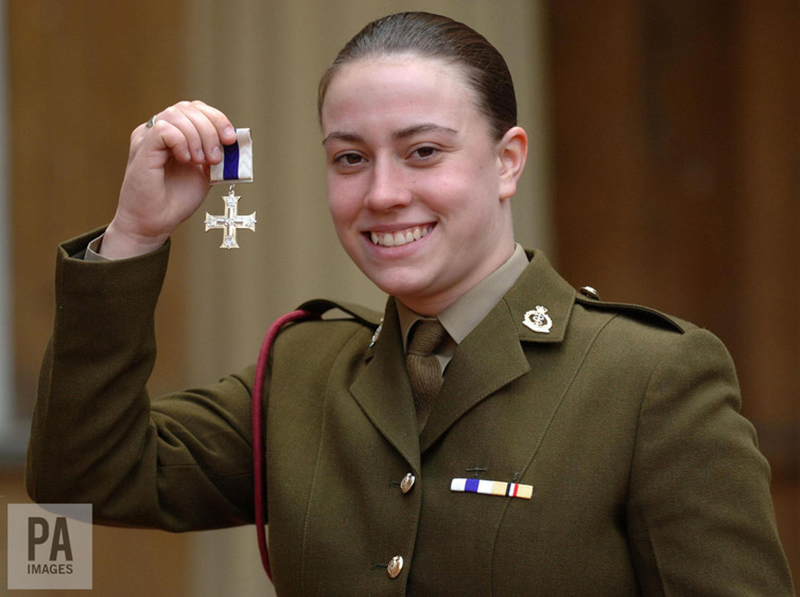
Or that shown by Kate Louise Nesbitt, who was awarded the Military Medal after she braved Taliban fire to tend to a comrade shot in the neck during a gun battle in Afghanistan in March, dressing the wound while bullets and rockets flew overhead.
Women’s stories
With such numbers of women veterans in Britain, the lack of specific research on them is surprising. We don’t know what their narratives are – so we don’t know what they may want or need when they leave the forces. So the starting point must be to collect their stories and analyse these through research – and what better way to research those who have served in the military, than by getting veterans to do the research.
I am a former Warrant Officer Class 1. I served in the Army for 24 years before retiring in 2010, joining Northumbria University in 2015. My research aims to explore the narrative of women veterans, by starting with their stories, it is hoped that we will be able to develop the knowledge of women veterans through analysing their narratives before, during and after their service.
A lot of research currently been published on women veterans is from the US – but we can’t assume that their experiences are the same as British women who have served. We need to investigate the experiences of British women veterans. The best way to do this is through a qualitative study, using biographical narrative methods to explore these in detail – and that’s the aim of my research.
The people who choose to put their lives on the line in the service of their country deserve our respect – and part of that is to acknowledge that we should understand their needs so that we can support them when the time comes for them to hang up their uniforms.
Lest we forget: women also serve.
This article was originally published in The Conversation. Read the original article here.
Latest News and Features

Speeding glaciers drive half a century of polar ice loss
The longest satellite record ever assembled shows that Greenland and Antarctica have lost 11.3…

Northumbria physicist elected Fellow of the Institute of Physics
Dr Juna Sathian, an Associate Professor at Northumbria University, has been elected a Fellow…

Northumbria helps shape national plan to boost graduate employability
Northumbria University has played a key role in shaping a new national plan designed to help…

Northumbria researcher joins appeal to Downing Street on free school meals and holiday support
A Northumbria University academic, whose research has played a key role in bringing breakfast…

Ancient wildfires near the South Pole shaped Earth's earliest peat bog
Wildfires raging through prehistoric rainforests helped create the earliest known peat bog…

Northumbria astronomer helps reveal secrets of rare interstellar visitor
A Northumbria University astronomer has helped uncover new clues about a rare icy object from…

Two Northumbria professors elected Fellows of the Academy of Social Sciences
Two leading academics from Northumbria University have been elected to the Fellowship of the…

New scientific review involving Northumbria researchers identifies Antarctic coastal blind spots limiting sea level projections
A new international, community-led, scientific review warns that major gaps in knowledge along…
More events
Upcoming events


IPE Conference 2026
Northumbria University
-

Specialist Teaching Assistant Degree Apprenticeship - In-person Information Session
Coach Lane Campus
-

Next Stop Northumbria
Europa Hotel
-
