A new,
faster and safer way of diagnosing the Ebola virus has been developed by an academic
from Northumbria University, Newcastle.
Research
led and carried out by Dr Sterghios Moschos at Northumbria means that patients with
Ebola-like symptoms can be identified and treated much sooner and at the point
of care, helping to reduce the spread of the disease and risks to others.
During
the Ebola outbreak in Africa in 2014, patients tested for the disease had to
provide a blood sample fortesting in a specialist lab by highly trained staff., There
are only a few of these facilities in the world, including Public Health England’s Lab in Porton
Down in the UK, with each diagnosis of the Ebola virus genome taking between5-8
hours to confirm.
Thanks to
the efforts of Dr Moschos’ research team, working with a manufacturer of
innovative diagnostic solutions, a new point of care diagnostic platform – EbolaCheck - has been developed, which can be deployed to the scene of an outbreak. The
test can now be carried out on an amount of blood that is 700 times smaller
than previously needed - literally a drop obtained by ‘pin pricking’ a finger -
and it now takes less than 70 minutes to complete. As a result, the test is much
safer to administer, requires minimal training and reduces the cost of
diagnosis significantly. Crucially, its performance is comparable to laboratory
testing, meaning any patient with symptoms of Ebola can be safely and reliably
diagnosed.
The
research has been funded by a grant from Elrha’s Research for Health inHumanitarian Crises (R2HC) Programme, and uses proprietary technology developed by
BioGene Ltd. The prototype is called the ‘QuRapID’.
The R2HC programme aims to
improve health outcomes by strengthening the evidence base for public health
interventions in humanitarian crises. In response to the Ebola outbreak in West
Africa, R2HC launched an emergency Ebola Health Research Call in August 2014,
aiming to fund research which would help to strengthen interventions to tackle
this and future outbreaks.
BioGene
Limited are based near Cambridge and provide a 'solution-based' portfolio of products, services and support -
to encompass the key application areas of molecular biology to include Nucleic Acid Purification, Target Amplification and Post-Amplification Analyses.
A number
of organisations have been involved in the research, including BG Research Ltd, the University of Westminster,
Public Health England, Flurogenics Ltd, Diagnostic Systems Division and Virology
Division of the United States Army Medical Research Institute of Infectious
Diseases and Kwame Nkrumah University of Science and Technology in
Ghana.
The
technology could also be used in the diagnosis of other high-risk viruses such
as the Zika, MERS, SARS, flu, and dengue viruses, but also bacterial and
parasite infections, including meningitis and malaria. This is because it
detects and measures genes and genomes and so has broader applications in
medicine.
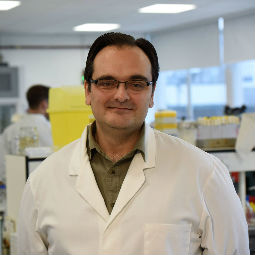
Dr
Sterghios A. Moschos, Associate Professor of Cellular and Molecular Sciences at
Northumbria University, led the research. He said: “During the Ebola outbreak,
between 2013 & 2016, over 28,500 individuals contracted the disease with a
mortality rate of 39.5%. These people often had to walk for hours to reach
overflowing treatment centres, or wait for days for samples to be processed.
Some were put at risk having to wait next to probable Ebola virus cases for an
‘all clear’- usually because the symptoms of other diseases, like malaria, made
them fear they had the Ebola virus.
“The
development of this pioneering technology could essentially save lives and
reduce the spread of the disease, which is crucial in a humanitarian crisis. Due
to there being no further cases since it was developed, to date, it has not
been possible to take the test out of the lab, into the field, where the
patient needs it. However, it can be deployed anywhere - the frontline in
Africa where this disease is found, as well as international airports and ports
- to help stop the disease from spreading and to prevent disruption of
international trade and travel. It could also be used in the diagnosis of other
infectious diseases, as well as bringing genetic testing to the shop front, for
example in a pharmacy or a GP surgery.”
Nelson Nazareth,
Managing Director of BioGene Ltd, which developed and manufactured the
equipment, said: “We are delighted to have worked with Dr Moschos and his team on
the project. BioGene is at the forefront of innovative, UltraRapid Molecular
Biology solutions for rapid detection of nucleic acids and this research has led to a very exciting platform
technology, and one that we are looking to develop further.”
Dr Moschos’ research findings are published in The
Royal Society of Chemistry’s,
Chemical Science
http://pubs.rsc.org/en/content/articlelanding/2017/sc/c7sc03281a#!divAbstract
Dr Moscho's research findings have also been published via Chemistry world and can be viewed here
For more information about research at Northumbria University, visit www.northumbria.ac.uk/research
For more information about Elrha’s Research for Health in
Humanitarian Crises (R2HC) programme visit www.elrha.org/work/r2hc
For
more information about BioGene Ltd visit www.biogene.com.
Ebola diagnosis from Northumbria University on Vimeo.
Notes to
editors:
- Northumbria University, Newcastle is a research-rich, business-focused, professional university with a global reputation for academic excellence.
- Northumbria is one of the largest universities in the UK with almost 34,000 students from 132 countries.
- Northumbria is ranked top 50 in the UK for research power and had the 4th largest increase in quality research funding (REF 2014). According to Times Higher Education, Northumbria had the biggest rise in research power of any university in the UK.
- Elrha’s R2HC programme is funded equally by the Wellcome Trust and UK Government.
- The Ebola virus causes an acute, serious illness which is often fatal if untreated. Ebola virus disease (EVD) first appeared in 1976 in two simultaneous outbreaks, one in what is now, Nzara, South Sudan, and the other in Yambuku, Democratic Republic of Congo. The latter occurred in a village near the Ebola River, from which the disease takes its name. The 2014–2016 outbreak in West Africa was the largest and most complex Ebola outbreak since the virus was first discovered in 1976. There were more cases and deaths in this outbreak than all others combined. It also spread between countries, starting in Guinea then moving across land borders to Sierra Leone and Liberia. It is thought that fruit bats of the Pteropodidae family are natural Ebola virus hosts. Ebola is introduced into the human population through close contact with the blood, secretions, organs or other bodily fluids of infected animals such as chimpanzees, gorillas, fruit bats, monkeys, forest antelope and porcupines found ill or dead or in the rainforest. It then spreads through human-to-human transmission via direct contact (through broken skin or mucous membranes) with the blood, secretions, organs or other bodily fluids of infected people, and with surfaces and materials (e.g. bedding, clothing) contaminated with these fluids. (Source: World Health Organization)





.png?modified=20261006102851)



