
-
Study
-
Quick Links
- Getting Started at Northumbria
- Open Days & Events
- Real-World Learning
- Fixed Block Degrees
- Discover The Bridge
- Tuition Fees, Funding & Scholarships
- Book an Open Day
-
Undergraduate
- Application Guides
- UCAS Exhibitions
- Extended Degrees
- School & College Outreach
- Parents & Guardians
-
Postgraduate
- Application Guide
- Postgraduate Research Degrees
- Flexible Learning
- Change Direction
- Register your Interest
-
Student Life
- Students' Union
- The Hub - Student Blog
- Accommodation
- Northumbria Sport
- Support for Students
-
Learning Experience
- Real-World Learning
- Research-enriched learning
- Graduate Futures
- The Business Clinic
- Study Abroad
-
-
International
International
View our Global Footprint-
International Students
- Northumbria and your Country
- Virtual Events
- Application Guide
- Entry Requirements and Education Country Agents
- Global Offices and Regional Support
- English Requirements
- English Language Centre
- International student support
- Cost of Living
-
International Fees and Funding
- International Undergraduate Fees
- International Undergraduate Funding
- International Masters Fees
- International Masters Funding
- International Postgraduate Research Fees
- International Postgraduate Research Funding
- Useful Financial Information
-
International Partners
- Agent and Representatives Network
- Global Partnerships
- Global Community
-
International Mobility
- Study Abroad
- Information for Incoming Exchange Students
-
-
Business
Business
Northumbria University is proud to offer a range of Professional, Statutory and Regulatory Body (PSRB) approved & accredited courses and programmes. Explore our list of courses and programmes under our Education and Training page.
More on our Business Services-
Business Quick Links
- Contact Us
- Business Events
- Research and Consultancy
- Education and Training
- Workforce Development Courses
- Join our mailing list
-
-
Research
Research
Northumbria is a research-rich, business-focused, professional university with a global reputation for academic quality. We conduct ground-breaking research that is responsive to the science & technology, health & well being, economic and social and arts & cultural needs for the communities
Discover more about our Research-
Quick Links
- Research Peaks of Excellence
- Academic Departments
- Research Staff
- Postgraduate Research Studentships
- Research Events
-
Research at Northumbria
- Interdisciplinary Research Themes
- Research Impact
- REF
- Partners and Collaborators
-
Support for Researchers
- Research and Innovation Services Staff
- Researcher Development and Training
- Ethics, Integrity, and Trusted Research
- University Library
- Vice Chancellors Fellows
-
Research Degrees
- Postgraduate Research Overview
- Doctoral Training Partnerships and Centres
- Academic Departments
-
Research Culture
- Research Culture
- Research Culture Action Plan
- Concordats and Commitments
-
-
About Us
-
About Northumbria
- Our Strategy
- Our Staff
- Our Schools
- Place and Partnerships
- Leadership & Governance
- University Services
- Northumbria History
- Contact us
- Online Shop
-
-
Alumni
Alumni
Northumbria University is renowned for the calibre of its business-ready graduates. Our alumni network has over 253,000 graduates based in 178 countries worldwide in a range of sectors, our alumni are making a real impact on the world.
Our Alumni - Work For Us
Northumbria University research to help keep astronauts healthy on the moon and Mars
Northumbria University research will help enable humankind stay fit and healthy on the moon with the long-term aim of colonising Mars.
Professor Nick Caplan is leading the University’s research team, which will determine how a partial gravity environment affects our spinal muscles that work to maintain upright spinal posture.
Earlier this month, the team from Northumbria’s Aerospace Medicine and Rehabilitation Laboratory visited Novespace, in Bordeaux, France – which runs microgravity, airborne missions - to start planning their research that will fly as part of a partial gravity parabolic flight campaign in June 2018.
The Northumbria team will complete 93 parabolas over three flights, where the gravity level will reduce by up to 75% of the Earth’s gravity.
The Northumbria University team hopes their research, which was selected by the European Space Agency (ESA) and funded by the UK Space Agency, will benefit the global aims of putting humans on the Moon again, as well as longer-term goals of humans colonising Mars.
Professor Nick Caplan, Professor of Aerospace Medicine and Rehabilitation at Northumbria University, said: “Following current missions to the International Space Station, astronauts return to Earth in a physiologically deconditioned state, where they have immediate access to medical support.
“When astronauts travel to Mars, they will arrive with deconditioned bodies, with limited access to medical support. We need to develop effective countermeasures to tackle this deconditioning, to make sure astronauts stay fit and healthy.”
This study is one of a series where Northumbria University has collaborated with the European Space Agency's Space Medicine Office to look at spinal muscle health.
This research will also help people on Earth, such as those with low back pain who have similar spinal muscular changes to astronauts, with spaceflight ageing the body about seven times faster than normal ageing on Earth.
Northumbria University's burgeoning Aerospace Medicine and Rehabilitation Laboratory is also home to the Aerospace Medicine Systematic Review Group, which has published reviews on the effects of partial gravity on the human body, as well as the effectiveness of countermeasures for preventing musculoskeletal deconditioning of the spine in microgravity, working with ESA's Space Medicine Office.
Professor Caplan continued: “Our spinal muscles are known to become smaller and dysfunctional following extended periods of unloading, be it through actual or simulated spaceflight.
“This deconditioning of the spinal antigravity muscles contributes to an increased injury risk to astronauts when they return to Earth's gravity, where many must undergo a period of intense rehabilitation.”
Professor Caplan will be speaking about his team's upcoming experiment at the UK Space Agency conference on Research in Space and Space Analogues in London on 8th November 2017 along with other speakers including British ESA astronaut Tim Peake.
Libby Jackson, Human Spaceflight and Microgravity Programme Manager at the UK Space Agency, said: “We are delighted to be supporting the growing microgravity science community in this research. These exciting experiments will further our understanding of how the human body copes with the challenging environment of living and working in space, which in turn will help humans to carry out more research in space.”
For more information about the Aerospace Medicine and Rehabilitation Laboratory, go to www.aerospacemed.rehab or search #FlySpineNU to keep up to date with the parabolic flight experiment.
Chair in Aerospace Medicine and Rehabilitation

Invest in our experience – Northumbria has been delivering programmes in sport, exercise and rehabilitation for over 30 years and is one of the “top 10” sport Universities in the UK.

Chair in Aerospace Medicine and Rehabilitation
Invest in our experience – Northumbria has been delivering programmes in sport, exercise and rehabilitation for over 30 years and is one of the “top 10” sport Universities in the UK.
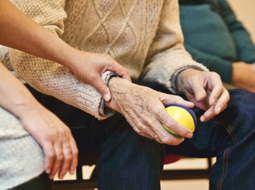
Latest News and Features
Pathbreaking mock trials to test how AI evidence affects justice
Researchers at Northumbria University, Newcastle University, and the University of Glasgow…
North-East pupils tackle real space research through award winning Orbyts programme
A Northumbria University-backed programme giving North-East pupils the chance to do real space…
New dementia risk tool designed for the countries that need it most
An international team led by Northumbria University has developed and validated a simple five-factor…
UK network to accelerate the development of sustainable surface technologies
A new national network led by Newcastle University and Northumbria University, in partnership…
Criminologist wins acclaimed Philip Leverhulme Prize to pioneer a new criminology of the offshore world
A Northumbria University criminologist has been awarded a Philip Leverhulme Prize, one of the…
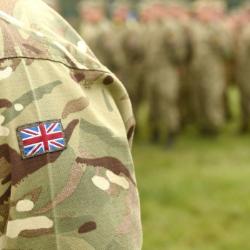
New platform maps charity support for the Armed Forces community
Pioneering data platform maps where the Armed Forces community receive support from charities
Northumbria co-leads study on fairer support for families
A major study co-led by Northumbria University will test whether attachment assessments lead…
New AHRC research shows how community innovation can power the next phase of devolution.
New research published today by the AHRC Creative Communities programme provides fresh evidence…
Upcoming events
Magnetospheric Multiscale Science Working Team Meeting
Sutherland Building
Christmas Market and Tree lighting
Northumbria University
-
What can an engineering education in the North East lead to?
Durrant Hall
-
Snow Problem? Why Arctic Snow Matters in a Warming World
Lecture Theatre 003, Business & Law Building
-
