
Research led by polar scientists from Northumbria University has revealed new hope in natural environmental systems found in East Antarctica which could help mitigate the overall rise of carbon dioxide in the atmosphere over long timescales.
As Antarctica's ice sheets thin due to climate change, newly exposed mountain peaks could significantly increase the supply of vital nutrients to the Southern Ocean which surrounds the continent, potentially enhancing its ability to absorb atmospheric carbon dioxide, according to the research published in Nature Communications.
A team of scientists with expertise in oceanography, ice sheet modelling and geochemistry contributed to the study which looked at analysis of sediment samples from East Antarctica's Sør Rondane Mountains. They discovered that weathered rocks exposed above the ice surface contain iron concentrations up to ten times higher than previously reported from the Antarctic continent. This bioavailable iron is transported to the ocean by glaciers and icebergs, where it fuels the growth of phytoplankton – microscopic marine organisms that absorb CO₂ through photosynthesis.
The study found that sediments from mountain peaks protruding through the ice – known as nunataks – had over three times more extractable iron compared to sediments already being transported by glaciers. Some visibly rust-stained rock samples showed particularly elevated iron levels, suggesting that weathering processes on exposed surfaces create especially nutrient-rich material.

"Our results show that exposed bedrock in Antarctica acts like an iron factory," explained Dr Kate Winter, Associate Professor in the School of Geography and Natural Sciences at Northumbria University and lead author of the research paper. "Even though air temperatures rarely rise above freezing, sunlight can heat dark rock surfaces above 20°C in summer, creating the conditions needed for weathering and the formation of bioavailable iron compounds."
Dr Winter has travelled to Antarctica on fieldwork several times in recent years and has been supported by a Baillet Latour Antarctica Fellowship – a joint initiative of the Baillet Latour Fund and the International Polar Foundation (IPF). It provides scientists with the opportunity to conduct original research in East Antarctica’s cutting-edge Princess Elisabeth Antarctica research station.

Satellite observations confirm that coastal waters near to glacier outlets in the study region experience recurring phytoplankton blooms, demonstrating the biological importance of this natural iron delivery system. The blooms contribute to the Southern Ocean's role as a major carbon sink, absorbing atmospheric CO₂.
Dr Winter added: “The exciting thing is that we can take some hope from these findings because we know that carbon dioxide is a really important factor in climate change. From our research we now know that sediments from the Antarctic continent could help to draw down atmospheric carbon dioxide into the ocean. Whilst our study area is limited to one glacier system, what we need to understand is the potential impact of these many small amounts being drawn down together across the whole of Antarctica. Piecing together information to gather an accurate picture of how much these natural systems are working to reduce the amount of carbon in the atmosphere is crucial.”
However the research team, which includes scientists from the universities of Newcastle, Swansea, Plymouth, Edinburgh and Leeds, caution that there is a significant time lag in this process. Using ice flow models, they calculated that it takes between 10,000 and 100,000 years for iron-rich sediments collected in the mountains to reach the coast via glacial transport.

Dr Sian Henley, a marine scientist from the School of GeoSciences at the University of Edinburgh explained: “While the sediments we examine in the mountains today will take a long time to reach the ocean, we know from seafloor surveys that iron-rich sediments have been delivered to the coast for millennia, so the processes we record today give us a glimpse into changes we might expect to see in the future, as glaciers thin and more mountain surfaces are exposed in Antarctica.”
The study suggests that as temperatures continue to rise, several factors will increase iron delivery to the Southern Ocean:
- More mountain peaks will emerge as ice sheets thin
- Increased rock slope failures will deliver more sediment to glaciers
- Enhanced weathering will produce more bioavailable iron compounds
- Icebergs carrying this iron-rich sediment will distribute nutrients across vast ocean areas

The research provides important insights into how Antarctica's extreme environment connects with ocean ecosystems and the global carbon cycle. It also offers a glimpse into how this system may evolve as climate change continues to reshape the continent.
Discover more about research at Northumbria University which examines the future of ice on Earth.
FURTHER INFORMATION:
Visit the Northumbria University Research Portal to find out more about Dr Kate Winter’s work.
Thinning Antarctic glaciers expose high-altitude nunataks delivering more bioavailable iron to the Southern Ocean was published in Nature Communications.
DOI: 10.1038/s41467-025-65714-y
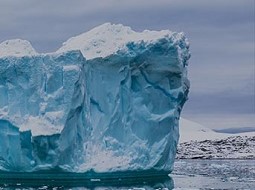
Banner image credit: Dr Kate Winter, drone footage

This is the place to find all the latest news releases, feature articles, expert comment, and video and audio clips from Northumbria University
Northumbria's academics are studying the future of ice sheets and glaciers worldwide in a warming world. This involves understanding the causes of ongoing changes in Antarctica, Greenland and alpine areas, as well as assessing future changes and resulting impacts on human environments globally.

VC Fellow in the Department of Geography and Environmental Sciences.
Latest News and Features

New Doctoral Training Programme will tackle key polar science questions with a reduced carbon footprint
The Net Zero Polar Science (NZPS) Doctoral Training Programme (DTP) has welcomed its first…

New Student Health Hub brings joint health and wellbeing support
A new drop-in service is bringing health and wellbeing support for students at both Newcastle…

Researchers aim to grow optical fibres using biology instead of machinery
A new project led by Northumbria University aims to grow optical fibres using proteins, mimicking…

Training the next generation of space scientists
Northumbria University has hosted a major international workshop, bringing together leading…
.png?modified=20261006102851)
International design competition to grow the colour of the future
Researchers at Northumbria University and Imperial College London have launched an international…

Northumbria graduates celebrated at North East Business Awards
Graduate entrepreneurs from Northumbria University are celebrating after winning recognition…

How facial recognition failures harm people with facial differences
Researchers at Northumbria University's Centre for Responsible AI are working with Face Equality…

New Master Research Agreement strengthens commitment to cutting-edge research and innovation
Northumbria University and Lockheed Martin Space UK have signed a new Master Research Agreement,…
More events
Upcoming events

Next Stop Northumbria
Europa Hotel
-
The Past We Inherit. The Future We Build: Better Decisions Happen Together
The Great Hall, Sutherland Building
-
Next Stop Northumbria
Manchester Marriott Hotel Piccadilly
-
