
Running projects without international volunteers will not help “decolonise development”, according to new collaborative research by international development charity Voluntary Service Overseas (VSO), and Northumbria University.
The first-ever focus on “blended volunteering”, VSO’s flagship approach that brings together international and national volunteering skills, concludes that local volunteers are experts and should be recognised as such. A report outlining the key findings suggests the knowledge of national volunteers needs to be valued equally with that of their international counterparts, if they are to help tackle global poverty and inequality.
The research questions assumptions about volunteering for development programmes aiming to contribute to the United Nations Sustainable Development Goals (SDGs). Professor Matt Baillie Smith led the study with Professor Katy Jenkins from Northumbria’s Centre for International Development, working alongside researchers in the UK, Nepal, Tanzania, and Uganda.
The report looked at practical examples from VSO projects. Some of the projects covered in the study include Improving Children’s Learning and Participation (ICLP) in Tanzania, Driving Youth Led Agrobusiness and Micro Enterprises (DYNAMIC) in Uganda, and Sisters for Sisters’ Education (S4S) in Nepal.
 “There's been a huge debate
during the pandemic about whether we can do everything without international volunteers and
how ‘this is a good way to ‘decolonise development’,” said Professor Baillie Smith, whose current work focuses on volunteering in humanitarian
and development settings. “But just removing international volunteers isn’t
going to ‘decolonise development’ and there are some risks of relying on this
approach.
“There's been a huge debate
during the pandemic about whether we can do everything without international volunteers and
how ‘this is a good way to ‘decolonise development’,” said Professor Baillie Smith, whose current work focuses on volunteering in humanitarian
and development settings. “But just removing international volunteers isn’t
going to ‘decolonise development’ and there are some risks of relying on this
approach.
“The burden on local volunteers may increase. We will miss out on the dynamic interaction of a blended team. Whether international volunteers exist or not, there are still power hierarchies that need addressing.”
The research, based on interviews and participatory workshops with volunteers, community representatives, and VSO staff, found that there was no “one-size fits all” approach to designing and putting in place successful “volunteer combinations”. There is a need to adapt volunteer planning and management in programmes based on local requirements and local learning, it found.
“The presence of international volunteers brings energy and donor attention to projects, whilst community and national volunteers enable effective engagement with local communities and increase the likelihood that impacts can be sustained due to their particular knowledges and longer-term involvement,” the report explains.
As one volunteer for Tanzania’s Lake Zone Youth Empowerment (LZYE) project said, “community volunteers continue to perform their duties and better even after the departure of the national volunteers”.
Much existing research on volunteering in the development sector focuses on the role of “international volunteers” like short-term Western gap year participants, or on “voluntourism”, where travellers participate in voluntary work which is often for charities.
 Professor Jenkins, who is committed to working in
partnership with development NGOs and grassroots and community organisations
with a particular focus on the impact of community volunteering, said
that past understandings of local community volunteers have often focused on
where they are, not the fact that they are experts in their own right.
Professor Jenkins, who is committed to working in
partnership with development NGOs and grassroots and community organisations
with a particular focus on the impact of community volunteering, said
that past understandings of local community volunteers have often focused on
where they are, not the fact that they are experts in their own right.
“The research shows that local community volunteers are not just important because of where they live but rather they bring knowledge and expertise, including context specific experiences, which can hold the blend together,” she said.
Dr Philip Goodwin, VSO’s Chief Executive, said: “This study demonstrates the importance of a blended volunteering approach which brings together international, national, and community volunteers to maximise development outcomes.
“A blended volunteering approach is a significant new way of thinking about how countries can succeed in their development journey.”
Read the full research report, Volunteering Together: Blending knowledge and skills for development, here.
To find out more about the work of the Centre for International Development team and studying International Development at Northumbria, visit northumbria.ac.uk
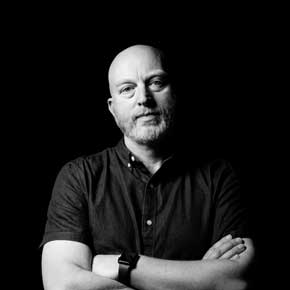
Professor of International Development
Geography at Northumbria University encompasses all of our work in physical and human geography, environmental science and management, health & safety, and disaster management.
Latest News and Features

Northumbria graduates celebrated at North East Business Awards
Graduate entrepreneurs from Northumbria University are celebrating after winning recognition…

How facial recognition failures harm people with facial differences
Researchers at Northumbria University's Centre for Responsible AI are working with Face Equality…

New Master Research Agreement strengthens commitment to cutting-edge research and innovation
Northumbria University and Lockheed Martin Space UK have signed a new Master Research Agreement,…

Speeding glaciers drive half a century of polar ice loss
The longest satellite record ever assembled shows that Greenland and Antarctica have lost 11.3…

Northumbria physicist elected Fellow of the Institute of Physics
Dr Juna Sathian, an Associate Professor at Northumbria University, has been elected a Fellow…

Northumbria helps shape national plan to boost graduate employability
Northumbria University has played a key role in shaping a new national plan designed to help…

Northumbria researcher joins appeal to Downing Street on free school meals and holiday support
A Northumbria University academic, whose research has played a key role in bringing breakfast…

Ancient wildfires near the South Pole shaped Earth's earliest peat bog
Wildfires raging through prehistoric rainforests helped create the earliest known peat bog…
More events
Upcoming events

Specialist Teaching Assistant Degree Apprenticeship - In-person Information Session
Coach Lane Campus
-

Next Stop Northumbria
Europa Hotel
-
The Past We Inherit. The Future We Build: Better Decisions Happen Together
The Great Hall, Sutherland Building
-
Next Stop Northumbria
Manchester Marriott Hotel Piccadilly
-
