
Academics from Northumbria University have secured funding to build Pakistan's first full-scale demonstration plant that converts agricultural waste into clean energy, creating a new source of income for rural women at the same time.
Every winter, farmers across Punjab burn millions of tonnes of cotton stalks and sugarcane waste in their fields because there is no other use for it. The practice contributes to air pollution levels five to seven times above World Health Organisation limits and is a major driver of Pakistan's seasonal smog.
At the same time, Pakistan imports around 19 million tonnes of coal every year at a cost of more than $2.5 billion, while rural communities in South Punjab endure power cuts of up to 18 hours a day.
The new project, called SAFER PLUS, turns cotton stalks and sugarcane waste into engineered bio-coal pellets through a heating process known as torrefaction.
The pellets can potentially replace imported coal in brick kilns and textile mill boilers at 40 to 50 per cent lower cost, with no modifications needed to existing equipment
The process also captures surplus heat, which will be piped to local handmade textile dyeing workshops, as well as generating electricity from its own gases to power off-grid households, and producing wood vinegar, which is a natural pesticide sold directly to farmers. Once running, the system powers itself, requiring no external fuel, making it fully sustainable.
 Dr Jibran Khaliq, of Northumbria University's School of Engineering, Physics and Mathematics, is leading the project from Northumbria University alongside Dr Shahid Rasul. He said: “Pakistan spends over two and a half billion dollars
every year importing coal to power its industries, while millions of tonnes of
crop residue are burned in fields because there is no market for it.
Dr Jibran Khaliq, of Northumbria University's School of Engineering, Physics and Mathematics, is leading the project from Northumbria University alongside Dr Shahid Rasul. He said: “Pakistan spends over two and a half billion dollars
every year importing coal to power its industries, while millions of tonnes of
crop residue are burned in fields because there is no market for it.
“What makes this project different is that we are not proposing another laboratory study; we have spent six years developing and validating the knowledge, and now we are building a live commercial facility with three textile mills already committed to using the fuel. This is the step that turns research findings into an investable, replicable business that Pakistan can own and scale.”
Central to the project is a women-led biomass cooperative that will collect and supply the agricultural waste. Women in rural South Punjab currently spend three to six hours a day collecting fuelwood and often work unpaid on family farms. Through the cooperative, more than 120 households across a 25-30-kilometre radius will receive a formal income from material that farmers currently pay to dispose of.
At least 60 per cent of training places on the project are reserved for women, and payments will be made directly into women's own mobile wallets to ensure they have independent control over their earnings.
.png?la=en&h=250&w=350&modified=20260805124539&hash=5606EB5E0468430172D6A0FE91C4B894) A
demonstration hub will be built on the campus of the University of Kamalia in
South Punjab, where it is expected to process around 5,000 tonnes of
agricultural waste per year and produce up to 4,000 tonnes of bio-coal. The hub
will remain operational at the university for at least 10 years after the
project ends, continuing to supply the local community.
A
demonstration hub will be built on the campus of the University of Kamalia in
South Punjab, where it is expected to process around 5,000 tonnes of
agricultural waste per year and produce up to 4,000 tonnes of bio-coal. The hub
will remain operational at the university for at least 10 years after the
project ends, continuing to supply the local community.
Dr Yasir Nawab, Vice Chancellor of the University of Kamalia, said: “This project demonstrates that universities in rural Pakistan can be more than places of learning, they can be the engines of clean energy, skilled employment and economic transformation for the communities they serve.”
Three Pakistani textile manufacturers have already signed letters of commitment to trial the bio-coal as boiler fuel. If they are satisfied with the results, they have indicated they would purchase it commercially, making SAFER PLUS the first project to demonstrate a viable market for agrowaste solid fuel in Pakistan's textile sector.
Dr Muhammad Saghir, Chief Executive of Eco Research Ltd, is the technology lead and administrative lead for the project. He said: “Our patent-pending reactor converts agricultural waste into four commercially viable products from a single process which are coal-grade fuel, electricity, industrial heat and organic pesticide, all without consuming any fossil fuel after startup.
“That combination does not exist anywhere in Pakistan today. Moving from laboratory validation to a full commercial-scale demonstrator with paying industrial customers is the critical step that proves this technology is not just technically sound but financially viable.
“Our shared ambition as a consortium is to replicate this across thirty hubs in Punjab within the next decade, creating a domestic clean fuel industry that reduces Pakistan's dependence on imported coal and puts revenue directly into the hands of farming communities.”
.png?la=en&h=250&w=350&modified=20260805124624&hash=368893426E6777AE9E0FA3F7BF0591B6) Entitled SAFER PLUS: Demonstrator for High Energy Bio Coal and Other Carbon Negative
Products in Rural South Punjab using Sustainable Agrowaste, the project has
been awarded nearly £1.25 million through Energy Catalyst Round 11. It was one
of only three projects funded at mid-stage out of nearly 300 applications.
Entitled SAFER PLUS: Demonstrator for High Energy Bio Coal and Other Carbon Negative
Products in Rural South Punjab using Sustainable Agrowaste, the project has
been awarded nearly £1.25 million through Energy Catalyst Round 11. It was one
of only three projects funded at mid-stage out of nearly 300 applications.
The programme is funded by the UK Government's Department for Science, Innovation and Technology (DSIT) and delivered by Innovate UK. The award was announced at the Ayrton Forum 2026 in London last month (June) as part of London Climate Action Week.
Jilian Henderson, Innovation Lead at Innovate UK commented: “This funding will help grow innovative projects that bring reliable, clean energy to communities that need it most, supporting better healthcare, education and livelihoods. Through Energy Catalyst, we’re helping turn ideas into practical solutions that improve lives and support a fairer, more sustainable energy future.”
Professor Louise Bracken, Pro Vice-Chancellor for Research and Knowledge Exchange at Northumbria University said: “This project demonstrates the strength of what can be achieved when universities work across borders with genuine shared purpose. Northumbria's role in SAFER PLUS reflects our commitment to research that addresses global challenges, and we are proud to be part of a consortium that is creating tangible, lasting benefits for communities in Pakistan.”
.png?la=en&h=250&w=350&modified=20260805124356&hash=2027310760AC8162D24344047C0F1940) SAFER
PLUS builds directly on earlier work by the same Northumbria-led consortium.
The predecessor project, SAFER, explored converting banana stem waste and other
agricultural residues into energy, and installed three fibre extraction units
at sites across Pakistan that are operational today. That project was highly
commended at the 2025 Green Gown Awards, one of the most prestigious
sustainability awards in the global education sector.
SAFER
PLUS builds directly on earlier work by the same Northumbria-led consortium.
The predecessor project, SAFER, explored converting banana stem waste and other
agricultural residues into energy, and installed three fibre extraction units
at sites across Pakistan that are operational today. That project was highly
commended at the 2025 Green Gown Awards, one of the most prestigious
sustainability awards in the global education sector.
Through that work, the team identified that cotton stalks and sugarcane bagasse offered significantly greater energy potential than banana waste. SAFER PLUS now takes that learning to full commercial scale, the first demonstration of its kind in Pakistan.
If the demonstrator proves successful, the consortium has set out a roadmap to replicate the model across 30 sites in Pakistan, which it estimates would displace more than 100,000 tonnes of imported coal every year.
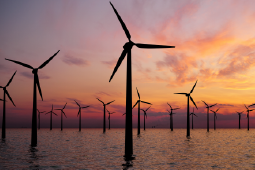
At Northumbria Engineering, Physics and Mathematics are co-located in one ambitious, future-facing school.

Our energy materials and systems research uses fundamental physics, chemistry and engineering to develop new ways to generate and store renewable energy - to help deliver a cleaner and greener future.
This is the place to find all the latest news releases, feature articles, expert comment, and video and audio clips from Northumbria University
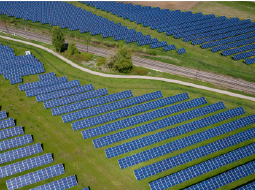
The vision of Energy Futures is to help meet this need by driving forward innovative research-driven approaches to create a cleaner energy future for all.

Latest News and Features

New Doctoral Training Programme will tackle key polar science questions with a reduced carbon footprint
The Net Zero Polar Science (NZPS) Doctoral Training Programme (DTP) has welcomed its first…

New Student Health Hub brings joint health and wellbeing support
A new drop-in service is bringing health and wellbeing support for students at both Newcastle…

Researchers aim to grow optical fibres using biology instead of machinery
A new project led by Northumbria University aims to grow optical fibres using proteins, mimicking…

Training the next generation of space scientists
Northumbria University has hosted a major international workshop, bringing together leading…
.png?modified=20261006102851)
International design competition to grow the colour of the future
Researchers at Northumbria University and Imperial College London have launched an international…

Northumbria graduates celebrated at North East Business Awards
Graduate entrepreneurs from Northumbria University are celebrating after winning recognition…

How facial recognition failures harm people with facial differences
Researchers at Northumbria University's Centre for Responsible AI are working with Face Equality…

New Master Research Agreement strengthens commitment to cutting-edge research and innovation
Northumbria University and Lockheed Martin Space UK have signed a new Master Research Agreement,…
More events
Upcoming events

Next Stop Northumbria
Europa Hotel
-
The Past We Inherit. The Future We Build: Better Decisions Happen Together
The Great Hall, Sutherland Building
-
Next Stop Northumbria
Manchester Marriott Hotel Piccadilly
-
