
Adapting to new ways of living and working while addressing the loss and damage already caused by climate change will be key to tackling the global crisis.
As the spotlight on the landmark COP26 climate change conference in Glasgow continues into a second week, Professor of International Development at Northumbria University, Matt Baillie Smith, reflects on the importance of taking a collaborative approach to finding solutions which protect the future of the planet.
Matt is a leading figure in the active research community at Northumbria and his research is focused on issues of global development and global justice. He is particularly interested in the different ways individuals and communities become involved in humanitarian and development work, including climate adaptation, as well as the roles of young people in shaping development, humanitarian responses and climate action.
 What are some of the practical solutions available to us when tackling the impacts of climate change?
Scientists across the globe have identified key things that can be done in everyday lives to try and tackle the climate emergency, from reducing flying to cutting meat consumption. But of course, the abilities to meet some of the challenges of changing behaviours are not evenly distributed – there are costs that not all can meet. And there is a risk that the burden for meeting the challenges of climate fall disproportionately on the poor. So ensuring the transitions that are needed are socially ‘just’ is critically important. It is also the case that individual behaviours are not enough. Meeting the challenges of climate emergency require government action and coordination, and this is key to changes in other sectors.
Can you outline some of the world-leading research happening at Northumbria which aims to develop these solutions and deal with the damage already done?
There is a wealth of research happening across the University addressing the impacts of the climate emergency on environments and people, the ways communities are adapting across the globe, and building the scientific knowledge essential to tracking what is happening and modelling what the future holds.
I’m currently working with Dr Oliver Hensengerth, Dr Laura Beckwith and Dr Chamithri Greru as part of the UKRI Global Challenges Research Fund (GCRF) Living Delta’s Hub, exploring young people’s experiences of the changing environments of river deltas in South and South East Asia, as well as the actions they are taking to adapt and push for change. Deltas are integral to global food supplies, fish stocks, water supply, industry, trade and culture. Deltas are under threat from climate change, rising sea levels, industrial farming techniques and pollutants. We’re doing research with communities in deltas to try and understand and support more sustainable delta futures.
Dr Pete Howson, for example, is researching climate change mitigation and financing in the Asia Pacific region. Professor Anil Namdeo’s research looks at air quality and environmental justice, Professor Alistair Rieu-Clarke’s work focuses on water governance, Dr Gita Gill is addressing the importance of access to justice in environmental matters, and Dr Katie Oven’s work looks at social vulnerability and resilience to disasters including earthquakes and landslides. And there are many others.
The breadth and richness of research in this area, its planetary significance, and the impacts of the climate emergency on some of the most vulnerable countries and communities in the world, is one of the reasons we created the multidisciplinary research group, the Global Development Futures Hub, which brings academic staff across disciplines together to address some of the world’s biggest challenges – including climate change.
What is the most profound or impactful thing you’ve seen which has highlighted the scale of the climate emergency?
Communities around the globe are already facing more frequent and severe weather events due to climate change. More action is needed to understand and respond to these risks and there is a lot of research being carried out at Northumbria to help inform this.
My understanding of the scale of the climate emergency has come to me from listening to the voices and experiences of those on the frontline in countries including India, Bangladesh, Vietnam and Uganda. Loss of land and livelihoods as a result of the changing climate really demonstrates the urgency of the challenges the world faces. Visiting West Bengal, India straight after a cyclone had hit the Sundarbans, and seeing the destructive impacts on people’s houses and their lives and livelihoods, highlighted how climate change is disproportionately impacting the world’s most vulnerable communities, despite them contributing least to the causes of the climate emergency.
How important is it to take a collaborative approach to finding the best way forward?
A really fundamental thing to say is that climate challenges cannot be met or overcome by a single discipline or by academics working in silos, separated from policy makers and the communities facing the climate emergency in their daily lives. We not only need the best researchers from across the sciences, humanities, arts and social sciences, but also to be working in partnership and collaboratively in ways that mean listening to voices who are often ignored.
In the Global Development Futures Hub, we are prioritising how we work as much as what we work on – working equitably and ethically with partners is easy to say, and very hard to do given the power inequalities and institutional systems we all have to navigate. But finding ways to work differently is critically important to meeting the global challenges of the climate emergency.
Discover more online about the cutting-edge research happening at Northumbria University. Visit northumbria.ac.uk/research/mdrts/
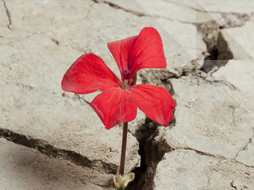
Geography At Northumbria University Encompasses All Of Our Work In Physical And Human Geography, Environmental Science And Management, Health & Safety, And Disaster Management.

The Department Offers An Exciting And Extensive Range Of High-Quality Undergraduate And Post-Graduate Courses In Criminology, Politics, And Sociology.

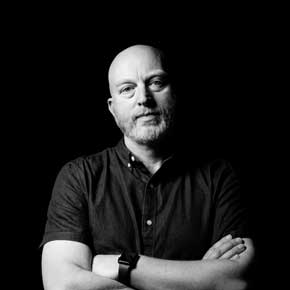
Professor of International Development
Latest News and Features

Free sessions to help families navigate the SEND system
Northumbria University's award-winning Student Law Office is launching SEND Decoded, a series…

New Doctoral Training Programme will tackle key polar science questions with a reduced carbon footprint
The Net Zero Polar Science (NZPS) Doctoral Training Programme (DTP) has welcomed its first…

New Student Health Hub brings joint health and wellbeing support
A new drop-in service is bringing health and wellbeing support for students at both Newcastle…

Researchers aim to grow optical fibres using biology instead of machinery
A new project led by Northumbria University aims to grow optical fibres using proteins, mimicking…

Training the next generation of space scientists
Northumbria University has hosted a major international workshop, bringing together leading…
.png?modified=20261006102851)
International design competition to grow the colour of the future
Researchers at Northumbria University and Imperial College London have launched an international…

Northumbria graduates celebrated at North East Business Awards
Graduate entrepreneurs from Northumbria University are celebrating after winning recognition…

How facial recognition failures harm people with facial differences
Researchers at Northumbria University's Centre for Responsible AI are working with Face Equality…
More events
Upcoming events

Next Stop Northumbria
Europa Hotel
-
The Past We Inherit. The Future We Build: Better Decisions Happen Together
The Great Hall, Sutherland Building
-
Next Stop Northumbria
Manchester Marriott Hotel Piccadilly
-
