
A glacier in Antarctica is committing “ice piracy” – stealing ice from a neighbour – in a phenomenon that has never been observed in such a short time frame, say scientists.
This activity was previously believed to take place over hundreds or even thousands of years, but high-resolution satellite observations have revealed that one huge glacier has been relentlessly stealing ice from its slower-moving neighbour over a 17-year period.

The research team which included experts from the UK Centre for Polar Observation and Modelling based at Northumbria University, say it is unprecedented that this change in ice flow direction can be directly witnessed in Antarctica over such a short time span and its discovery is an important step in improving our understanding of the future of Antarctica and its contribution to sea level rise.
Their findings are published in the journal The Cryosphere.
Using data provided by satellites belonging to the European Space Agency, the Japan Aerospace Exploration Agency, the Canadian Space Agency and NASA, the researchers examined high-resolution images taken between 2005 and 2022.
In a bid to understand the rates of flow from eight ice streams in the Pope-Smith-Kohler region of West Antarctica, they investigated changes in conditions that impact how fast the ice flows, such as warming of the ocean, change in ocean circulation, change in air temperature and the amount of snow falling.

The satellite data revealed that seven of the eight ice streams have sped up their ice flow by an average of 51% since 2005. Six of the streams reached average speeds of over 700 metres per year in 2022 alone – equivalent to advancing the length of seven football pitches in one year, a remarkably fast pace for ice.
They also discovered a significant shift in flow direction during the same time period.
While the Kohler East glacier had the fastest rate with a speed of 87%, in stark contrast, its neighbour, Kohler West, slowed by 10%.
As the rate of ice flow and its eventual melt into the sea has implications for sea-level rise, the findings are giving polar scientists new insights into the behaviours and future evolution of ice sheets.
The study was led by Dr Heather L. Selley, who undertook this work as a PhD researcher in the School of Earth and Environment at the University of Leeds. She collaborated with Dr Tom Slater, a Research Fellow in Northumbria University’s Department of Geography and Environmental Sciences who co-authored the paper. It also involved researchers from British Antarctic Survey.
Dr Selley said: “We think that the observed slowdown on Kohler West Glacier is due to the redirection of ice flow towards its neighbour – Kohler East. Because Kohler East’s ice stream is flowing and thinning faster as it travels, it absorbs, or “steals” ice from Kohler West. This is effectively an act of ‘ice piracy’, where ice flow is redirected from one glacier to another, and the accelerating glacier is essentially ‘thieving’ ice from its slowing neighbour.
“We didn’t know ice streams could ‘steal’ ice from each over such a short period, so this is a fascinating discovery. It’s unprecedented as we're seeing this from satellite data and it’s happening at a rate of under 18 years, whereas we’ve always thought it was this extremely long, slow process.”
Dr Slater said: “This study is another great example of how satellites like ESA’s CryoSat-2 and Sentinel-1 have revealed that glaciers can change over short timescales not thought possible just three decades ago, revolutionising our ability to project their future behaviour.”
The team calculated the ice velocity using a tracking technique which measures the displacement of visible features at or near the ice surface, such as crevasses or rifts. Data on ice-thinning rates from the European Space Agency’s (ESA) CryoSat mission was also used in the study.
Dr Martin Wearing, ESA Digital Twin Earth Scientist and Polar Science Cluster Coordinator, said, “This new study highlights the unique ability of satellites to provide both the temporal and spatial coverage required to assess change in the polar regions.
“Using data from Copernicus Sentinel-1 and ESA's Earth Explorer CryoSat, the team has revealed the complex evolution of ice flow in part of West Antarctica over the past few decades. Understanding these changing dynamics and what drives them is crucial for improved projections of future ice-sheet change and contributions to sea-level rise.”
The research was funded by UKRI Natural Environment Research Council (NERC), ESA and NASA Headquarters.
Northumbria University has one of the world’s largest groups of polar scientists studying the interactions between ice sheets and oceans and is home to the UK’s Centre for Polar Observation and Modelling (CPOM).
CPOM, a partnership of six universities funded primarily by UKRI-NERC, studies the Earth's polar regions, using satellite observations to monitor change and numerical models to better predict how their ice and oceans might continue to change in the future. By providing long-term capabilities to the scientific community and leading international assessments, CPOM helps global policymakers plan for the effects of climate change and sea level rise.
Join us in powering the next generation of space innovation. Our new BEng Aerospace Satellite Engineering course has been developed by world-leading academics and industry partners to equip graduates with the key skills required to work and thrive within the rapidly growing space sector.
Join us in powering the next generation of space innovation. Our new MSc in Aerospace Satellite Engineering course has been developed by world-leading academics and industry partners to equip postgraduates with the advanced knowledge and skills required to work and thrive within the rapidly growing space sector.
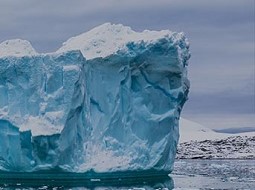
Northumbria's academics are studying the future of ice sheets and glaciers worldwide in a warming world. This involves understanding the causes of ongoing changes in Antarctica, Greenland and alpine areas, as well as assessing future changes and resulting impacts on human environments globally.
Geography At Northumbria University Encompasses All Of Our Work In Physical And Human Geography, Environmental Science And Management, Health & Safety, And Disaster Management.
This is the place to find all the latest news releases, feature articles, expert comment, and video and audio clips from Northumbria University

Northumbria University News is packed full of news and features covering everything from research projects and business partnerships to student and staff awards.
Latest News and Features

UK network to accelerate the development of sustainable surface technologies
A new national network led by Newcastle University and Northumbria University, in partnership…

Criminologist wins acclaimed Philip Leverhulme Prize to pioneer a new criminology of the offshore world
A Northumbria University criminologist has been awarded a Philip Leverhulme Prize, one of the…
New platform maps charity support for the Armed Forces community
Pioneering data platform maps where the Armed Forces community receive support from charities

Northumbria co-leads study on fairer support for families
A major study co-led by Northumbria University will test whether attachment assessments lead…

New AHRC research shows how community innovation can power the next phase of devolution.
New research published today by the AHRC Creative Communities programme provides fresh evidence…

Free sessions to help families navigate the SEND system
Northumbria University's award-winning Student Law Office is launching SEND Decoded, a series…

New Doctoral Training Programme will tackle key polar science questions with a reduced carbon footprint
The Net Zero Polar Science (NZPS) Doctoral Training Programme (DTP) has welcomed its first…

New Student Health Hub brings joint health and wellbeing support
A new drop-in service is bringing health and wellbeing support for students at both Newcastle…
More events
Upcoming events

Next Stop Northumbria
Manchester Marriott Hotel Piccadilly
-

-
Magnetospheric Multiscale Science Working Team Meeting
Sutherland Building

Christmas Market and Tree lighting
Northumbria University
-
