
Gavin completed his PhD training at the University of South Australia which examined the neural basis of affective responses during exercise using functional near infrared spectroscopy (fNIRS; a non-invasive neuroimaging technique). He completed his initial postdoctoral training at Tomsk State University (Russia) and then escaped the Siberian winter to thaw out at the University of Nice Sophia Antipolis on the French Riviera. His postdoc work examined the effects of exercise upon cognitive function and creativity using NIRS. He then moved stateside to Stanford University where he examined the effectiveness of exercise to improve brain function and symptoms in childhood attention deficit/hyperactivity disorder (ADHD). In 2019, Gavin was appointed as Assistant Professor in the Department of Sport, Exercise and Rehabilitation.
Gavin's research spans three complementary approaches:
1) mechanistic studies using neuroimaging (fNIRS) to understand brain responses to exercise;
2) applied research monitoring health and behaviour in real-world ecological settings; and
3) public health research addressing the social determinants of physical activity and behaviour change in children, adults, and under-served communities.
Gavin leads the Physical Activity for Health Across the Lifespan Research Group at Northumbria University and is a Fellow of the Higher Education Academy. He supervises PhD students working across physical activity, cognition, nutrition, health and behaviour.

- Exercise neuroscience and psychophysiology (fNIRS, HRV)
- Affective and perceptual responses to exercise
- Cognitive function, brain health and physical activity
- Nutrition, hydration and cognitive performance
- Immersive technologies (virtual reality) and exercise
- Physical activity promotion in children and young people
- Social determinants of health and health equity
- Behaviour change theory and health behaviour
- Please visit the Pure Research Information Portal for further information
- DE-PASS best evidence statement (BESt) – Modifiable determinants of physical activity and sedentary behaviour in adults aged 20-64 years: A protocol for systematic review and meta-analysis, Izzicupo, P., Ciaccioni, S., Serafini, S., Guidotti, F., Ciorciari, A., Corvino, C., D'Angelo, C., Di Baldassarre, A., Di Credico, A., Fusco, A., Gozzoli, C., Ernstsen, L., Man Ling, F., Mork, P., Bartoš, F., Khudair, M., Maier, M., Marcuzzi, A., Ng, K., Tempest, G., MacDonncha, C., Capranica, L., Cortis, C., Orrù, S. Aug 2026, In: Heliyon
- Game on, grades up? Effects of a teacher- and pupil-informed physical activity break on executive function and behaviour in children, Dixon, S., Hettinga, F., McCullogh, N., Tempest, G. 16 Feb 2026, In: Journal of Sports Sciences
- Modifiable determinants of adolescents’ physical activity and sedentary behaviour in school, home and mixed settings: A DE-PASS systematic review and meta-analysis of self-reported data with a holistic analysis, Ciaccioni, S., Oddi, L., Kolovelonis, A., Syrmpas, I., Marcuzzi, A., Khudair, M., Ng, K., Tempest, G., Peric, R., Bartoš, F., Maier, M., Brandes, M., Carlin, A., Cortis, C., Corvino, C., Di Credico, A., Drid, P., Gallè, F., Izzicupo, P., Jahre, H., Kongsvold, A., Kouidi, E., Mork, P., Palumbo, F., Rumbold, P., Sandu, P., Stavnsbo, M., Vilela, S., Woods, C., Wunsch, K., Capranica, L., MacDonncha, C., Ling, F. 1 Oct 2026, In: Mental Health and Physical Activity
- Quantifying the effect of Behaviour Self-regulation on well-being through causal analysis: A methodological framework for longitudinal health data, Wang, J., Wang, P., Woo, W., Sakalidis, K., Hettinga, F., Rodrigues, A., Dawes, H., Tempest, G. 1 Feb 2026, In: Journal of Biomedical Informatics
- Teachers’ perspectives on barriers and motivators to physical activity participation in children from ethnic minority groups in Newcastle upon Tyne: A qualitative study, Omojor-Oche, J., Tempest, G., Hettinga, F., Sakalidis, K. 5 Feb 2026, In: PLoS One
- The impact of natural and urban environmental settings on exercise and perceptual responses during virtual reality-based exercise, Festino, E., Papale, O., Cortis, C., Fusco, A., Hibbs, A., Khudair, M., Sakalidis, K., Barry, G., Hettinga, F., Tempest, G. 17 Mar 2026, In: Frontiers in Psychology
- A qualitative analysis of perceived barriers and motivators to physical activity in children from ethnic minority groups and white British children, Omojor-Oche, J., Tempest, G., Hettinga, F., McCullogh, N. 27 May 2025, In: PLoS One
- DE-PASS Best Evidence Statement (BESt): A Systematic Review and Meta-analysis on the Effectiveness of Trials on Device-Measured Physical Activity and Sedentary Behaviour and Their Determinants in Children Aged 5-12 Years, Khudair, M., Marcuzzi, A., Tempest, G., Ng, K., Peric, R., Bartoš, F., Maier, M., Brandes, M., Carlin, A., Ciaccioni, S., Cortis, C., Corvino, C., di Credico, A., Drid, P., Gallè, F., Izzicupo, P., Jahre, H., Kolovelonis, A., Kongsvold, A., Kouidi, E., Mork, P., Palumbo, F., Rumbold, P., Sandu, P., Stavnsbo, M., Syrmpas, I., Vilela, S., Woods, C., Wunsch, K., Capranica, L., MacDonncha, C., Ling, F. 1 Feb 2025, In: Sports Medicine
- Exploring the psychophysiological mechanisms underlying the relationship between cognitive function and exercise performance, Angius, L., Staiano, W., Tempest, G. 12 Jun 2025, Sport and Exercise Psychophysiology, Cham, Switzerland, Springer
- Hydration, mood, and cognition in primary school aged children in the United Kingdom, Roberts, C., Boak, K., McCullogh, N., Brownlee, I., Haskell, C., James, L., Green, B., Tempest, G., Bruce-Martin, C., Rumbold, P. 1 Dec 2025, In: Physiology and Behavior
- Joyce Omojor-Oche Addressing health inequality and wellbeing through physical activity; Identifying barriers and motivators to uptake of PA in children from ethnic minority groups. Start Date: 18/12/2025 End Date: 01/06/2026
- Amelie Leach The Effects of Exercise on Psychophysiological Response to Acute Psychological Stress Start Date: 01/10/2025
- Charlie Ward Affective States and Physical Activity Behaviour in Low-Active Adults: A Multi-Study Research Programme Start Date: 01/10/2025
PhD March 12 2014
Latest News and Features

Criminologist wins acclaimed Philip Leverhulme Prize to pioneer a new criminology of the offshore world
A Northumbria University criminologist has been awarded a Philip Leverhulme Prize, one of the…
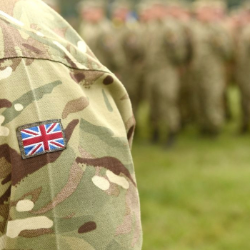
New platform maps charity support for the Armed Forces community
Pioneering data platform maps where the Armed Forces community receive support from charities

Northumbria co-leads study on fairer support for families
A major study co-led by Northumbria University will test whether attachment assessments lead…

New AHRC research shows how community innovation can power the next phase of devolution.
New research published today by the AHRC Creative Communities programme provides fresh evidence…

Free sessions to help families navigate the SEND system
Northumbria University's award-winning Student Law Office is launching SEND Decoded, a series…

New Doctoral Training Programme will tackle key polar science questions with a reduced carbon footprint
The Net Zero Polar Science (NZPS) Doctoral Training Programme (DTP) has welcomed its first…
More events
Upcoming events
The Past We Inherit. The Future We Build: Better Decisions Happen Together
The Great Hall, Sutherland Building
-

Next Stop Northumbria
Manchester Marriott Hotel Piccadilly
-

-
Magnetospheric Multiscale Science Working Team Meeting
Sutherland Building
