Supporting Survivors of Sexual Violence and Abuse Conference 2026
CCE1 - City Campus East 1
-

Mental illness is a not a modern phenomenon: but how society responds to it, how it is treated and therefore the individual’s experience of mental illness has changed over the centuries. Analysing literature, poetry, art and drama from the long eighteenth century (1660 to 1800) the research found that culture has a strong influence on the experience and treatment of mental illness.
These insights into depression are helping medical professionals to broaden their historical and cultural understanding of the diagnosis and treatment of mental illness. Through public lectures and podcasts the findings have reached a wide range of medical professionals. They are being used as a resource for teaching in the UK and in Australia to provide support and information for people suffering from depression. Feedback from a one-day workshop in London for practising psychotherapists acknowledged the view that a historical perspective was valuable in modern psychiatry: “[this talk] has given me a greater insight as to how so-called “mental disorder” was “identified” and “treated” in the 18th century and hence to think about how it is regarded today.”
The benefits of this research extend to individual members of the public. In partnership with Shipley Art Gallery the researchers put together an art exhibition entitled 18th Century Blues. It showed how visual artists of the period depicted the different modes in which eighteenth-century people suffered from and explained depression. It was very well received and contributed to an increase in the Gallery’s footfall of nearly 40 percent during the three months that it was on. The project and exhibition remain in the public domain through an on-line blog, ‘Stay on Top: Coping with Depression’.
The success of this project has led to further research to explore a wider range of ‘fashionable maladies’ from that period.
The below video shows how Northumbria recently introduced its 18-century research to the public as part of the national Being Human festival.
18th Century Legacies: The Past in our Present. from Northumbria University on Vimeo.
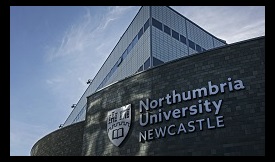
CCE1 - City Campus East 1
-
