Nursing Science Registered Nurse (Mental Health) BSc (Hons)
 Option for Placement Year
Option for Study Abroad
Placement

Option for Placement Year
Option for Study Abroad
Placement
Northumbria University has an established reputation for excellence and innovation in nursing education. We are working closely with our NHS partners to deliver a pre-registration Nursing Science degree that embodies the Nursing and Midwifery Council’s ‘FutureNurse’ standards, to equip you to lead your profession.
You will study partially at our Coach Lane Campus, and partially on clinical placement, with both strands running alongside each other to give you an integrated approach to theory and practice. You will study within the standard university semester system, allowing time during the Easter and summer breaks for additional projects and internships – or simply a well-earned rest.
This programme will equip you to be curious, creative and collaborative in your care. It will allow your compassion to thrive within an evidence-based approach and it will enable you to make a genuine impact on the mental health and wellbeing of people, their families and the wider community.
At Northumbria, we recognise the value of gaining experience beyond our campus and enhancing your employability in a new environment. Mental health Nursing students at Northumbria are encouraged to participate in a short-term international programme with our partner Think Pacific.
The BSc Nursing Science (Mental Health) degree will prepare you to build experience in a professional health care role, and graduate with NMC Registration as a fully Registered Nurse. Studying within the requirements of the new NMC standards means that you will be ‘future nurse’ ready, demonstrating critical thinking skills in relation to complex healthcare issues and the health and wellbeing of your patients and their families.
Mental Health Nursing at Northumbria is ranked 6th in the UK by Guardian University Guide 2026.
98% of our Mental Health Nursing graduates are in highly skilled employment or further study 15 months after graduation (Guardian University Guide, 2026).
Over 91% of students studying Mental Health Nursing at Northumbria believed their course positively challenged them to achieve their best work (NSS, 2025).
Why is a personal statement important?
The Personal Statement in the application is about you (as the name suggests) and it is an opportunity to tell us why you want to study here and why you want to study the chosen field of nursing. The Nursing Midwifery Council require universities to conduct a face-to-face interview (including Skype) with all nursing candidates and the personal statement is key to you being asked to attend an interview. The personal statement is your chance to sell yourself to the person assessing your application.
What should you highlight in the Personal Statement?
Universities want to know what interests you about your chosen field of nursing and that you understand what it takes to be a nurse. You will need to include transferrable skills gained at school, work or in your personal life. You will really need to think about the skills and qualities that are required to be a nurse. Universities want to know what bearing your current studies have on your selection to the chosen field of nursing, and what experiences you have gained from your studies. Look at the NHS Constitution and the six NHS Values and include some of the values within the statement. We also want to know what bearing your current studies have on your selection to the chosen field of nursing, and what experiences you have gained from your studies. We also want to learn about you, your extra-curricular activities, what you do in your spare time, any relevant work/volunteer experience, and any other achievements.
Through all this, you also have to pinpoint the skills and attributes you have gained from inside and outside of school/college. This is very important. For instance, if you have good powers of analysis and problem-solving ability then record this in the statement. If you are not sure where to start, write down a list of what you have done, and pick out the most relevant parts and link them to the field of nursing chosen.
What should I avoid doing?
Do not waffle. It is tempting to list everything you have done and let the selector 'pick out' the relevant bits - that does not happen. Think of it as a job application - keep it concise, keep it clear, and keep it logically organised. For everything you write, make sure it is relevant. For instance, do not say you just 'find something interesting' - that does not tell us much. We want to know why you find it interesting, and why that makes you a good candidate. Always remember that phrases such as 'for as long as I can remember' may sound good but they can sound cliched and at times simply are not true. Keep it honest - keep it meaningful.
What sort of experiences might be relevant?
You can talk about what you have learnt from team sports, part-time work or volunteer work. If you have health care experience then include this in the personal statement. You may might want to give examples of situations where you have demonstrated commitment, leadership and hard work. When have you adapted to new situations or managed a variety of commitments? Can you relate this to how you will cope with the demands of nursing? Have you had to deal with a difficult situation at work or at school or college? Whatever your experiences, tailor them to the chosen field of nursing.
Where can you get further tips?
There is a wealth of information available online and from careers advisers. Access nursing journals and health care websites too so that information in the personal statement is relevant to the chosen field of nursing.
Similar courses you may be interested in: Nursing Science, Nursing Associate FdSc, Registered Nurse (Learning Disability) BSc (Hons). For our wider range of nursing courses, make sure to visit our UG and PG Nursing Courses page.
UCAS Code
B740
Level of Study
Undergraduate
Mode of Study
3 years Full Time
School
Healthcare and Nursing Sciences
Location
Coach Lane Campus, Northumbria University
City
Newcastle
Start
September 2026 or September 2027
Fees
Fee Information
Modules
Module Information
Shaping the future of care.

GET A TRAINING GRANT UP TO £5,000

EXPLORE NURSING AT NORTHUMBRIA

Outstanding rankings for Northumbria's Nursing course.
Read the news story.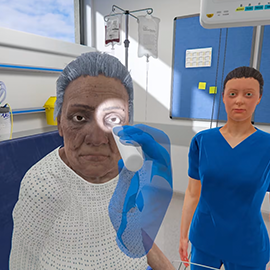
Simulated learning using virtual reality recognised as example of best practice in nursing education.
Read the news story.
Northumbria University has been nationally recognised for the exceptional support it provides for nursing students after winning a coveted Times Higher Education award.
Read More
Northumbria to develop its Centre for Health & Social Equity.
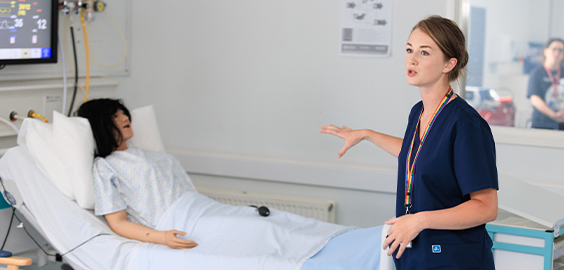
Read the news story.Taught in our specialised clinical skills centre, you will have access to state-of-the-art facilities and training equipment that is at the forefront of the healthcare industry.


.png?modified=20230914113437)

A video describing all the different skills you will learn at the clinical skills centre
NMC are the nursing and midwifery regulators for the UK. Watch the videos below to help you understand what is expected of nurses and the key aspects of the role.
The Clinical Skills Centre, located at the heart of Coach Lane Campus, is the focal point for our Health students educational journey

Explore Coach Lane Campus
First person tour through the clinical skills facilities at Coach Lane Campus
You can boost your CV and develop your experience whilst studying at Northumbria.
From first year through to final year and beyond graduation, we are here to help.
Visit an Open Day to get an insight into what it's like to study Nursing Science/Registered Nurse Mental Health. Speak to staff and students from the course and get a tour of the facilities.
96 to 112 Tariff Points
From a combination of acceptable Level 3 qualifications which may include: A-level, T Level, BTEC Diplomas/Extended Diplomas, Scottish and Irish Highers, Access to HE Diplomas, or the International Baccalaureate.
Find out how many points your qualifications are worth by using the UCAS Tariff calculator: www.ucas.com/ucas/tariff-calculator
Northumbria University is committed to supporting all individuals to achieve their ambitions and we understand that every applicant’s circumstances can be different, which is why we take a flexible approach when making offers for this course. We have a range of schemes and alternative offers to make sure as many individuals as possible are given an opportunity to study at our university regardless of personal circumstances or background. Typically, offers range from 96 to 112 UCAS tariff points, but we’ll assess your individual circumstances and potential when reviewing your application
To find out more, review our Northumbria Entry Requirement Essential Information page for further details www.northumbria.ac.uk/entryrequirementsinfo
Subject Requirements:
There are no specific subject requirements for this course.
GCSE Requirements:
Applicants will need Maths and English Language at minimum grade 4/C, or an equivalent.
Additional Requirements:
Applicants will be required to attend an interview. Admission is subject to a suitable DBS Enhanced Certificate and a satisfactory health check. Applicants must meet the Nursing and Midwifery Council's suitability for registration requirements.
International Qualifications:
We welcome applicants with a range of qualifications which may not match those shown above.
If you have qualifications from outside the UK, find out what you need by visiting www.northumbria.ac.uk/yourcountry
English Language Requirements:
International applicants should have a minimum overall IELTS (Academic) score of 7.0, with a minimum writing score of 6.5 and all other components at a minimum score of 7.0, or Occupational English Test (OET) with at least a grade B (350 to 440) in reading, listening and speaking, and at least a grade C+ (300 to 340) in writing.
For further admissions guidance and requirements, please visit www.northumbria.ac.uk/admissionsguidance Please review this information before submitting your application.
UK Fee in Year 1: £9,790
The UK tuition fee for 26/27 is £9,790 and is set in line with the UG Government's tuition fee cap. The University may increase this fee in subsequent years in line with any changes to the tuition fee cap. Students will be notified of any increase ahead of it taking effect. The remaining fees relate to the International Soccer Academy and accommodation fees. Accommodation fees may increase in subsequent years. Students will be notified of any increase ahead of the re-issuing of tenancy agreements. Tuition fees in the academic year 2027/28* will be £10,050. Fees are set in line with the UK Government's tuition fee cap. The University may increase fees in subsequent years in line with any changes to the tuition fee cap. Increases will be linked to inflation. For example, increases may be linked to RPIX (Retail Price Index excluding mortgage interest payments) Students will be notified of any increase ahead of it taking effect. Student fee loans rise in line with the tuition fees cap. *if your course is longer than one year
* Fees subject to annual increases over the course of the period of study. Students will be liable for payment of any/all tuition fees which are not sponsored by their employer or other third party.
International Fee in Year 1:
This is the tuition fee for your first year of study. You should expect to pay tuition fees for every year of study. The University may increase fees in the second and subsequent years of your course at our discretion in line with any inflationary or other uplift. Students will be notified of any increase ahead of it taking effect.
Tuition fees in the academic year 2027/28* will be £10,050. Fees are set in line with the UK Government's tuition fee cap. The University may increase fees in subsequent years in line with any changes to the tuition fee cap. Increases will be linked to inflation. For example, increases may be linked to RPIX (Retail Price Index excluding mortgage interest payments) Students will be notified of any increase ahead of it taking effect. Student fee loans rise in line with the tuition fees cap.
This is the programme fee for your first year of study. The programme fee includes the international tuition fee, International Soccer Academy and accommodation fees. Accommodation fees may increase in subsequent years. Students will be notified of any increase ahead of the re-issuing of tenancy agreements.
ADDITIONAL COSTS
You will be required to purchase a fob watch and suitable footwear for use in placement, which will cost approximately £80. You will need to pay for your own travel costs, which may be approximately £800 per year depending on your placement location. You may be eligible to claim reimbursement of travel costs from the NHS Business Authority. Up to date information relating to this can be found at: https://www.nhsbsa.nhs.uk/student-services. If using a car to attend placement, you may also need to pay parking charges of approximately £200 per year. On completion of the programme you will be eligible to register with the Nursing Midwifery Council and the cost is approximately £120.
* At Northumbria we are strongly committed to protecting the privacy of personal data. To view the University’s Privacy Notice please click here
Module information is indicative and is reviewed annually therefore may be subject to change. Applicants will be informed if there are any changes.
HW5000 -
Skills for Academic Success in a UK University (Core – for International and EU students only,0 Credits)
You will develop your understanding of academic conventions in UK higher education aligned to your level of study, including expectations around critical analysis, structure, argumentation, evidencing, and referencing. The module focuses on developing communication strategies that will help you express your ideas clearly and coherently in written assignments and spoken activities. You will also reflect on your current academic and language skills and develop strategies for development ahead of your assessments.
More informationMH0407 -
Theory Module 1: Introduction to Evidence-Based Practice in Health and Ill Health - Mental Health Nursing (20 Credits)
You will be introduced to fundamental concepts of ‘health’ and ‘ill-health’, as a preliminary step within the evolving concept curriculum. You will develop an understanding of evidence-based practice, evolving in complexity over three years. You will explore fundamental concepts to becoming a self-aware, compassionate and knowledgeable mental health nurse. You will explore your values and beliefs, exploring the concepts of resilience, recovery/ discovery, diversity/ sameness, collaboration, assessment and formulation. The way health and ill-health are understood will be considered through evaluation of several concepts including: sociological, psychological and biomedical perspectives. Key concepts surrounding the aetiology of distress will be explored and will include the ‘stress-vulnerability model’, the ‘power, threat, meaning framework’ and ‘attachment theory’. Crucially, we will explore the qualities both the providers and recipients of care bring to the relationship and the key concepts of mutuality and reciprocity and the impact this has on care delivery.
Practicing as a safe and knowledgeable nurse requires familiarity with clinical and professional literature to explore competing theories of practice. It also requires the nurse to be able to interpret and reason with the ‘evidence-base’ and supply a sound rationale for practice (expressed in both written and verbal formats). Evidence-based practice requires nurses to understand a scientific evidence-base whilst demonstrating respect for diversity and the individual’s interpretation of experience, how people live in their communities, what people value, believe and discover what it means to be human. You will explore the delivery of care within the context of co-production.
MH0408 -
Theory Module 2: Applied life and social sciences - planning and evaluating care (20 Credits)
This module will enable you to apply the biosciences and social sciences to understand determinants of health- social, psychological, behavioural, environmental and biological factors. You will develop an understanding of the functioning of the body at different levels (cell, tissue, organ, system) and how the mind and body interact and influence one another. This knowledge will assist you in delivering safe, holistic, and person-centred care.
This module builds on the knowledge gained in semester 1 and considers the importance of holistic assessment.
In this module you are offered opportunities to learn about supporting people with mental health distress and how to apply this knowledge to offer high quality and safe care to service users and their families. You will study the following;
• Physical systems of the body and the reciprocal impact on mental health
• The psychological aspects of traumatic life events and the reciprocal impact on physical health
Topics you will cover include:
• Anatomy and physiology
• Deterioration in physical and mental health
• Drugs and medicines interactions within living systems
• Holistic assessment, planning, delivering and evaluating care
• Introduction to consent and legal frameworks within mental health services
• Introduction to Functional Analysis of Care Environments (FACE) risk and narrative risk assessment
• Diabetes
You will explore the experiences of people with a mental distress and their families through meeting with ‘Experts by Experience’ and practitioners specialising in mental health.
NS0423 -
Practice Module 1: Becoming a Safe, Caring Professional (40 Credits)
This practice module will provide you with a unique opportunity to develop skills and knowledge directly relevant to your current practice placement experiences. The practice module will both support your learning while you are in practice and provide an environment, within university, to consolidate the skills and knowledge necessary to progress effectively. By using a concept curriculum approach, the nursing practice module will support you to learn how to become an accountable professional, lead and manage nursing care, and work in teams.
During the first year, you will learn the fundamental skills that are necessary for safe, effective and professional practice.
During the majority of your first year clinical placements you will return to university for two days a week to reflect on your experiences. You will learn together with your peers and examine theoretical concepts such as professionalism, interprofessional learning, medicines management and safeguarding that will enhance your practice. Seminars and workshops will focus on a range of subjects that will enhance your professional nursing practice. Innovative teaching and learning strategies will be used to enhance your learning, This will include the use of digital educational resources to support your learning in relation to concepts such as medicines management.
You will learn how to develop your Ongoing Record of Achievement (ORA) and how to reflect on your personal and professional development. You will learn about the importance of patient centred and recovery focussed approaches and will be asked to reflect on feedback given by Experts By Experience (EBE). These skills are the start of your development as an evidence-based practitioner.
NS0424 -
Nursing Skills 1: Introduction to Nursing Assessment Skills (20 Credits)
The content of Nursing Skills 1 will be informed by the proficiency standards outlined in Annex A and B in ‘Future Nurse: standards of proficiency for registered nurse’ (NMC 2018).
The module will introduce the concept of safe nursing practice and the proficiencies nurses need when undertaking the physical assessment of people of all ages. You will learn how to observe and assess people of all ages in terms of symptoms and signs of physical ill health. You will learn how to take, record and interpret a patient’s vital sign and use communication tools to support verbal and written reports. These skills and proficiencies will be supported by opportunities to participate in simulated education utilising a range of specialist technology and taught by experts. These nursing skills are directly relevant to your practice learning and include nursing procedures that are necessary for safe and effective patient care. Before your first placement you will complete a number of mandatory requirements, which will enable you to practice with confidence and ensure patient safety. The learning opportunities in this module are designed to support you to develop knowledge, which will inform the attainment of communication and relationship management skills and nursing procedures as identified as Part 1 in your Ongoing Record of Achievement (ORA).
NS0425 -
Nursing Skills 2: Development of Communication Skills and Nursing Interventions (20 Credits)
Nursing Skills 2 will build on the concept of communication and safe and effective practice which you have been introduced to in the previous skills module. You will further develop your communication and clinical skills relevant to your practice placement experiences. You will continue to learn a range of skills, such as recognition of the deteriorating patient, that are necessary for safe, effective and professional practice. You will have the opportunity to participate in simulated education utilising a range of specialist technology, including human patient simulators, and taught by a specialist module team of lecturers in nursing, midwifery and health.
You will consider and develop your nursing skills, acting with integrity, applying the principles of The Code (NMC, 2018). You will demonstrate your ability to practise in a holistic, individualised, person centred, non-judgemental, caring and sensitive manner, acknowledging the diverse needs of a contemporary society. You will continue to develop your understanding of team working and its importance in nursing practice. You will learn about the importance of person-centred care and effective communication skills. These learning opportunities will continue to help you gather evidence of your abilities and confidence and will inform your attainment of communication and safe and effective practice as identified as Part 1 in your Ongoing Record of Achievement (ORA).
HW5000 -
Skills for Academic Success in a UK University (Core – for International and EU students only,0 Credits)
You will develop your understanding of academic conventions in UK higher education aligned to your level of study, including expectations around critical analysis, structure, argumentation, evidencing, and referencing. The module focuses on developing communication strategies that will help you express your ideas clearly and coherently in written assignments and spoken activities. You will also reflect on your current academic and language skills and develop strategies for development ahead of your assessments.
More informationMH0511 -
Theory Module 3: Psychosocial Approaches in Mental Health Nursing (20 Credits)
This module will enable you to learn about the concepts and principles of psychosocial approaches as used within mental health nursing practice. You will be encouraged to critically explore contemporary theoretical perspectives and approaches, focussing upon the recovery model and principles. Consideration will be given to their application in meeting the individualised needs of the person receiving care and support, whilst also incorporating the needs and involvement of their family and /or carers.
Central to contemporary mental health nursing practice is the notion of recovery, you will debate themes and principles crucial to recovery-orientated practice, co-produced stories of health; collaborative partnership between professionals and the individual receiving care; and collaborative partnerships between other professionals and agencies. How such approaches impact on shared decision-making in relation to treatment options, assessment and co-construction of care plans will be a central theme of the module, as will a critical review of the current evidence of psychosocial approaches.
You will critically consider competing perspectives in relation to traditional models of care and more contemporary understandings using bio medical social constructs and reflecting on the relational influence with intervention and recovery. Utilising a strengths-based approach you will develop an understanding of humanistic inter-personal approaches to psychosocial interventions and on-going care. Exploring the nature of the helping relationship underpinned by a collaborative formulation approach to care you will be developing a broad ranging perspective of the person within the context of risk, resilience and their personal, social and environmental domains.
MH0512 -
Theory Module 4: Perspectives of Complex Care in Mental Health Nursing (20 Credits)
Within this module you will explore the concepts, principles and perspectives of complex care in mental health nursing. You will be encouraged to critically explore contemporary theoretical perspectives and approaches, focussing upon recovery model principles, and the application to the individualised needs of the person receiving care and support including their family / carer.
You will explore more nuanced understandings of aetiology, including exploring iatrogenic and salutogenic causation; the ‘adverse childhood experiences’ literature and understanding the neurobiological impact of trauma and the subsequent reciprocal impact on the physical, psychological and the social being- who is situated within a social network. You will explore how complex mental health needs are supported within legal, professional and clinical frameworks from the Mental Health Act, the Care Programme Approach and on to more advanced clinical formulation. Collaborative partnerships with other professionals and agencies are integral to working practice in this area of mental health nursing to ensure safe and effective care.
You will critically consider competing perspectives in relation to traditional models of care and more contemporary approaches such as recovery focussed and coaching approaches’. Utilising an assets-based approach, you will develop an understanding of ‘humanistic inter-personal approaches to care by co-creating the therapeutic relationship across various levels of complexity. Weaving throughout the module will be a review and reflection of the professional narrative aligned with the personal lived experience and the tensions which can arise whilst working within a system that can exercise power and control over the lives of the people it has been created to serve.
NS0524 -
Practice Module 2: Developing Shared Decision Making (40 Credits)
This practice module will provide you with an opportunity to build upon and extend your portfolio of skills and knowledge relevant to your clinical practice. This module will both support your learning while you are in practice and provide an environment, within university, to consolidate the skills and knowledge necessary to progress effectively. By using a concept curriculum approach, the nursing practice module will support you to learn how to become an accountable professional, lead and manage nursing care, and work in teams.
During your module you will explore clinical decision making in practice through collaboration and partnership working. In your clinical placements you will return to university for two days a week to share your experiences with your peers and module tutors to help develop effective decision making. You will be provided with opportunities to critically reflect on your own role and professional responsibilities in making shared decisions for your continued development as a safe and effective student nurse. By using a developing concept curriculum approach, you will be able to practise safely and have an awareness of your own limitations, demonstrating increasing autonomy and independence when performing a range of practical skills. You will apply your developing knowledge of pharmacology, social and life sciences to nursing practice. Innovative teaching and learning strategies will be used to enhance your learning. This will include the use of digital educational resources to support your learning in relation to concepts such as medicines management. The module will also incorporate simulated practice learning hours to support you to develop appropriate nursing skills.
You will continue to develop your Ongoing Record of Achievement (ORA) and reflect on your personal and professional development as an evidence-based practitioner. You will reflect on the importance of patient and family centred approaches in addition to the effectiveness of patients and client feedback. Some of your learning will be online via online learning resources stored on BlackBoard Ultra as we help you to facilitate, and organise your independent learning.
NS0525 -
Nursing Skills 3: Developing Evidence-Based Skills for Best Practice (20 Credits)
This module will build on the concepts from year one and introduce more complex skills linked to the proficiency standards outlined in Annex A and B ‘Future Nurse: Standards of Proficiency for Registered Nurse’ (NMC, 2018). This will support your practice learning and help you further develop the knowledge and skills you have gained from your year one clinical placements. The module will help you develop greater confidence and autonomy, allowing you to contribute effectively to a multi-disciplinary team of healthcare providers. This skills module will support your learning while you are in practice and provide an environment, within university, to consolidate the skills and knowledge necessary to progress effectively. While in university you will also be updating, consolidating and learning new communication and relationship management skills, nursing procedures and elements of patient safety to ensure safe and effective practice.
More informationNS0526 -
Nursing Skills 4: Enhancing Clinical Skills for Complex Care (20 Credits)
The content of Nursing Skills 4 will be informed by the proficiency standards outlined in Annex A and B in ‘Future Nurse: Standards of Proficiency for Registered Nurse’ (NMC, 2018).
This module will build upon your knowledge of medicine administration whilst being exposed to the challenges of complex care needs. You will learn about nursing interventions associated with people of all ages with complex care needs exploring the principles, approaches and concepts of safe nursing practice and the delivery of holistic care. You will build your knowledge of safe ethical medicines management with an emphasis on the clinical application of these skills and understanding. There will be a particular focus on the challenges of medicines optimisation in people with complex care needs, which requires understanding of pharmacodynamics and pharmacokinetics. Alongside this you will learn to develop professional accountability to ensure safe administration of medicines including competency in drug calculation. You will continue to develop your understanding of team working and its importance in nursing practice.
HW6000 -
Skills for Academic Success in a UK University (Core – for International and EU students only,0 Credits)
You will develop your understanding of academic conventions in UK higher education aligned to your level of study, including expectations around critical analysis, structure, argumentation, evidencing, and referencing. The module focuses on developing communication strategies that will help you express your ideas clearly and coherently in written assignments and spoken activities. You will also reflect on your current academic and language skills and develop strategies for development ahead of your assessments.
More informationMH0613 -
Theory 5: Transition to Accountable Practitioner in Mental Health Nursing (40 Credits)
The module builds on the skills and knowledge that you have developed during the programme and supports your transition towards becoming a confident accountable practitioner. Scholarship within mental health nursing will be embraced; this will enable you to critically analyse and challenge the status quo, demonstrating courage and professional curiosity. The module content encourages independent thinking skills and creativity. Research and practice development philosophy is explored, which will support your summative assessment which is a Practice Project Proposal.
You will critically reflect upon a presenting operational, practice, or leadership challenge within a clinical setting. In order to do this, you will explore contentious elements of mental health practice including consent & capacity, advocacy, global health priorities and health economics. Patient safety and cost effectiveness are competing forces in mental health practice, and you will examine this paradox alongside the maintenance of high-quality care with finite resources. You will also understand human factors within organisations and/or systems are paramount to its success, and appraise the evidence, particularly in relation to working within teams, utilising archived serious case reviews, critical incidents and ‘never events’. By critically appraising pertinent literature you will promote understanding of organisational culture and compassion fatigue, increasing your determination and resilience to become a competent accountable practitioner. Moreover, research and practice development provide rich evidence to support innovation and action. This module will develop your ability to analyse and select appropriate methods of research/practice development to fulfil the summative assessment requirements and prepare you for the future.
NS0621 -
Practice Module (3) Leadership, Quality and Team Work (40 Credits)
In this third year module which is based in practice, your learning will be predominantly online via BlackBoard Ultra. This will be supported with some additional face to face seminars to explain expectations as we help you to facilitate greater independent learning as you transition to become a registered nurse. This module will provide you with the opportunity to advance your skills and knowledge directly relevant to your third year practice placement experiences and prepare you for working life as a registered nurse. It will specifically focus on leadership, quality and team work.
By using a concept curriculum approach, the nursing practice module will support you to become an accountable professional, working in teams to lead and manage quality nursing care. Within the context of your practice placements you will critically reflect and debate contemporary theories and explore service improvement models, which support sustainable service improvement. Applying your knowledge of team and Interprofessional working you will learn how to coordinate safe and effective high quality care. This will include a collaborative approach embedding the views of service users, lay carers and colleagues in the delivery and enhancement of care. You will be provided opportunities to critically reflect on your own personal and professional responsibility for your continued development as a manager and future leader of service improvement. You will learn how to manage uncertainty and put into practice the strategies that develop resilience in yourself and others.
Through dynamic learning opportunities in practice you will gather evidence to aid completion of your North East Electronic Practice Assessment Document (NEEPAD). Through critical reflection and self-assessment you will complete your Ongoing Record of Achievement (ORA) demonstrating your capability and readiness for independent practice. This demonstrates to a future employer that you are fit to practise as a registered nurse caring for people of all ages and across all care settings.
NS0622 -
Nursing Skills 5: Leading and Improving Safety and Care Quality (20 Credits)
Nursing Skills 5 will build on the concepts from years 1 and 2 and further enhance your skills. The module focuses on aspects of leadership to build your competence in the delivery of safe and effective person-centred care. You will update and explore in greater depth skills you acquired in previous years, including mandatory skills and a range of more advanced techniques and procedures whilst preparing you for your role as a newly qualified nurse. In addition, you will build on your knowledge and experience of safe nursing practice, promotion of health and medicines management in relation to caring for people with acute, complex and advanced conditions. You will develop advanced communication and nursing procedure skills as appropriate to your field of nursing.
More informationNS0623 -
Nursing Skills 6: Advancing Nursing Skills (20 Credits)
This module will consolidate the concepts and nursing interventions from the previous skills modules and be delivered following Nursing Skills 5. Building on your existing knowledge and skills you will enhance your development and become an agile skilled practitioner in your relevant field of nursing. You will be learning to apply high level communication and medicines management skills, previous knowledge and experience as well as your advanced knowledge of nursing procedures to prepare you for autonomous practice. History taking skills will be developed and used as a framework for enhanced assessment and care of people of all ages. A range of dynamic learning opportunities both in the simulated and real-life practice setting will help to generate evidence, which will aid you in the completion of your Ongoing Record of Achievement, demonstrating that you are capable of a high standard of competent, safe and independent nursing practice.
More informationTo start your application, simply select the month you would like to start your course.
Our Applicant Services team will be happy to help. They can be contacted on 0191 406 0901 or by using our Contact Form.
Full time Courses are primarily delivered via on-campus face to face learning but could include elements of online learning. Most courses run as planned and as promoted on our website and via our marketing materials, but if there are any substantial changes (as determined by the Competition and Markets Authority) to a course or there is the potential that course may be withdrawn, we will notify all affected applicants as soon as possible with advice and guidance regarding their options. It is also important to be aware that optional modules listed on course pages may be subject to change depending on uptake numbers each year.
Contact time is subject to increase or decrease in line with possible restrictions imposed by the government or the University in the interest of maintaining the health and safety and wellbeing of students, staff, and visitors if this is deemed necessary in future.
Northumbria University is committed to developing an inclusive, diverse and accessible campus and wider University community and are determined to ensure that opportunities we provide are open to all.
We are proud to work in partnership with AccessAble to provide Detailed Access Guides to our buildings and facilities across our City, Coach Lane and London Campuses. A Detailed Access Guide lets you know what access will be like when you visit somewhere. It looks at the route you will use getting in and what is available inside. All guides have Accessibility Symbols that give you a quick overview of what is available, and photographs to show you what to expect. The guides are produced by trained surveyors who visit our campuses annually to ensure you have trusted and accurate information.
You can use Northumbria’s AccessAble Guides anytime to check the accessibility of a building or facility and to plan your routes and journeys. Search by location, building or accessibility feature to find the information you need.
We are dedicated to helping students who may require additional support during their student journey and offer 1-1 advice and guidance appropriate to individual requirements. If you feel you may need additional support you can find out more about what we offer here where you can also contact us with any questions you may have: