
-
Study
-
Quick Links
- Getting Started at Northumbria
- Open Days & Events
- Real-World Learning
- Fixed Block Degrees
- Discover The Bridge
- Tuition Fees, Funding & Scholarships
- Book an Open Day
-
Undergraduate
- Application Guides
- UCAS Exhibitions
- Extended Degrees
- School & College Outreach
- Parents & Guardians
-
Postgraduate
- Application Guide
- Postgraduate Research Degrees
- Flexible Learning
- Change Direction
- Register your Interest
-
Student Life
- Students' Union
- The Hub - Student Blog
- Accommodation
- Northumbria Sport
- Support for Students
-
Learning Experience
- Real-World Learning
- Research-enriched learning
- Graduate Futures
- The Business Clinic
- Study Abroad
-
-
International
International
View our Global Footprint-
International Students
- Northumbria and your Country
- International Student Events
- Application Guide
- Entry Requirements and Education Country Agents
- Global Offices and Regional Support
- English Requirements
- English Language Centre
- International student support
- Cost of Living
-
International Fees and Funding
- International Undergraduate Fees
- International Undergraduate Funding
- International Masters Fees
- International Masters Funding
- International Postgraduate Research Fees
- International Postgraduate Research Funding
- Useful Financial Information
-
International Partners
- Agent and Representatives Network
- Global Partnerships
- Global Community
-
International Mobility
- Study Abroad
- Information for Incoming Exchange Students
-
-
Business
Business
Northumbria University is proud to offer a range of Professional, Statutory and Regulatory Body (PSRB) approved & accredited courses and programmes. Explore our list of courses and programmes under our Education and Training page.
More on our Business Services-
Business Quick Links
- Contact Us
- Business Events
- Research and Consultancy
- Education and Training
- Workforce Development Courses
- Join our mailing list
-
-
Research
Research
Northumbria is a research-rich, business-focused, professional university with a global reputation for academic quality. We conduct ground-breaking research that is responsive to the science & technology, health & well being, economic and social and arts & cultural needs for the communities
Discover more about our Research-
Quick Links
- Research Peaks of Excellence
- Academic Departments
- Research Staff
- Postgraduate Research Studentships
- Research Events
-
Research at Northumbria
- Interdisciplinary Research Themes
- Research Impact
- REF
- Partners and Collaborators
-
Support for Researchers
- Research and Innovation Services Staff
- Researcher Development and Training
- Ethics, Integrity, and Trusted Research
- University Library
- Vice Chancellors Fellows
-
Research Degrees
- Postgraduate Research Overview
- Doctoral Training Partnerships and Centres
- Academic Departments
-
Research Culture
- Research Culture
- Research Culture Action Plan
- Concordats and Commitments
-
-
About Us
-
About Northumbria
- Our Strategy
- Our Staff
- Our Schools
- Place and Partnerships
- Leadership & Governance
- University Services
- Northumbria History
- Contact us
- Online Shop
-
-
Alumni
Alumni
Northumbria University is renowned for the calibre of its business-ready graduates. Our alumni network has over 253,000 graduates based in 178 countries worldwide in a range of sectors, our alumni are making a real impact on the world.
Our Alumni - Work For Us
Scientists determine cause of devastating Indian flood
A Northumbria University geomorphologist is among a team of international scientists to investigate the cause of the Uttarakhand flood in India earlier this year, which left more than 200 people dead or missing.
On February 7 the Uttarakhand region of India experienced a humanitarian tragedy when a wall of rock and ice collapsed and formed a debris flow that barreled down the Ronti Gad, Rishiganga, and Dhauliganga river valleys.
This massive slide was caused when a wedge of rock carrying a steep hanging glacier broke off a ridge in the Himalayan mountain range, leading to the destruction of two hydropower generating facilities, as well as massive loss of life.
In the days following the disaster, a team of 53 scientists came together to investigate the cause, scope, and impact of the flood and landslide. Among them was Dr Matt Westoby, of Northumbria University’s Department of Geography and Environmental Sciences.
The team analysed satellite imagery, seismic records, and eyewitness videos to produce computer models of the flow, with their findings published online today in the journal Science.
Dr Westoby’s research expertise includes the reconstruction of extreme glacial lake outburst floods. Speaking about his role in the project he said: “In the immediate aftermath of the so-called ‘Chamoli event’ I was fortunate to be able to work with a team of international experts to unravel the causes and impacts of this catastrophic flood.
“Using my experience in the geomorphological analysis of sudden-onset floods I assisted with rapid, initial estimates of the flood magnitude and other characteristics.
“We refined this understanding as more data became available, including invaluable observations from in-country partners.”
Lead author Dr Dan Shugar, Associate Professor in the Department of Geoscience at the University of Calgary, used high-resolution satellite imagery provided by MAXAR, PlanetLabs, and CNES to determine the cause of the Uttarakhand disaster.
While initial suggestions pointed to a glacial lake outburst flood, Dr Shugar confirmed that there are no glacial lakes of any size large enough to produce a flood anywhere near the site.
“High resolution satellite imagery used as the disaster unfolded was critical to helping us understand the event in almost real time,” he said.
“We tracked a plume of dust and water to a conspicuous dark patch high on a steep slope. This was the source of a giant landslide that triggered the cascade of events, and caused immense death and destruction.”
The Science paper provided satellite evidence that previous large ice masses had been dislodged from the same ridge and struck the same valley area in recent years. The researchers suggest that climate change is contributing to such events happening more frequently, and that the greater magnitude of the latest disaster is an argument in favour of avoiding further developments in the area.
Dr Westoby is continuing to research the Chamoli event and was recently awarded a Natural Environment Research Council (NERC) Urgency Grant to estimate how quickly millions of cubic metres of new sediment deposited by the flood could be removed or modified by the river.
He will lead a team of scientists which includes researchers from the University of Leeds, Hull, and Newcastle University, who will work alongside a series of leading Indian and North American partners.
Speaking about this new project, Dr Westoby said: “The passage of this flood was a massive shock to the local river system. The next 12 months are a crucial period because this is when we predict that newly deposited sediments will be eroded and transported in vast quantities.
“These elevated sediment loads have implications for local hydropower operators and local authorities, who require forecast estimates of these loads to mitigate against further damage to key energy and transport infrastructure.
“We are using a state-of-the-art computer model to predict patterns and rates of river channel adjustment and are working closely with in-country partners to disseminate our findings to local stakeholders.”
Photo caption: Destroyed Tapovan Vishnugad hydroelectric plant after devastating debris flow of Feb 7, 2021. Photo: Irfan Rashid, Department of Geoinformatics, University of Kashmir.
Geography At Northumbria University Encompasses All Of Our Work In Physical And Human Geography, Environmental Science And Management, Health & Safety, And Disaster Management.

Northumbria has submitted 1096 staff across thirteen Units of Assessment (UoA) to the Research Excellence Framework (REF) 2021. This submission reflects our research across four Faculties and nineteen Departments, incorporating traditional disciplines, such as English and Engineering, modern disciplines, such as Business and Design, and professional disciplines, such as Architecture and Nursing.
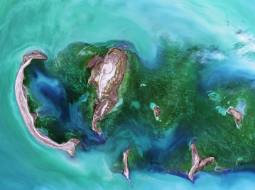
Geography and Environmental Studies investigates the increasingly urgent issues affecting the world and its people such as the climate crisis, global sustainable development, solar-terrestrial science and cold climates.
Latest News and Features
Northumbria helps shape national plan to boost graduate employability
Northumbria University has played a key role in shaping a new national plan designed to help…
Northumbria researcher joins appeal to Downing Street on free school meals and holiday support
A Northumbria University academic, whose research has played a key role in bringing breakfast…
Ancient wildfires near the South Pole shaped Earth's earliest peat bog
Wildfires raging through prehistoric rainforests helped create the earliest known peat bog…
Northumbria astronomer helps reveal secrets of rare interstellar visitor
A Northumbria University astronomer has helped uncover new clues about a rare icy object from…
Two Northumbria professors elected Fellows of the Academy of Social Sciences
Two leading academics from Northumbria University have been elected to the Fellowship of the…
New scientific review involving Northumbria researchers identifies Antarctic coastal blind spots limiting sea level projections
A new international, community-led, scientific review warns that major gaps in knowledge along…
STEM outreach team wins prestigious Royal Society Athena Prize
Researchers from an outreach group at Northumbria University, which promotes opportunities…
Northumbria works with the Mayor's Fund for London to widen access to higher education
Northumbria University's London Campus has opened its doors to young Londoners this summer,…
Upcoming events
NU-NHSA Launch Event
Northumbria University
-
Vortex Wakes of Airplanes, Helicopters, and Wind Turbines: Structure and Stability
ELA 001, Ellison Building A
-
