
Research Group: Making Sense
Supervisor:Professor Gilbert Cockton, Dr. Joyce Yee, Thomas Greenough
I have a Masters degree in interaction design from the University of Vienna and wrote my master thesis on tangible media design for people in rehabilitation. Before starting my PhD programme at Northumbria Design I have worked with CURE - Center for Usability Research and Engineering in Vienna for 3 years. Working at CURE I mainly focused on research on interactive technologies for older people.

Prompted by my PhD topic I am thinking a lot about methodologies used to inform and inspire interaction design. Where do we gain our design inspiration from? How do we inform our design choices? Are we using the right methods? Should we use methods at all? What are the alternatives to the contemporary, often rather rigid user centred approaches? Do they really supply us with suitable insights for the design of interactive systems?
My PhD project is located in the area of interactive media design. The aim of the project is to advance mobile experience research to inspire and inform design by a) broadening the understanding of mobility in interactive media design and b) by introducing a kind of materiality into mobile methods to raise the creative potential in data collection and representation. I am conducting different sort of secondary research studies but mainly I am designing mobile probes based upon material formats. These are methodological resources which allows people to record aspects about their everyday life in expressive and creative ways. The collected data is then used to gather rich mobile experience accounts with mobile technologies during follow-up interviews. I am applying my probe materials in different user studies, which mainly focus on technology mediated social communication in everyday life.
Teaching:
I'm currently running 'interaction tyneside', which is a monthly series of talks on “people and technologies” featuring speakers from local universities (Culture Lab, PaCT Lab and Northumbria School of Design).
IDA - Institut for Design Anthropology; Vienna
CURE – Centre for Usability Research and Engineering; Vienna
Leitner, M. Supporting Design for Mobile People: a material-istic approach; Doctoral Consortium Abstract: CHI 2012, May 5-10, 2012, Austin, Texas, USA.
Subasi, Ö; Leitner, M.; Geven, A.; Tscheligi M.; Designing accessible experiences for older users: User requirement analysis for a railway ticketing portal, Journal on Universal Access in the Information Society, 2011
Leitner M.; Wolkerstorfer P.; Sefelin R.; Tscheligi M.; Mobile multimedia: identifying user values using the means-end theory; MobileHCI '08: Proceedings of the 10th international conference on Human computer interaction with mobile devices and services; September 2008
Schrammel, J., Geven, A., Leitner, M., & Tscheligi, M.; Using narration to recall and analyse user experience and emotions evoked by today’s technology. In P. M. A. Desmet, M. A. K. Karlsson & J. van Erp (Eds.), Cambridge Scholars Press., 2008
Leitner M., Tomitsch M., Költringer T., Kappel K, Grechenig T.; 2007; Designing Tangible Tabletop Interfaces for patients in rehabilitation: Conference & Workshop on Assistive Technologies for People with Vision & Hearing Impairments, Assistive Technology for All Ages; CVHI 2007
Latest News and Features

Criminologist wins acclaimed Philip Leverhulme Prize to pioneer a new criminology of the offshore world
A Northumbria University criminologist has been awarded a Philip Leverhulme Prize, one of the…
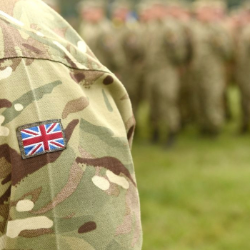
New platform maps charity support for the Armed Forces community
Pioneering data platform maps where the Armed Forces community receive support from charities

Northumbria co-leads study on fairer support for families
A major study co-led by Northumbria University will test whether attachment assessments lead…

New AHRC research shows how community innovation can power the next phase of devolution.
New research published today by the AHRC Creative Communities programme provides fresh evidence…

Free sessions to help families navigate the SEND system
Northumbria University's award-winning Student Law Office is launching SEND Decoded, a series…

New Doctoral Training Programme will tackle key polar science questions with a reduced carbon footprint
The Net Zero Polar Science (NZPS) Doctoral Training Programme (DTP) has welcomed its first…
More events
Upcoming events

Next Stop Northumbria
Manchester Marriott Hotel Piccadilly
-

-
Magnetospheric Multiscale Science Working Team Meeting
Sutherland Building

Christmas Market and Tree lighting
Northumbria University
-
